 Historical Figure MBTI
#645 · 5-11-26 · The Julio-Claudians
Macro
The Instrument Who Replaced the Instrument
d. 38 CE
3 min read
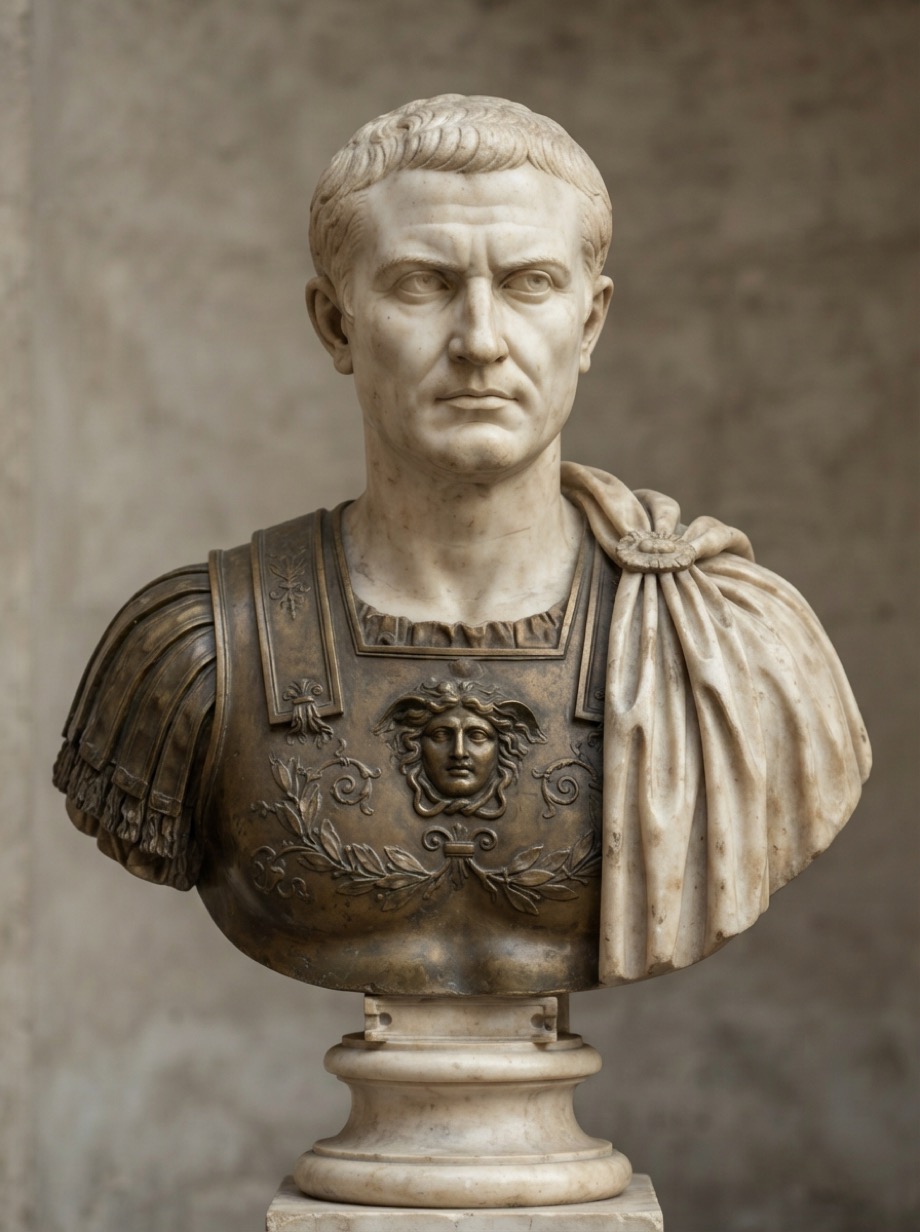
AI-assisted Portrait of Macro
The Instrument Who Replaced the Instrument
Quintus Naevius Sutorius Macro ran Rome's night watch before Tiberius, brooding on Capri, chose him for the one job that mattered: replacing Sejanus. In 31 CE the emperor sent Macro ahead into the city with sealed instructions — take the Praetorian Guard's loyalty, swap out Sejanus's men at the key posts, and hold troops ready to move the instant the Senate turned. It worked exactly as planned. Sejanus was dead within a day.
Macro spent the rest of Tiberius's reign as his enforcer, running the purge of Sejanus's family and allies with the same cold competence. When the old emperor was dying in 37 CE, ancient sources say Macro smothered him with a pillow to speed Caligula's succession — having already switched his loyalty, and reportedly offered his own wife's company, to the heir apparent. The reward lasted less than a year. Caligula turned on Macro exactly as Tiberius had turned on Sejanus, and in 38 CE he and his wife were forced to suicide.
An ISTP operative solves the problem in front of him — precisely, under pressure, without building anything of his own — then repeats the trick for whoever holds power next.
Psychological Verdict
The operation against Sejanus reads like a piece of internal logic worked out in advance and executed without hesitation: secure the Guard, isolate the target, wait for the signal, strike. There is no rhetoric in it, no attempt to build a case Sejanus could see coming — just a mechanism assembled quietly and sprung at the right moment, with Macro in the room or the barracks himself, adjusting to what the day handed him. That combination — cold, private problem-solving paired with comfort acting inside a live, physically dangerous situation — reads as ISTP: dominant Ti, auxiliary Se.
There is a flicker of longer-range foresight in how early he shifted his loyalty to Caligula while Tiberius still breathed, and in how he offered his own wife's favor to curry the heir's trust — loyalty treated as currency rather than bond. But neither trait grows into a vision or a relationship of his own; both stay narrow instincts for which patron is about to matter, deployed just far enough ahead to survive one more transition. Set beside Sejanus's decade-long campaign of image-building, Macro's single sharp operation and his purely functional decades read as introverted competence in service of whoever sat on the throne, not a project of his own.
Connected Figures
Further Reading
- The Annals — TacitusThe primary account of Macro's operation against Sejanus in 31 CE.
- The Twelve Caesars — SuetoniusThe smothering account (Life of Tiberius) and Macro's fall under Caligula.
- Caligula: The Corruption of Power — Anthony BarrettCovers Macro's role in the succession and his subsequent downfall.
- Roman History — Cassius DioAdditional detail on the Praetorian Guard's role in the imperial transition.
