 Historical Figure MBTI
#635 · 5-11-26 · The Julio-Claudians
Tiberius
Second Emperor · The Steward Who Ran an Empire He Never Wanted
42 BCE — 37 CE
8 min read
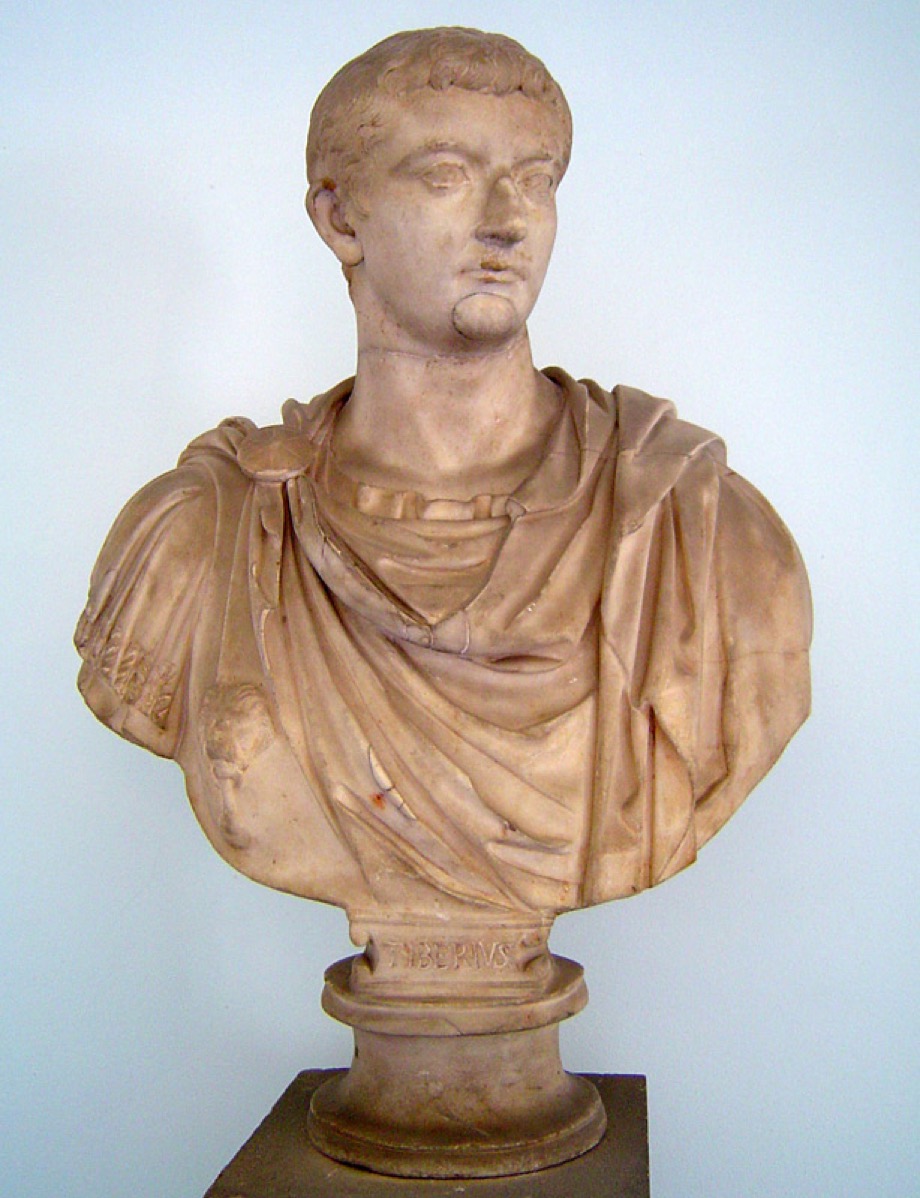
Portrait of Tiberius
The Understudy Who Never Auditioned
Tiberius was never supposed to rule Rome. He was Livia's son by her first husband, carrying not a drop of the Julian blood that mattered, and for most of his life he was a contingency — the man Augustus turned to only after Marcellus, then Agrippa, then Gaius and Lucius Caesar, then Agrippa Postumus had all been tried, and had all failed him, by death or disgrace. By the time the succession fell to Tiberius in 14 CE, he was fifty-five years old, a decorated general who had spent the better part of two decades proving himself in the mud of Pannonia and Germania while the honors went to younger men with better bloodlines.
What he inherited he ran the way he had always run everything: by precedent, by the book Augustus had already written, without a flourish of his own invention. He refused the title pater patriae. He declined temples built in his name. He told a fawning Senate, more than once, that he found their groveling contemptible — homines ad servitutem paratos, men fit to be slaves, he is said to have muttered as he left one session. This was not modesty performed for effect. It was a man who had been made to divorce the wife he loved, who had exiled himself from Rome at the height of his power, and who trusted almost no one — least of all a Senate that could not stop complimenting him. He is the clearest ISTJ in this archive's Roman gallery: dutiful past the point of self-interest, allergic to spectacle, and quietly ruthless when the system he had sworn to protect was threatened from within.
Tiberius did not build Rome's new order. He maintained it, for twenty-three years, with the grim fidelity of an ISTJ who had never once been asked what he wanted — and had stopped expecting to be.
Governing by What Augustus Already Decided
Tiberius's first instinct as emperor was never to ask what Rome needed now. It was to ask what Augustus would have done, and to do that, precisely, without embellishment. He cited his stepfather's example as justification for nearly every act of restraint — the honors he refused, the titles he left unclaimed, the expansion he declined to pursue beyond the frontiers Augustus had already fixed in his will. Where Augustus had built the Principate as an improvisation, dressing naked autocracy in the threadbare costume of the old Republic, Tiberius treated that costume as sacred, not because he believed in the fiction but because it was the established form and departing from it felt, to him, like a kind of theft.
The pattern held even in the smallest rituals of state. He insisted the Senate actually deliberate rather than simply ratify his wishes, forcing them through the motions of a body that still, on paper, governed itself. He kept the imperial cult at arm's length, refusing worship that Augustus himself had accepted only reluctantly and posthumously. None of this was innovation. It was conservation, exact and unglamorous, the work of a man who trusted the tested past over any vision of his own devising.
The clearest evidence of dominant Si, though, is what it cost him. Tiberius spent his reign managing a role he had been handed rather than one he had chosen, measuring every decision against a precedent someone else had set. A man driven by his own vision does not spend two decades citing another man's example as his highest authority. Tiberius did, consistently, almost to the end.
The General Who Left the Treasury Full
Before the throne, Tiberius was simply Rome's best available soldier. He spent years in Pannonia and Germania grinding out the unglamorous, decisive work of frontier war — securing supply lines, drilling legions, taking territory in slow, methodical campaigns rather than dramatic single strokes. After the catastrophe of the Teutoburg Forest, when three legions were annihilated under Varus and Rome briefly feared a Germanic army at the gates, it was Tiberius who went north and steadied the frontier again, not by avenging the loss in a blaze of glory but by rebuilding discipline and holding the line.
As emperor, the same competence turned inward. He ran the empire's finances with a frugality that verged on parsimony, refused to debase the currency, and left the treasury markedly fuller than he found it — a fact even hostile ancient sources concede. He governed the provinces through capable, long-serving administrators rather than constant turnover, valuing continuity and proven results over the political theater of new appointments. He avoided costly wars of choice, expanding nowhere Augustus had not already sanctioned.
This is auxiliary Te in its purest form: effectiveness in service of an inherited structure, not effectiveness in service of a new idea. Tiberius never asked what Rome could become. He asked what Rome needed to keep functioning, and then, methodically, made sure it did — for over twenty years, without a single original institution to his name.
Following Vipsania Through the Street, Weeping
Augustus ordered Tiberius to divorce Vipsania Agrippina, the wife he loved, and marry Julia the Elder instead, binding him more tightly to the family whose blood he did not share. Tiberius obeyed, as duty demanded. But Suetonius records that after the divorce, Tiberius happened to see Vipsania in public once more — and followed her through the streets in tears, an unguarded, almost unbearable display from a man who otherwise gave the world nothing. Augustus, hearing of it, made sure the two were never allowed to meet again.
That single recorded scene is nearly the whole visible record of Tiberius's inner life, and it is enough. He did not perform grief for public consumption — not for Vipsania, not later for his son Drusus the Younger, not for anyone. His private convictions surface only in flashes, almost always in refusal: refusing to remarry with any warmth, refusing the easy flattery that might have made his reign more comfortable, refusing to pretend the marriage to Julia had ever been anything but a transaction imposed on him.
Tertiary Fi in Tiberius is not a rich emotional world on display. It is a narrow, fiercely guarded one, glimpsed only when duty briefly loses its grip — and then sealed shut again for another two decades.
Capri, and the Retreat From Every Possibility
In 26 CE, at the height of his authority, Tiberius left Rome for the island of Capri and never returned. He ruled the empire for the last eleven years of his life entirely by letter, refusing to set foot again in the city he governed. It was not the first time he had withdrawn — decades earlier, at the peak of his influence under Augustus, he had exiled himself to Rhodes for seven years, walking away from public life at the exact moment ambition would have told him to press forward. Both retreats read less as calculation than as flight.
This is inferior Ne under siege: not a generative imagination reaching toward new possibilities, but its collapse into suspicion of every possibility at once. Isolated on Capri, Tiberius grew — by Tacitus's and Suetonius's hostile but consistent account — increasingly convinced that threats surrounded him on every side, trusting his Praetorian prefect Sejanus with the business of Rome precisely because he could no longer bear to weigh the possibilities himself. The dark rumors that gathered around his final years, disputed as their details are, describe a mind that had stopped exploring options and started fearing them.
An ISTJ under prolonged strain does not spiral into scattered new schemes. He narrows, retreats to the one place that feels controllable, and lets the unmanaged world outside grow more menacing in his absence. Capri was not a holiday. It was the sealed door of a man whose only remaining function for confronting the unknown had failed him.
Why ISTJ Over INTJ
Why not INTJ?
The case for INTJ rests almost entirely on one episode: the decade-long, silently patient destruction of Sejanus, ended by a single letter to the Senate that built dread clause by clause before ordering an arrest — Sejanus was strangled and thrown down the Gemonian stairs within hours. That looks like Ni-Te architecture, a long game designed and executed by a hidden vision. But it is one episode, not a reign. For the other twenty-two years, Tiberius built nothing new — no original institution, no reimagined frontier, no personal stamp on the Principate beyond maintaining it exactly as Augustus had left it. An INTJ governs by a vision of what should exist. Tiberius governed by what already did.
Augustus is typed INTJ in this archive — the architect who improvised an entirely new form of government out of a dying Republic and called it restoration. Tiberius, his successor, is the steward who inherited that architecture and refused to alter a single load-bearing wall. Standing the two side by side is the cleanest way to see the difference: one man built the system, the other spent two decades making sure it didn't crack under the strain of holding still. Sejanus is the exception that makes the pattern visible, not the pattern itself.
Connected Figures
Further Reading
- The Twelve Caesars — SuetoniusThe primary hostile-but-detailed ancient life of Tiberius, source for the Vipsania scene and the 'men fit to be slaves' remark.
- The Annals — TacitusThe other major ancient source, more analytically damning, especially on the Sejanus affair and the Capri years.
- Tiberius the Politician — Barbara LevickThe standard modern rehabilitative biography, reading past the hostile ancient sources to the administrator underneath.
- Tiberius — Robin SeagerA balanced modern political biography of the reign.
