 Historical Figure MBTI
#641 · 5-11-26 · The Julio-Claudians
Drusus the Younger
Tiberius's Son · The Heir Who Never Got to Rule
13 BCE — 23 CE
8 min read
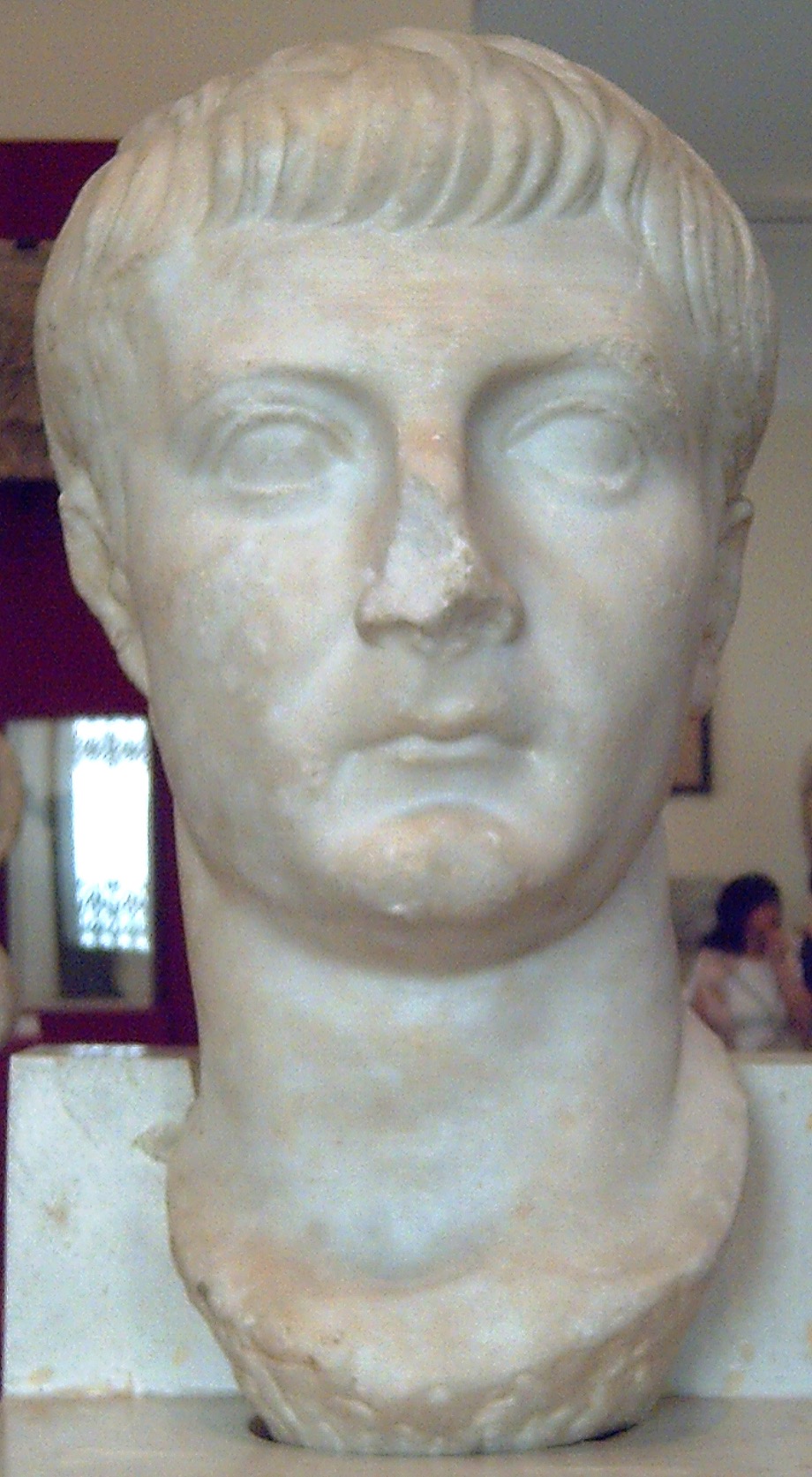
Portrait of Drusus the Younger
The Fist Before the Formula
There is a story Tacitus tells almost in passing, the way you'd mention weather: Drusus, in some dispute with a knight named Lucius Domitius Ahenobarbus, hit him hard enough to draw blood. No trial of words first, no cold calculation of consequence — just the arm moving before the mind had finished deciding. It is the single most legible fact of his short life, and it tells you almost everything about how he was built. This was the son Tiberius actually had, as opposed to the disciplined, magnetic nephew — Germanicus — that Rome would have preferred him to be.
Drusus Julius Caesar, born in 13 BCE to Tiberius and his first wife Vipsania Agrippina, grew up watching his father's slow, joyless climb toward power and seems to have absorbed none of its caution. He loved the arena with an enthusiasm the Roman elite found faintly embarrassing — not the statesman's obligatory attendance but real appetite, real physical pleasure in violence performed well. Sent to Pannonia in 14 CE to put down a legionary mutiny — the same year Germanicus was handling a nearly identical crisis on the Rhine — Drusus solved it his own way: not through Germanicus's patient theater of loyalty restored, but by negotiating just long enough, then seizing a lunar eclipse that terrified the superstitious legions as his opening and moving on the ringleaders with sudden, lethal force. He was made consul, groomed as heir, set in permanent uneasy competition with a cousin he could match in blood but never quite in charm. Then, in 23 CE, he was dead — poisoned slowly, it would later emerge, by his own wife, at the urging of a man patient enough to wait him out.
Drusus was an ESTP, and his defining trait was dominant Se: a compulsion to act on what stood physically in front of him, right now, with his hands.
The Punch, the Arena, the Body
Se dominance shows up in Drusus as raw appetite for the immediate and physical, unmediated by reflection. The blow to Ahenobarbus is the clearest instance on record — a grown man of consular rank, in the middle of Roman public life, resolving a disagreement with his fists rather than his rhetoric. Rome had plenty of vocabulary for controlled aggression: legal maneuvering, patronage warfare, the studied insult. Drusus reached past all of it for the plainest tool available.
His attraction to gladiatorial combat reads the same way. Where other elite Romans attended games as a civic performance — seen to watch, rather than genuinely watching — ancient sources suggest Drusus's interest in the arena was sincere, almost indecorous in its enthusiasm. He wanted to be near real physical stakes, real bodies in real contest, not the abstraction of politics conducted at a remove. Se dominant types orient to the world through direct sensory and physical engagement; for Drusus that meant a preference for blood he could see over intrigue he could only infer.
Even his one great administrative achievement — Pannonia — was, at bottom, a physical intervention dressed up afterward as strategy. He did not out-negotiate the mutiny the way Germanicus did across the Rhine; he waited for his moment and then struck, using an eclipse as cover for what was fundamentally a decisive, in-person act of force against men he judged, correctly, would break under sudden violence rather than sustained persuasion.
Reading the Eclipse as Leverage
What separates Drusus from a mere brawler is the cold analytical thread running underneath the impulsiveness — auxiliary Ti, working out the mechanics of a situation in private, without needing to explain itself to anyone. The Pannonian mutiny is the case study. When the moon darkened unexpectedly during the standoff, panicking the superstitious legionaries, Drusus did not treat it as an omen the way his soldiers did. He treated it as a variable he could exploit — an internally reasoned piece of leverage, assessed and used within minutes, with no committee, no consultation, no performance of consensus-building.
This is Ti's signature: a private, self-contained logic system that doesn't need external validation to act on its conclusions. Drusus worked out, on his own terms, exactly which mutineers were the structural problem and moved on them specifically rather than punishing indiscriminately — a scalpel where a lesser tactician might have swung a hammer. It was brutal, but it was not thoughtless; the brutality was the output of a calculation, not a substitute for one.
The same undercurrent explains why Tacitus, no admirer of Drusus's temper, still credits him with real competence in the field. Se supplied the nerve to act instantly; Ti supplied the quiet, unglamorous reasoning about who to strike and when — a pairing that made him genuinely effective in a crisis, even if it never once resembled statesmanship.
Standing in Germanicus's Shadow
Tertiary Fe surfaces in Drusus not as warmth but as a chronic, uncomfortable awareness of how he measured up against Germanicus in the eyes of the Roman public — a comparison he did not choose and could not escape. Where Fe dominant or auxiliary types actively cultivate group harmony, Drusus's tertiary version registers mainly as friction: he seems to have felt, sharply, that his cousin was better loved, and the rivalry between them was reportedly real rather than performed, a genuine sore spot rather than aristocratic theater.
It is telling that his father's favor was never quite enough to settle the matter for him. Tiberius positioned Drusus as heir apparent, gave him the consulship, sent him to handle Pannonia — every institutional signal available — and still the public seemed to prefer the golden nephew campaigning on the Rhine. A more self-sufficient type might have shrugged that off. Drusus, by most accounts, did not.
The Long Game He Never Saw
Inferior Ni is visible mainly in its absence — in what Drusus failed to notice rather than in anything he did. He lived entirely in the tactical present: the mutiny in front of him, the rival beside him, the insult that demanded an immediate fist. What he did not do, and what an Ni-strong figure would have done almost reflexively, was step back and ask who benefited from his death years before it happened. Sejanus's slow campaign — seducing Livilla, positioning himself as indispensable to Tiberius, waiting — unfolded for years in plain sight of a man whose entire cognitive style was built for the opposite kind of vision.
Drusus never saw it coming, and by every surviving account, neither did anyone close to him until the poisoning was uncovered nearly a decade later. That blindness was not misfortune so much as pattern: a life spent excelling at the immediate crisis while remaining structurally unequipped to detect the slow-burning one closing in around him.
Why ESTP Over ESTJ
Why not ESTJ?
An ESTJ reading would emphasize procedural command — a man building institutional order through Te. But the documented Drusus is defined by blunt, physical, in-the-moment reaction: the punch thrown without deliberation, the sincere love of the arena, the improvised use of a lunar eclipse rather than a prepared plan. That is Se dominance, not Te. His method in Pannonia was cold and effective, but it was privately reasoned in the moment rather than procedurally assembled beforehand — the mark of auxiliary Ti, not the institution-building instinct of an ESTJ.
The distinction matters because it explains why Drusus never quite became the leader Tiberius needed him to be. An ESTJ heir would have built structures, cultivated administrators, made himself procedurally indispensable — the way Tiberius himself, however joylessly, had learned to operate. Drusus instead solved problems the way he solved the dispute with Ahenobarbus: directly, physically, and without the patience for the slower architecture of power. It made him formidable in a crisis and fatally exposed everywhere else.
Connected Figures
Further Reading
- The Annals — TacitusPrimary source for the Pannonian mutiny, the Ahenobarbus incident, and the eventual revelation of the poisoning.
- The Twelve Caesars (Life of Tiberius) — SuetoniusCorroborating family and character detail on Drusus and his place in the succession.
- Roman History — Cassius DioAdditional narrative detail on the mutiny and the unraveling of Sejanus's conspiracy.
- Tiberius the Politician — Barbara LevickModern analysis of the succession politics that shaped Drusus's short career.
