 Historical Figure MBTI
#638 · 5-11-26 · The Julio-Claudians
Germanicus
The Golden Prince · The Heir the Legions Would Have Mutinied For
15 BCE — 19 CE
7 min read
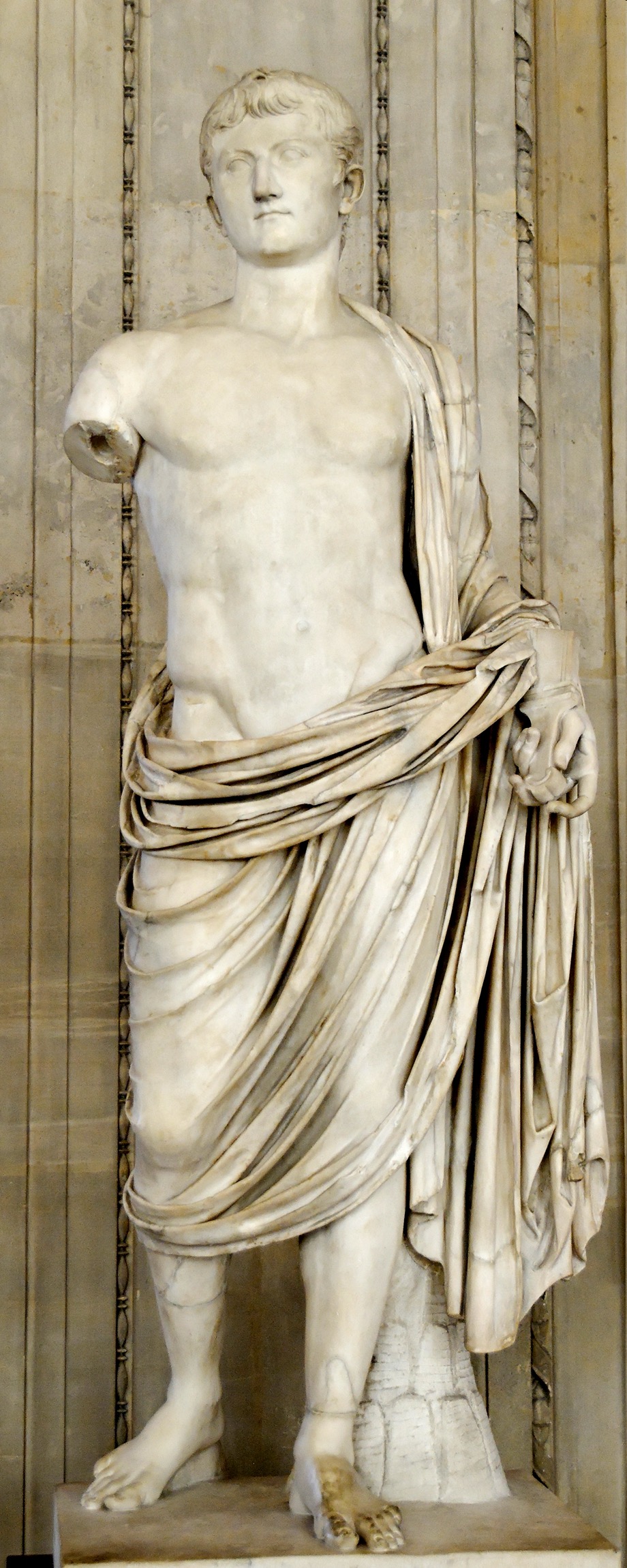
Portrait of Germanicus
The Man the Legions Would Not Let Die
In the winter of 14 CE, weeks after Augustus's death, the Rhine legions mutinied — furious over pay, terms of service, and the sudden vacuum at the top of the world. They had a golden opportunity in their hands: their commander, Germanicus, was popular enough, well-born enough, and beloved enough that a march on Rome behind him might have actually succeeded. He refused it outright, and when the mutineers would not stand down, he reportedly drew his sword and offered to kill himself on the spot rather than lead them against his own country. The soldiers broke. Not from fear of punishment — from something closer to love.
That scene is the key to ENFJ. Germanicus was the great charismatic of the Julio-Claudian house — a general who avenged Teutoburg Forest, recovered lost legionary eagles, and became, by every ancient account, the single most adored man in the empire not named Augustus. Tiberius, his uncle and adoptive father, watched that adoration curdle into something close to political danger and moved to contain it: recall from Germany, reassignment to the East, and finally a governor of Syria, Gnaeus Calpurnius Piso, who seemed installed for the express purpose of checking him. Germanicus died at Antioch in 19 CE, thirty-three years old, convinced with his last breath that he had been poisoned. Rome mourned as if it had lost a second Augustus.
Germanicus led with feeling, not calculation — an ENFJ whose dominant Fe could turn a mutiny into a vigil and a legion into a family.
The Sword He Offered to His Own Throat
Dominant Fe reads a room and then moves it — and no scene in Germanicus's life shows that better than the Rhine mutiny. He did not out-argue the mutineers or out-maneuver them. He stood in front of them and made the stakes personal: if they wanted a civil war, they would have to be the ones who killed him first. Tacitus records soldiers physically restraining him, weeping, begging him not to do it. A purely tactical mind manipulates a crowd from outside it; Germanicus's method worked because the legions believed, correctly, that his anguish was real.
The same gift showed up everywhere he went, minus the desperation. Soldiers who served under him described a commander who ate what they ate, marched when he could have ridden, and visited the wounded after Teutoburg's battlefields were finally cleared of the dead — a scene ancient sources linger on precisely because it was uncharacteristic of Roman command culture, which prized distance. Fe like this isn't performance layered over indifference; it's the actual organizing center of the man, the lens through which every decision about leadership got made.
It cut both ways. The devotion Germanicus generated in Rome and in the legions was exactly what made Tiberius nervous enough to sideline him, and exactly what made his death, when it came, detonate as a public trauma rather than a private grief. Crowds rioted; temples were stoned; the empire behaved, for a season, as though its own emotional center had been cut out. That is Fe's shadow side made visible — the leader so thoroughly beloved that his loss becomes a crisis of state.
Reading the Deathbed Before He Reached It
Auxiliary Ni gave Germanicus's charisma its aim. Standing in front of the mutineers, he did not merely emote — he seemed to grasp, in the moment, exactly which threat would land and exactly which appeal would break the standoff without spilling blood on either side. That is Fe with a compass: the improvisation of a man who could feel where an audience was about to go and get there half a step ahead of it.
The clearest late instance is grimmer. Sent east with vague, contested authority and shadowed by a governor who plainly answered to someone above him, Germanicus seems to have understood the shape of the trap closing around him well before it finished closing. Ancient sources describe him growing convinced, in his final illness at Antioch, that Piso and Piso's wife Munatia Plancina had poisoned him — and while the medical truth is unrecoverable, the political read was sound: Piso was tried after Germanicus's death precisely because Rome believed, and largely still believes, that Germanicus had correctly identified his killer's motive if not his method.
That pattern — the sense of a bigger design behind day-to-day events, and a persistent unease at how thoroughly Tiberius's court seemed to be managing his career from a distance — points to Ni working quietly under the more visible Fe. He was not merely liked. He suspected, accurately, that being liked was itself a problem someone else was solving.
Marching With the Men He Led
Tertiary Se shows up as physical nerve, not restlessness. Germanicus led from the front through the German campaigns, crossing the Rhine repeatedly, marching with the infantry rather than trailing behind it, and personally overseeing the grim work of recovering the bones of the Varian legions from Teutoburg's battlefield rather than delegating a scene most commanders would have avoided. The mutiny speech itself was a physical act as much as a rhetorical one — a man putting his own body between an army and a civil war, sword in hand, in the open, where anyone could have struck first.
That comfort with immediate physical risk gave his Fe its credibility. Soldiers do not follow a man to the death because he speaks well; they follow him because he has already shown he will stand where they stand. Se supplied the proof the speeches needed.
Why ENFJ Over ESFJ
Why not ESFJ?
An ESFJ reading treats Germanicus as simply likable — a man skilled at keeping others comfortable and on his side. But the Rhine mutiny is not harmony-keeping; it is a leader deploying an intense, values-driven vision of what Rome owed itself, backed by a genuine strategic read of exactly what the moment demanded, at real risk to his own life. ESFJ maintains an existing social order. Germanicus, sword in hand in front of a mutinous army, was trying to prevent one from collapsing — a much more Ni-inflected, higher-stakes act than sociability alone explains.
The distinction matters because Germanicus's whole career reads differently depending on which one you choose. An ESFJ golden boy is a court favorite who happens to be popular with the troops. An ENFJ golden prince is something more dangerous to the regime around him — a man whose felt conviction and instinct for where events were heading made him, without any intention on his part, the single most destabilizing figure in Tiberius's Rome. That is the man who died at Antioch still certain, correctly as it turned out to matter politically, that someone had decided he could not be allowed to keep being that popular.
Connected Figures
Further Reading
- The Annals — TacitusThe fullest ancient account of Germanicus's career, the mutiny, and his death at Antioch.
- The Twelve Caesars — SuetoniusCorroborating biographical detail on Germanicus's household and reputation.
- Caligula: The Corruption of Power — Anthony BarrettCovers Germanicus's household and the legacy that shaped his son's reign.
- Germanicus: The Magnificent Life and Mysterious Death of Rome's Most Popular General — Lindsay PowellThe dedicated modern biography, with close attention to the Piso affair.
