 Historical Figure MBTI
#644 · 5-11-26 · The Julio-Claudians
Gnaeus Calpurnius Piso
Governor of Syria · Tried for a Prince's Death
d. 20 CE
3 min read
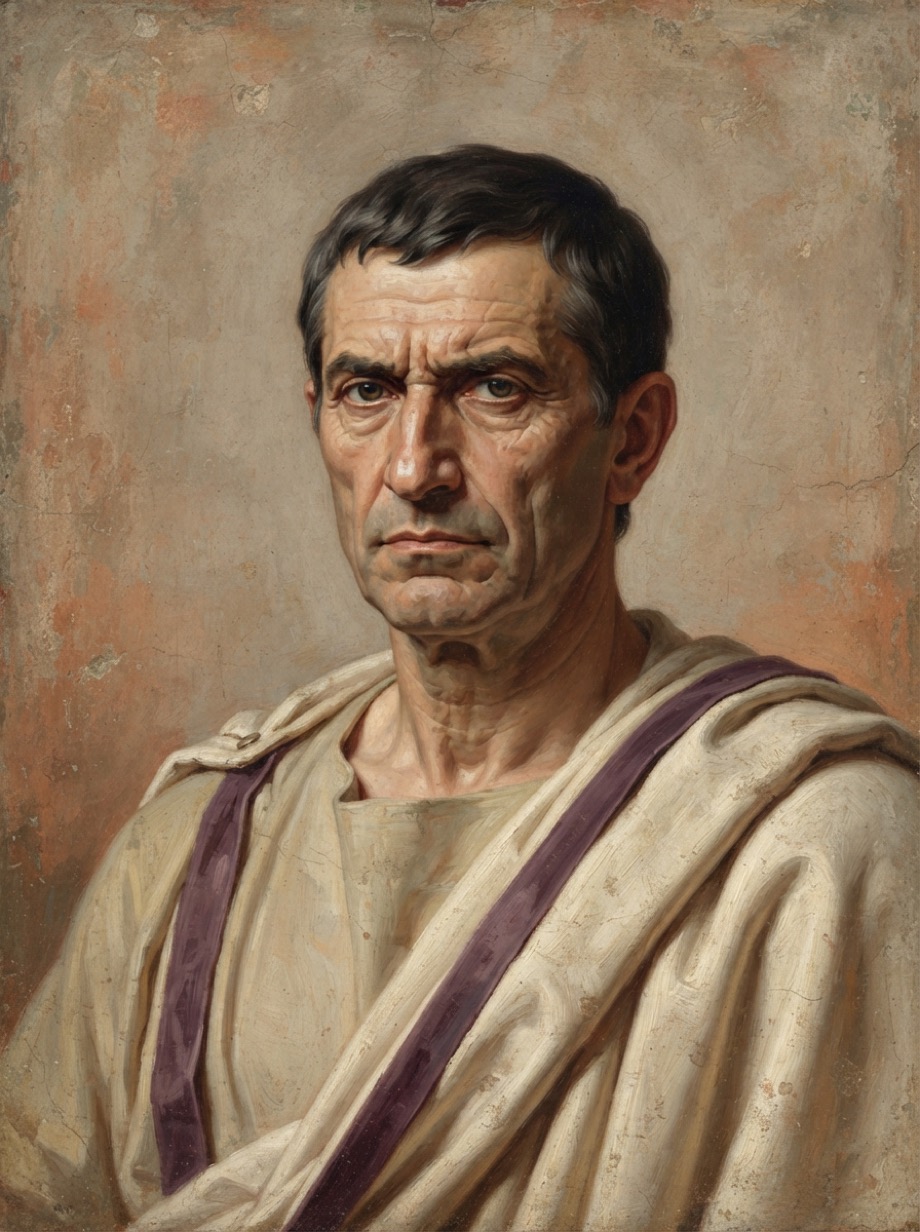
AI-assisted Portrait of Gnaeus Calpurnius Piso
The Governor Who Would Not Yield
Gnaeus Calpurnius Piso came from an old, proud patrician house, and he governed as one — through rank, precedent, and the blunt authority of office. In 17 CE, Tiberius sent him to Syria at the same moment he sent Germanicus east on a sweeping special command, and the ancient sources, backed by the extraordinary 1992-discovered bronze inscription of his own Senate trial, agree that Piso was placed there to check the young prince, likely with tacit blessing from above. He and his wife, Munatia Plancina, did not disguise their contempt: they reversed Germanicus's orders, contested his authority in the open, and by report celebrated rather than mourned his final illness.
When Germanicus died at Antioch in 19 CE, believing himself poisoned, he named Piso with his dying breath. Piso's response was not to flee or negotiate but to march on the legions of Syria and try to retake the province by force — a decision that read, in Rome, as attempted usurpation. Recalled and tried before the Senate on charges of poisoning, treason, and armed insubordination, he died by his own hand before the verdict came, his case closing in blood rather than judgment.
A man who answered every challenge to his authority with more authority — never subtlety, never retreat: the case for ESTJ.
Psychological Verdict
Piso's confrontation with Germanicus shows up not in schemes but in orders. Where a subtler operator might have waited him out or worked around him through allies and rumor, Piso simply reversed his decisions in the field — countermanding a co-equal command as though it were his own province to run unilaterally, leaning on his own standing as a senior senator of an ancient house to make it stick. When the crisis broke after Germanicus's death, the same instinct took over: rather than argue his case in Rome, he moved to seize the legions outright, treating a political problem as a logistical one to be solved by force and structure. That combination — direct, procedural assertion backed by rank and precedent — reads as ESTJ: dominant Te, auxiliary Si.
What is most striking is what does not appear: no recorded remorse, no private reckoning, no sign he weighed the human cost of humiliating a dying prince and his grieving widow. Whatever quieter self existed surfaced only at the very end, in the suicide itself — not as expressed guilt, but as a final, characteristically decisive act once the institutional ground he depended on had given way completely. It is worth flagging how thin this read ultimately is: whether Piso was pursuing his own ambition or executing an understanding with Tiberius or Livia is a question the sources themselves cannot settle.
Connected Figures
Further Reading
- The Annals — TacitusThe primary ancient narrative of the Piso affair.
- Senatus Consultum de Cn. Pisone Patre — Roman Senate, 20 CEThe 1992-discovered bronze inscription recording the Senate's actual verdict.
- Das senatus consultum de Cn. Pisone patre — Werner Eck, Antonio Caballos, and Fernando FernándezThe scholarly edition and analysis of the inscription.
- Caligula: The Corruption of Power — Anthony BarrettTraces the political fallout of the affair into the next generation.
