 Historical Figure MBTI
#643 · 5-11-26 · The Julio-Claudians
Vipsania Agrippina
The Wife Tiberius Was Made to Leave
36 BCE — 20 CE
3 min read
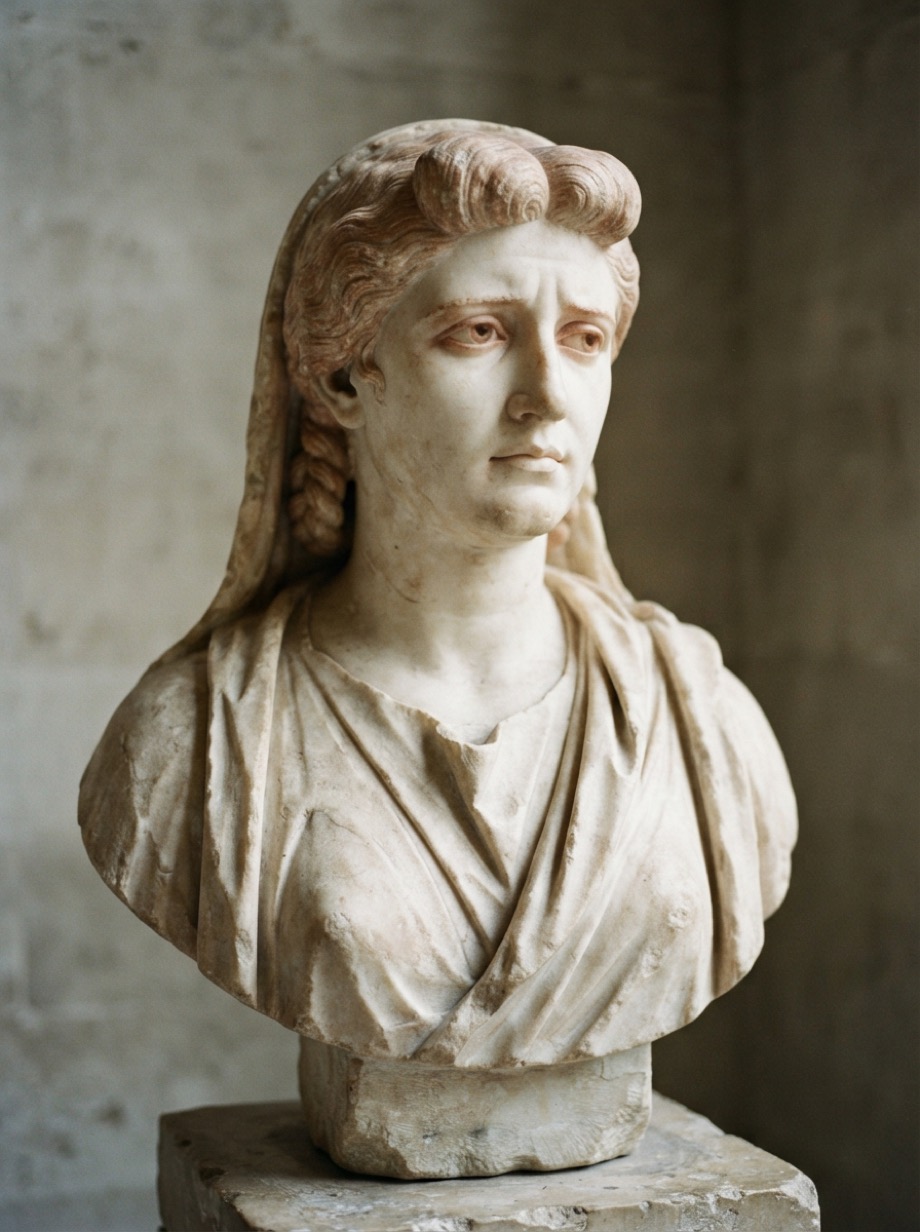
AI-assisted Portrait of Vipsania Agrippina
The Marriage Augustus Undid
Vipsania Agrippina left almost nothing of her own behind — no speeches, no political maneuvers, no faction. She was the daughter of Marcus Agrippa, Augustus's indispensable general, and in 19 BCE she married Tiberius. By every surviving account it was a genuinely happy match; they had a son, Drusus the Younger, and settled into what looks, from this distance, like an ordinary, contented household inside an extraordinary family.
It did not last. In 12 BCE Augustus, arranging his dynasty like pieces on a board, ordered Tiberius to divorce her and marry his own daughter, Julia the Elder, instead. Vipsania had no say in it. Neither, really, did Tiberius — but he supplied the one unguarded human moment either of them left to history. Suetonius records that some time later Tiberius passed Vipsania by chance in the street and followed her, weeping openly, until Augustus had to forbid the two of them from ever meeting again.
She remarried, to Gaius Asinius Gallus, and had several more children with him — a second, quieter life resumed without evident spectacle. Gallus would later become one of Tiberius's bitterest enemies in the Senate and die, likely starved, in one of his purges: a bleak coda to the marriage that had once undone him. Vipsania herself died in 20 CE, remembered by history almost entirely as the shape of what Tiberius lost.
What the record shows of Vipsania Agrippina is not ambition but steadiness — a private, present ISFJ warmth that outlasted the political machinery built to discard it.
Psychological Verdict
The record is thin, and it has to be read carefully rather than extrapolated from. But what does survive points the same direction twice: a first marriage remembered for its steadiness rather than its drama, and a second one, after the divorce, that she rebuilt in the same quiet register — more children, a household, no apparent effort to make a public case of what had been taken from her. Nothing in the sources shows her contesting the divorce or angling for advantage through her second husband's Senate career; where Livia or Agrippina the Younger left unmistakable evidence of calculation and reach, Vipsania left none. That combination — comfort in the familiar and domestic, oriented toward the people closest to her rather than toward an audience — reads as ISFJ: dominant Si, auxiliary Fe.
The single vivid detail that survives about the marriage — Tiberius weeping in the street at the sight of her — says more directly about him than about her, but it implies a bond built on real, unshowy attachment rather than political theater. It is worth stating plainly how thin this verdict is. Vipsania Agrippina has almost no independently documented action; the type read here rests on how she appears to have absorbed and outlasted a single defining rupture, not on a career of choices. ISFJ is the best fit the available evidence supports — a private, steady temperament visible mainly in the shape of what endured after the record fell silent on her.
Connected Figures
Further Reading
- The Twelve Caesars (Life of Tiberius) — SuetoniusSource of the anecdote of Tiberius weeping in the street after seeing Vipsania.
- The Annals — TacitusBrief corroborating context on the family and the divorce.
- Tiberius the Politician — Barbara LevickModern biography discussing the marriage, the divorce, and its political motives.
