 Historical Figure MBTI
#642 · 5-11-26 · The Julio-Claudians
Livilla
Drusus's Wife · The Conspirator at the Center of the Household
13 BCE — 31 CE
8 min read
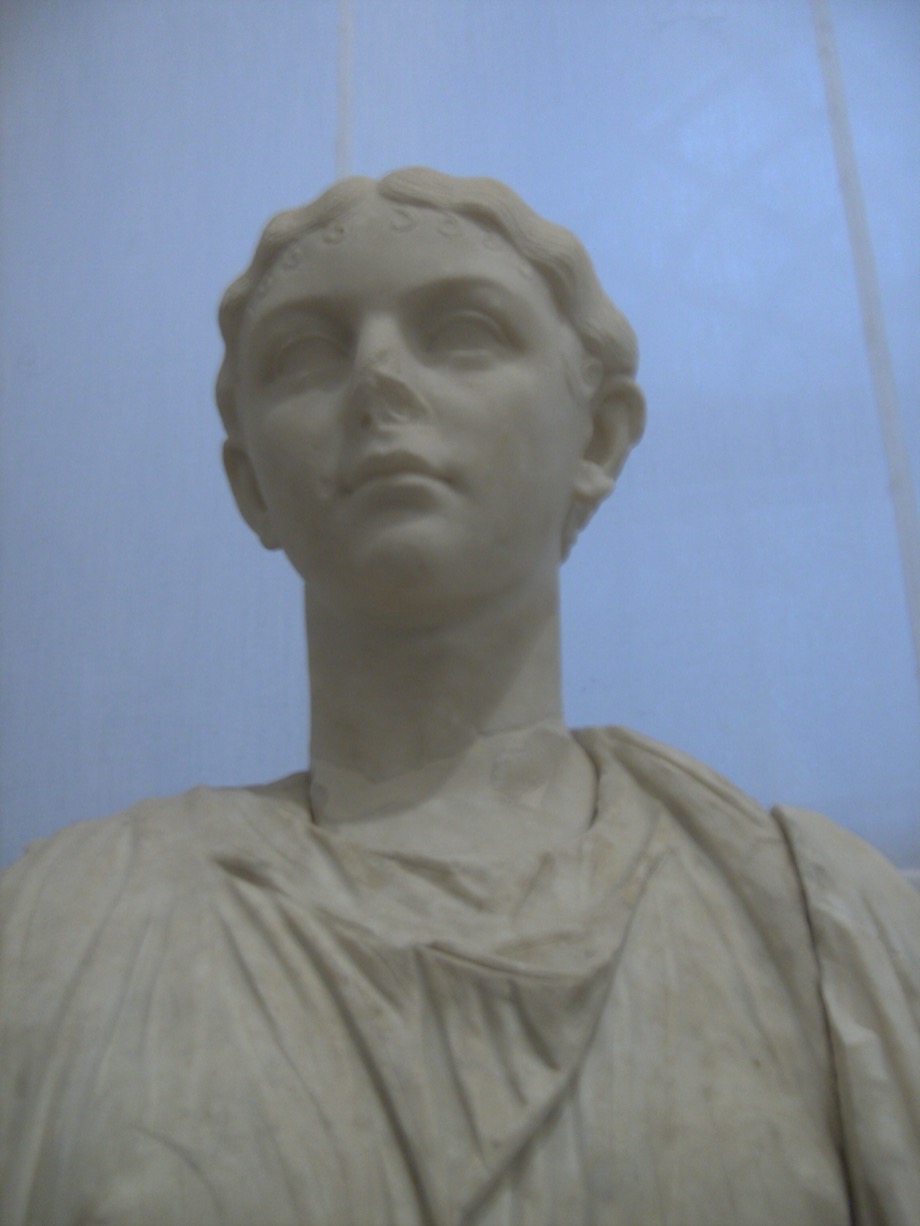
Portrait of Livilla
Eight Years, Undetected
For eight years, nobody knew. Claudia Livia Julia — called Livilla — was the daughter of Antonia Minor and Drusus the Elder, sister to Germanicus and the future emperor Claudius, and wife to her own first cousin, Drusus the Younger, son of the emperor Tiberius. It was a marriage built entirely for dynastic architecture, and Livilla treated it the same way: as a structure to be worked, not a bond to be honored. Sometime in the 2020s CE she became the lover of Sejanus, the Praetorian prefect whose ambition had already begun to outgrow his rank, and together they built something colder than an affair. In 23 CE, using a eunuch named Lygdus as the instrument, they poisoned Drusus the Younger slowly enough that his death read as illness. Tiberius mourned a son. No one suspected a murder.
That is the detail that defines her: not the affair, not even the killing, but the patience. Sejanus petitioned to marry her in 25 CE — Tiberius refused, unwilling to raise an equestrian that high — and still Livilla waited, still nothing surfaced. The plot held for eight years, through a divorce Sejanus arranged on her behalf, through a formal rejection, through the ordinary suspicion of a household that watched everyone. It came apart only in 31 CE, in the same investigation that destroyed Sejanus, when Livilla's own mother uncovered the evidence — reportedly through the testimony of Livilla's confidante Eudemus — and delivered it to Tiberius herself. Antonia did not wait for a trial. She locked her daughter in a room and let her starve, sparing the family a public execution by administering a private one.
Read plainly, against a Rome that preferred its women decorative, Livilla looks like ENTJ: a woman who identified the one lever capable of moving her out of a marriage that bored her and into the center of imperial power, and who pulled it with a coldness that never once slipped for nearly a decade.
She did not fall in love and lose herself. She calculated a future and built toward it, one dose at a time, for eight years.
The Slow Administration of a Poison
Dominant Te organizes toward a result and does not flinch from the machinery required to get there. Livilla's poisoning of Drusus the Younger was not a single desperate act — it was a sustained operation, run through a household intermediary, calibrated to produce a death that looked like nature rather than murder. That takes more than motive. It takes the discipline to keep administering a lie in small doses, year after year, while behaving at court and in the family as a grieving widow rather than a killer watching her plan mature.
The same instinct shows in how she treated the marriage itself. Livilla did not simply resent being paired with a cousin for dynastic convenience — she reorganized the arrangement around her own interest, first by taking Sejanus as a lover, then by making herself indispensable to his ambitions, then by removing the one obstacle, her husband, that stood between the current arrangement and the one she wanted. Every step was a decision about structure: who occupies which position, and what has to change for her to occupy a better one.
Even the choice of Lygdus as instrument reads as Te logic — delegate the mechanism, keep her own hands clean, control the outcome without owning the visible act. It is the same managerial instinct an ENTJ brings to any project, applied here to the ugliest possible end.
A Throne Seen Years Before It Existed
Auxiliary Ni supplies the destination Te works toward, and Livilla's destination was strikingly specific: not merely freedom from an unwanted marriage, but a future in which Sejanus rose to formally join the imperial family, with her installed beside him as empress in fact if not yet in name. That is not the horizon of a woman swept up in an affair. It is the horizon of someone who looked at the dynasty's power structure, identified where the actual authority was consolidating — around Sejanus, not around her middling husband — and repositioned herself years in advance of the outcome she wanted.
The 25 CE petition for marriage, which Tiberius refused, shows the plan already in motion two years after Drusus's death — meaning Livilla and Sejanus had been building toward this specific configuration of power since before the poisoning even happened. Ni thinks in long arcs and single, decisive images of what could be; Livilla held one image — herself as the wife of Rome's most powerful man outside the emperor — steadily enough to organize a decade of her life around reaching it, undeterred by a formal rejection that would have ended a less patient plan.
An Affair Conducted Inside a Watched House
Tertiary Se surfaces as a taste for risk taken in the open rather than at a safe remove. The Julio-Claudian household was not a place where an affair could stay private for long — everyone in it was watched, by rivals, by informers, by Tiberius's own suspicion of anyone who orbited his son too closely. Livilla conducted her relationship with Sejanus inside that house anyway, under the same roof as the husband she was simultaneously poisoning, for years. That is not the caution of someone managing risk from a distance. It is the nerve of someone comfortable operating in close physical proximity to the exact danger she was creating.
A Mother's Verdict, Not a Court's
Inferior Fi is the function Livilla's story punishes rather than the one it showcases. She treated her own moral position with something close to indifference — the murder of a husband, the betrayal of a father-in-law who trusted her, the exploitation of family loyalty as camouflage, none of it seems to have registered as a cost worth weighing against the gain. That is precisely what an underdeveloped inferior Fi looks like in a dominant-Te type under pressure: personal values collapse into whatever the strategy requires.
It is fitting, then, that the reckoning came from the one relationship built on values rather than strategy. Antonia Minor did not report her daughter to a court or wait for Roman law to run its course — she delivered a private, absolute moral judgment and enforced it herself, locking Livilla away to starve rather than let the family's shame become a public spectacle. Livilla's own inferior Fi never surfaced to stop her; her mother's fully developed sense of what the family's honor demanded is what finally did.
Why ENTJ Over ESFJ
Why not ESFJ?
An ESFJ reading would cast Livilla as a woman carried along by devotion — a wife undone by love for Sejanus rather than a planner who chose him as the instrument of her own advancement. But nothing in the record supports a reactive, relationship-first motive sustained for eight years. The poisoning was gradual, deniable, and precisely timed to a political goal; the years-long silence afterward required exactly the kind of structural patience Fe-dominant impulsiveness does not produce. This is a genuinely close call, since the sources were written by men with every incentive to flatten a woman's ambition into a man's seduction — but the sustained architecture of the plot argues for calculation over swept-along devotion.
The clearest evidence is the shape of the plan itself. A woman acting from relational devotion does not need her husband dead for eight quiet years before the man she loves can even ask to marry her — she needs him gone, quickly, however it can be managed. Livilla's plot was engineered around a specific future position, refined even after a formal rejection in 25 CE, and executed with a delegated instrument that kept her exposure minimal throughout. That is the fingerprint of Te-Ni ambition wearing the appearance of a marriage, not a marriage that ambition merely overtook.
Connected Figures
Further Reading
- The Annals — TacitusThe primary account of the poisoning plot and the 31 CE investigation that exposed it.
- The Twelve Caesars — SuetoniusThe Life of Claudius and Life of Tiberius supply the surrounding family context.
- Roman History — Cassius DioAdditional detail on Sejanus's downfall and the palace investigation.
- Caligula: The Corruption of Power — Anthony BarrettTraces how the household's dynamics shaped the generation that followed.
