 Historical Figure MBTI
#636 · 5-11-26 · The Julio-Claudians
Sejanus
Praetorian Prefect · The Instrument Who Became the Rival
c. 20 BCE — 31 CE
7 min read
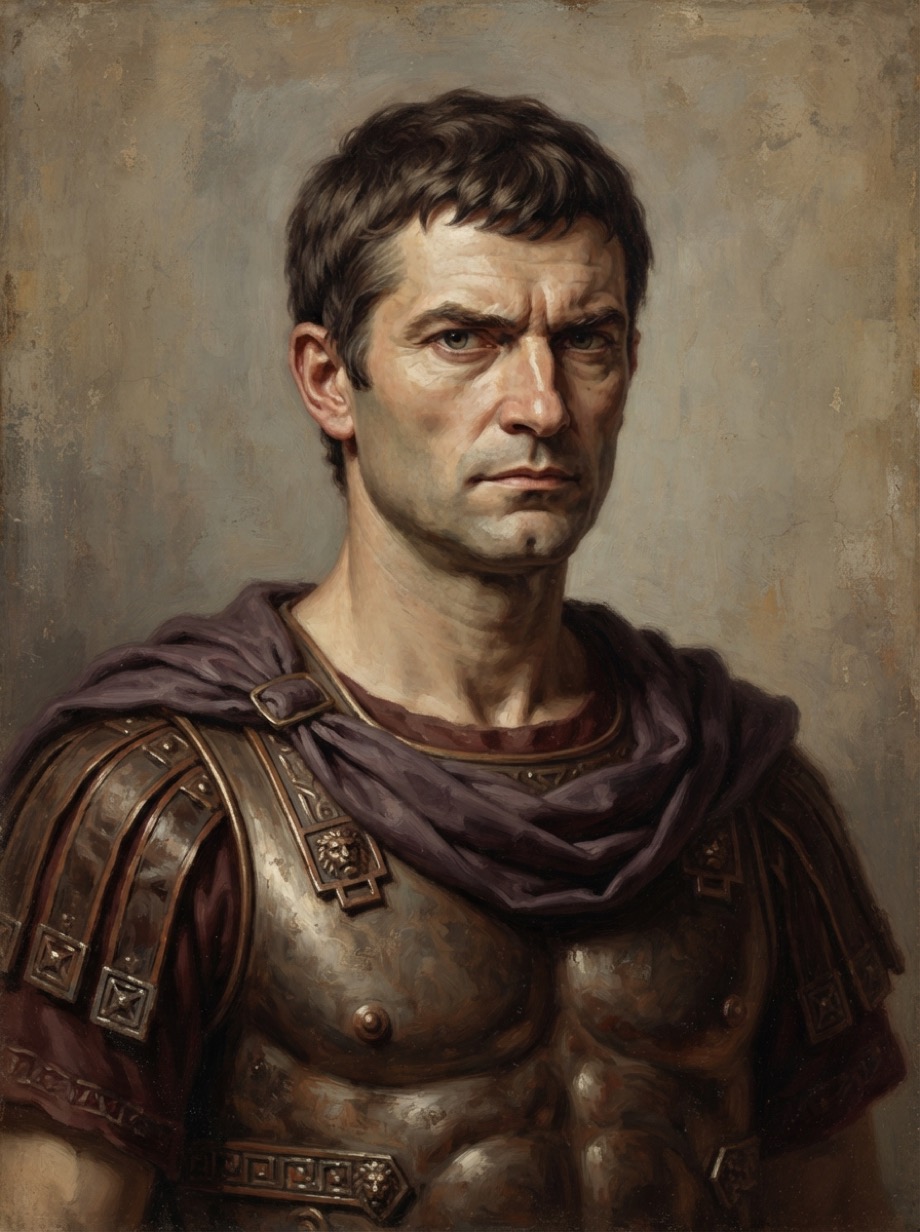
AI-assisted Portrait of Sejanus
The Camp Outside the Walls
For nearly two centuries the Praetorian Guard had existed as a scattered convenience — nine cohorts billeted around Rome and its suburbs, useful but diffuse, nobody's weapon in particular. Sejanus looked at that arrangement and saw waste. He proposed a single fortified camp, the Castra Praetoria, just outside the city walls, and Tiberius — trusting, or simply tired — approved it. In one stroke, Rome's most lethal military force went from a loose bodyguard to a concentrated instrument with one address and one commander. That commander was Sejanus.
It was the signature move of a man who did not wait for power to be handed to him in finished form; he built the machinery first and let the title catch up. Son of an equestrian family, without the pedigree of the Julio-Claudians he served, Sejanus rose by making himself indispensable to Tiberius and then, after 26 CE, effectively irreplaceable — the emperor withdrew to the island of Capri and let his prefect run Rome by proxy. What followed was a decade of engineered prosecutions, a seduction that became a poisoning conspiracy, and finally a fall so total it erased his name from public monuments within the year.
He is, in outline, the purest case the archive has of ENTJ ambition running past every restraint that might have checked it — a man who read institutions like circuitry and treated people as components.
Sejanus did not seek Tiberius's favor so much as Tiberius's function — and having captured it, an ENTJ built dominant Te into the empire's only working government.
The Architecture of Control
Consolidating the Guard into the Castra Praetoria was not an isolated flourish; it was the method Sejanus applied everywhere. Dominant Te organizes the external world into systems and then seizes the levers, and Sejanus treated Roman politics as exactly that kind of system — a set of levers waiting for a hand decisive enough to pull them all at once.
When Tiberius retreated to Capri in 26 CE, most courtiers would have read the vacancy as danger — the emperor gone, the succession unsettled, the Senate restless. Sejanus read it as infrastructure. He became the sole channel through which petitions, appointments, and information reached the emperor, and he built that chokepoint methodically: cultivating informers, staffing key offices with loyalists, making himself the answer to the question "who do I need to see." By the late 20s CE he was, in practical terms, running the empire's day-to-day machinery — not through any office the constitution recognized, but because he had made the machinery run through him.
Even his ruthlessness had an executive quality. The prosecutions he engineered against Agrippina the Elder's family were not crimes of passion; they were the clearing of obstacles from a org chart, conducted with the same cold efficiency he'd used to consolidate the Guard.
A Decade's Patience
Te needs a destination, and Sejanus's auxiliary Ni supplied one early and held it without wavering for more than ten years. He did not stumble toward proximity to the throne; he saw the shape of it from the start and worked backward from that endpoint, discarding whatever stood between himself and a marriage into the imperial family.
The clearest evidence is the sequence itself. Long before any single act looked treasonous on its own, Sejanus was positioning: cultivating Tiberius's trust, isolating Germanicus's family as rivals to the succession, drawing close to Livilla — the wife of Tiberius's own son Drusus the Younger — years before that closeness paid off. Each move made sense only as part of a pattern invisible to contemporaries who saw merely a capable, loyal prefect. That is Ni's signature: a private, unstated vision, executed patiently, disclosed only in the acts that finally reveal its logic.
By the time he sought formal betrothal into the dynasty in 30–31 CE, the ambition was no longer deniable — but by then it had already been the organizing thread of his entire career.
Nobody Was Off-Limits
Inferior Fi is the function Sejanus almost never used, and the entries missing from his biography say as much as the ones present. There is no recorded moment of private scruple, no letter of doubt, no gesture that suggests an inner tribunal weighing what he owed the people he destroyed. Livilla was Drusus the Younger's wife before she was Sejanus's accomplice; he took her as a lover and, per Tacitus, enlisted her in poisoning her own husband — a plot that required her to betray a marriage and a family in the same act that advanced his position. Sejanus does not appear to have weighed the cost to her, only its utility to him.
The same flatness marks his campaign against Agrippina the Elder and Germanicus's children — people whose only offense was standing between him and the succession he wanted. An ENFP or an INFJ with strong Fi in the stack might have felt the moral weight of destroying an entire branch of the imperial family; Sejanus processed it as we'd expect from someone whose feeling function sits last and weakest — a cost to be paid, not a wound to be felt.
That absence of inner restraint is precisely what let a Te-Ni engine run as far as it did. Nothing internal ever pulled the brake.
Why ENTJ Over ISTJ
Why not ISTJ?
Sejanus can look procedural from a distance — a careful administrator quietly reorganizing a bodyguard's barracks. But that reading mistakes scale for diligence. Concentrating the Guard into the Castra Praetoria was not maintenance; it was a decisive seizure of structural leverage, and Sejanus pursued it in service of a private, long-range vision — marriage into the imperial family, and beyond that, perhaps the throne itself — that an ISTJ's dutiful, present-focused Si would never generate. ISTJ preserves systems it inherits; Sejanus built one to seize what wasn't his.
What separates ENTJ from the more cautious reading is exactly the combination the record keeps supplying: bold, structural action (Te) aimed at a distant, privately held goal (Ni), pursued with no visible inner check (inferior Fi). ISTJ explains the competence. It cannot explain the ambition, or the ruthlessness required to chase it for over a decade without flinching.
Connected Figures
Further Reading
- The Annals — TacitusThe primary detailed ancient account of Sejanus's rise, conspiracy, and fall.
- The Twelve Caesars (Life of Tiberius) — SuetoniusA corroborating, more anecdotal account of the Sejanus affair.
- Roman History — Cassius DioA third ancient source adding further detail on the Praetorian consolidation and purge.
- Tiberius the Politician — Barbara LevickModern analysis of the Tiberius-Sejanus power-sharing arrangement and its collapse.
