 Historical Figure MBTI
#646 · 5-12-26 · The Julio-Claudians
Agrippina the Younger
Kingmaker · Empress-Mother · Architect of a Throne
15 — 59 CE
7 min read
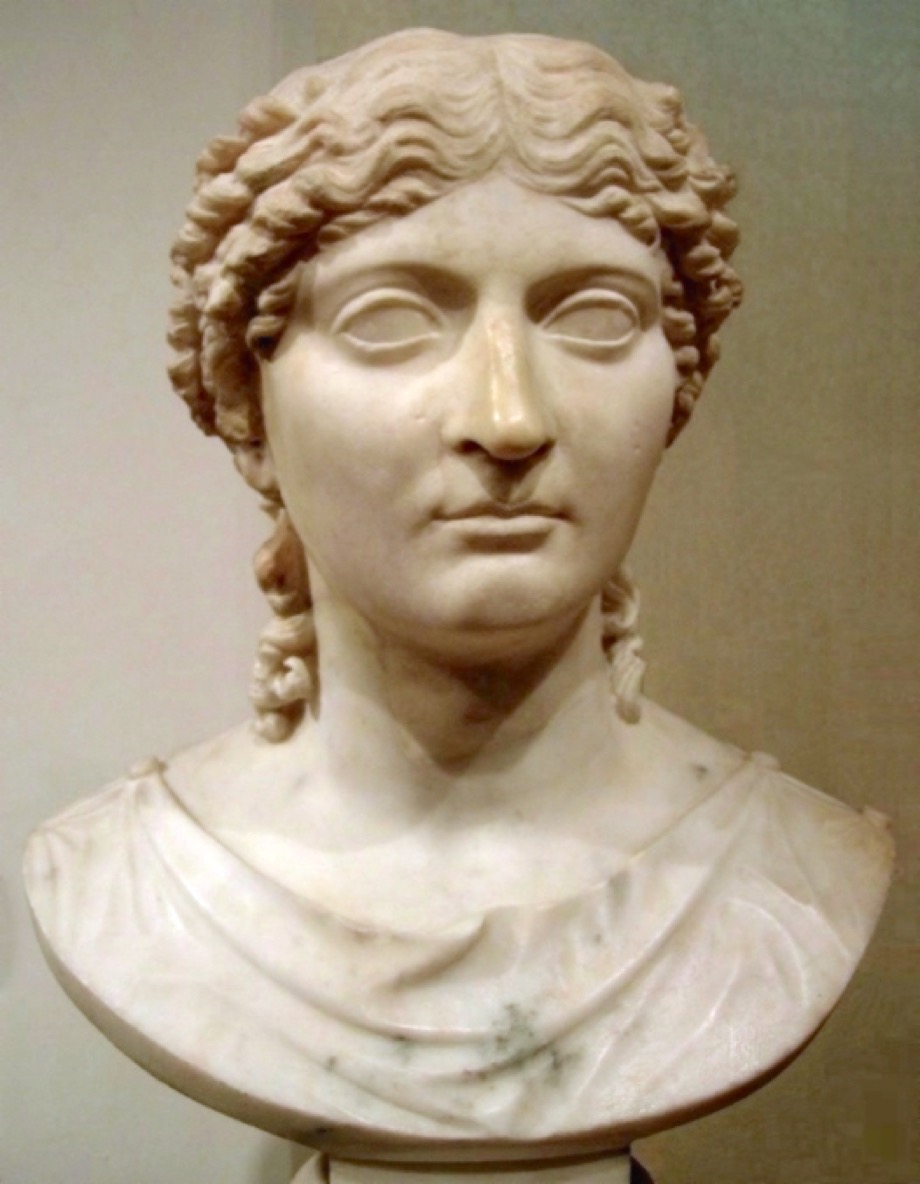
Portrait of Agrippina the Younger
The Woman Who Built an Emperor
Agrippina the Younger did not seize power in a single dramatic stroke. She built it, brick by brick, across three reigns that tried to destroy her. Tiberius scattered her family and drove her mother to starve herself in exile. Caligula, her own brother, banished her to a rocky island and forced her to carry the urn of a murdered lover back to Rome in her lap. Claudius, her uncle, married her — and she made that marriage the load-bearing wall of a decade-long plan to put her son on the throne of the world.
What separates Agrippina from every other palace schemer of the Julio-Claudian court is the horizon of her thinking. She was not reacting to threats as they arose; she was working from a fixed image of an endpoint — Nero, purple-clad, unchallengeable — that she had apparently held since he was a child too young to know his own name would one day be Caesar. Every marriage, adoption, and poisoning that followed was a rung on a ladder she had already seen the top of. That is the signature of an ENTJ: a commanding, structural intelligence that treats the future as a plan to be executed rather than a mystery to be discovered as it comes.
Agrippina did not want influence. She wanted architecture — a throne built to her own specifications, with her son as its façade and herself as the load-bearing structure behind it.
The Machinery of Ascent
Agrippina's Te showed up first as pure logistics. Recalled from exile by Claudius, she did not simply reenter court life — she engineered a marriage to her own uncle, a union so irregular under Roman law that the Senate had to pass special legislation to permit it. She then maneuvered the executioner Lucius Vitellius into publicly proposing the match on her behalf, so that it arrived as the Senate's idea and not her ambition. This is the tell of dominant Te: she did not merely want the outcome, she engineered the mechanism that would deliver it while leaving no fingerprints.
Once inside the palace, she moved with the same systemic thoroughness. She had the tutor Seneca recalled from exile specifically to shape Nero's education and public image. She arranged Nero's betrothal to Claudius's daughter Octavia, forced Claudius to adopt Nero ahead of his biological son Britannicus, and had Nero granted the toga virilis early so he could appear before the Senate and the Praetorian Guard as an adult heir while Britannicus was still visibly a child. Each move closed off an alternate succession before it could form.
The culmination was the coup itself: the poisoned mushroom dish in 54 CE, timed and stage-managed so that Claudius's death and Nero's presentation to the Praetorians happened within hours, with Britannicus kept from public view until the succession was irreversible. Whether or not every detail Tacitus records is precise, the operational shape is unmistakably Te — she treated an empire's succession as a project with a critical path, and she executed it.
The Long Game, Held for Years
Ni gave Agrippina's Te its target. She held the vision of Nero as emperor for the better part of two decades before it was realized — through her own exile under Caligula, through Claudius's marriage to Messalina, through years in which her son's claim to anything was purely theoretical. That kind of patience is not native to a purely tactical mind; it belongs to someone who sees a single, compressed, non-negotiable image of the future and refuses to let present circumstances dislodge it.
It is visible, too, in how she read Claudius. Rather than compete with Messalina's faction on Messalina's terms, Agrippina waited until Messalina's own recklessness — her scandalous "marriage" to Gaius Silius while still wed to the emperor — created the opening, then moved decisively once the opportunity matched the shape she had already been waiting for. She did not manufacture the crisis; she recognized it as the one she had been positioned to exploit.
Coinage from Nero's early reign shows Agrippina's profile facing his, an unprecedented visual claim of co-rule for a Roman woman. That image was not vanity. It was the public unveiling of a structure she had been building in her head since before Nero could walk — proof that the plan long precedes the execution.
A Nerve for the Moment
Se surfaced as physical nerve at the exact instants when the plan met reality. When Nero, having broken from her control, staged a self-sinking boat to drown her in the Bay of Naples in 59 CE, Agrippina swam to shore through the wreckage — a fifty-something woman with no illusions left about her son, acting on pure bodily instinct to survive a collapsing ceiling and a folding hull.
It appears earlier too, in the sheer physical audacity of returning from Caligula's island exile carrying her murdered lover's ashes without visible collapse, and in her willingness to appear in public, in armor, reviewing troops beside Claudius on the Rhine frontier as if she, and not just her husband, commanded them. She used presence — literal, bodily, visible presence — as a tool of authority, not merely words or decrees.
But Se in an ENTJ is tertiary, not dominant: it is muscle in service of the plan, not the plan itself. Once ashore after the shipwreck, she did not flee or improvise a new strategy. She sent word to Nero as though nothing had happened, buying time within a structure she still, even then, believed she could out-maneuver.
The Final, Unguarded Word
Fi is the function Agrippina spent a lifetime keeping subordinate, and its scarcity is what makes its one great eruption so haunting. When Nero's soldiers finally cornered her to finish what the boat had failed to do, she is said to have bared her abdomen and told them to strike her womb — the place, she said, that had borne him. It is the single moment in the sources where personal feeling, not strategy, drives her words.
For most of her life, that inner register stayed nearly silent, subordinated to the machinery of Te and the fixed image of Ni. She endured her mother's death, her brother's cruelty, and her husband's court without recorded outbursts of private grief; whatever she felt, she metabolized into the next calculated move rather than into confession or withdrawal.
That the inferior function surfaced only at the moment of death, aimed as a final rebuke rather than a plea, is consistent with how inferior Fi tends to erupt in dominant Te types: not as sustained emotional expression, but as one sharp, unguarded, almost involuntary statement of value when every strategic option has finally run out.
Why ENTJ Over ESTJ
Why not ESTJ?
ESTJ describes a mind that enforces and administers structures that already exist — chains of command, laws, precedent — through Te paired with Si's memory of what has worked before. Agrippina did not enforce Roman succession; she rewrote it, engineering an irregular imperial marriage, an unprecedented co-adoption, and a public claim to female co-rule that had no real Roman precedent to draw on. That requires Ni's capacity to hold a wholly novel end-state in mind for years, not Si's inclination to preserve and administer the established order.
The distinction matters because Agrippina's story is often flattened into simple ambition or cruelty, when what the sources actually describe is architecture. An ESTJ climbs an existing ladder efficiently. Agrippina built a ladder that did not exist — a woman's face on imperial coinage beside the emperor's, a throne passed by adoption over a natural son — and held the blueprint in her head long before she had the materials to build it. That is Ni in service of Te, vision converted into policy, and it is what makes her ENTJ rather than ESTJ.
Connected Figures
Further Reading
- The Annals of Imperial Rome — TacitusThe primary narrative source for Agrippina's rise, marriage, and murder, written with a hostile but detailed eye.
- The Twelve Caesars — SuetoniusBiographical anecdotes on Claudius and Nero that fill in court gossip Tacitus omits.
- Agrippina: Sex, Power, and Politics in the Early Empire — Anthony BarrettThe standard modern biography, sifting the ancient sources' bias from the documented political record.
- Roman History — Cassius DioA later, sometimes divergent account of the same events, useful for cross-checking Tacitus.
