 Historical Figure MBTI
#655 · 5-12-26 · The Julio-Claudians
Burrus
The Soldier-Prefect · Half of Nero's Brief Restraint
died 62 CE
3 min read
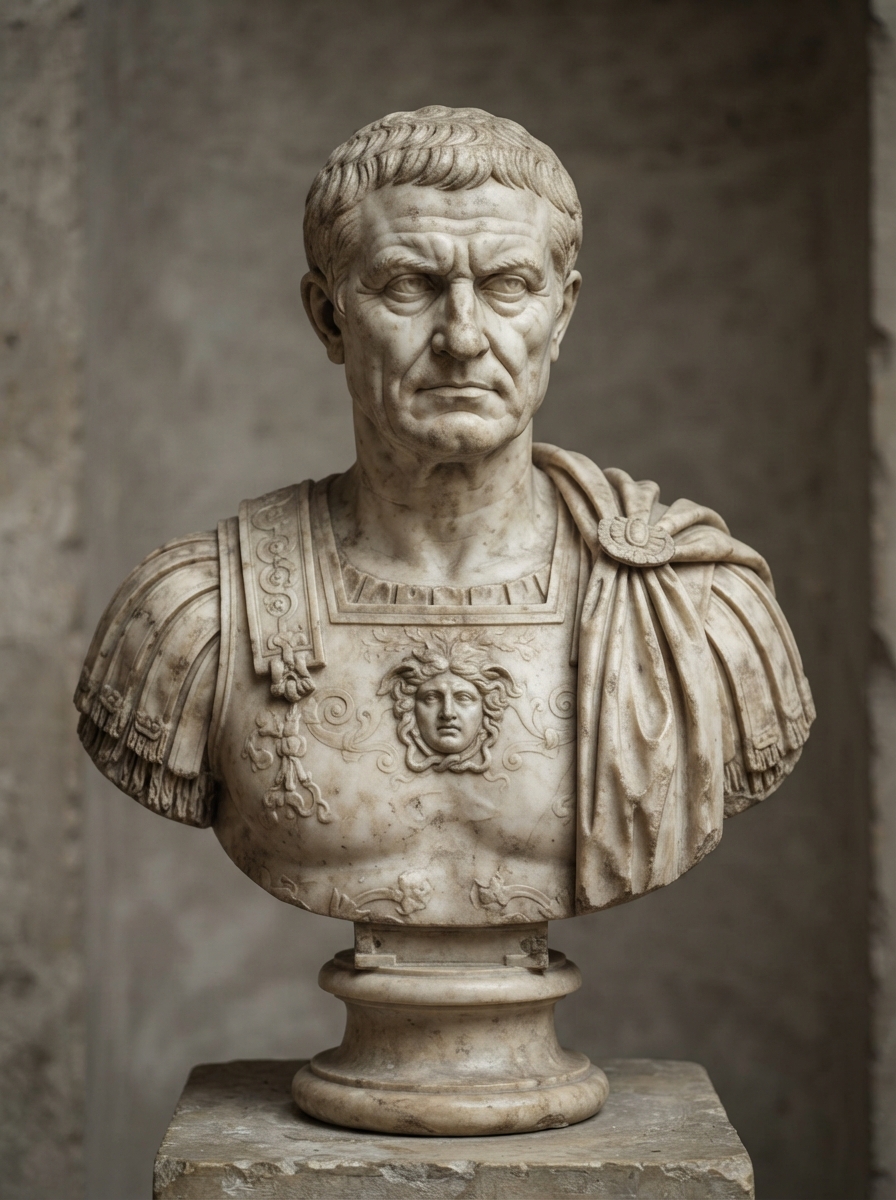
AI-assisted Portrait of Burrus
The Man Who Held the Watch
Sextus Afranius Burrus is remembered, when he is remembered at all, as the quieter half of a famous pairing — Seneca got the philosophy, Burrus got the sword, and history has generally preferred to write about the man with the pen. But it was Burrus who held the more dangerous job. In 51 CE, Agrippina the Younger placed him alone at the head of the Praetorian Guard, unifying a command that had been split for decades — the same structural move that had once made Sejanus the most feared man in Rome. Burrus did not use it that way. He used it to keep the peace, not to seize it.
For most of a decade he did the unglamorous work of propping up a throne he had not built and did not entirely trust: managing the Guard, managing the young emperor, managing the widening gap between what Nero wanted and what the state could survive. He was not a visionary and made no claim to be one. He was a soldier who had been handed an administrative problem and solved it, day after day, through procedure rather than persuasion — until the day arrived that no procedure could solve.
Psychological Verdict
Burrus reads as an ISTJ — a temperament built on established fact, concrete duty, and distrust of improvisation. He inherited the most volatile institution in Rome, one instrument away from becoming a kingmaker in its own right, and ran it like an administrator rather than a politician: consistent discipline, unified chain of command, no personal faction inside the ranks. That is dominant Introverted Sensing at work — a preference for the tested method over the clever gambit, for order that has already proven itself rather than order improvised on the spot. His auxiliary Extraverted Thinking shows in how he and Seneca actually restrained Nero for those first years: not through inspiration, but through practical checks — audiences managed, correspondence filtered, decisions routed through people who could absorb the emperor's worse instincts before they became policy.
The limits of that same wiring show in 59 CE, when Nero resolved to have his own mother killed. Ancient sources describe Burrus present, uneasy, and reportedly refusing to have the Guard do the killing directly — a flicker of Introverted Feeling surfacing under pressure. But he neither resigned his post nor moved against the emperor he served; the job, once assigned, still needed doing, and doing the job was the frame he never stepped outside of. It is a very ISTJ kind of tragedy: the competence that makes a system function is the same competence that keeps a person inside it long after the system stops deserving them. Burrus died in 62 CE — poison was whispered by some ancient writers, illness is just as plausible — and with Seneca's retirement following soon after, the "good Quinquennium" ended with him. He had not steered Nero's reign so much as delayed its collapse, one procedural decision at a time.
Connected Figures
Further Reading
- The Annals of Imperial Rome — TacitusThe primary ancient account of Burrus's tenure and Nero's early reign.
- Nero: The End of a Dynasty — Miriam GriffinThe standard modern study of Nero's reign, including the Seneca–Burrus regency.
- The Twelve Caesars — SuetoniusCourt-level anecdote and character detail on the Julio-Claudian succession.
