 Historical Figure MBTI
#650 · 5-12-26 · The Julio-Claudians
Seneca
Stoic Philosopher · Tutor to a Tyrant · The Gap Between Virtue and Life
4 BCE — 65 CE
8 min read
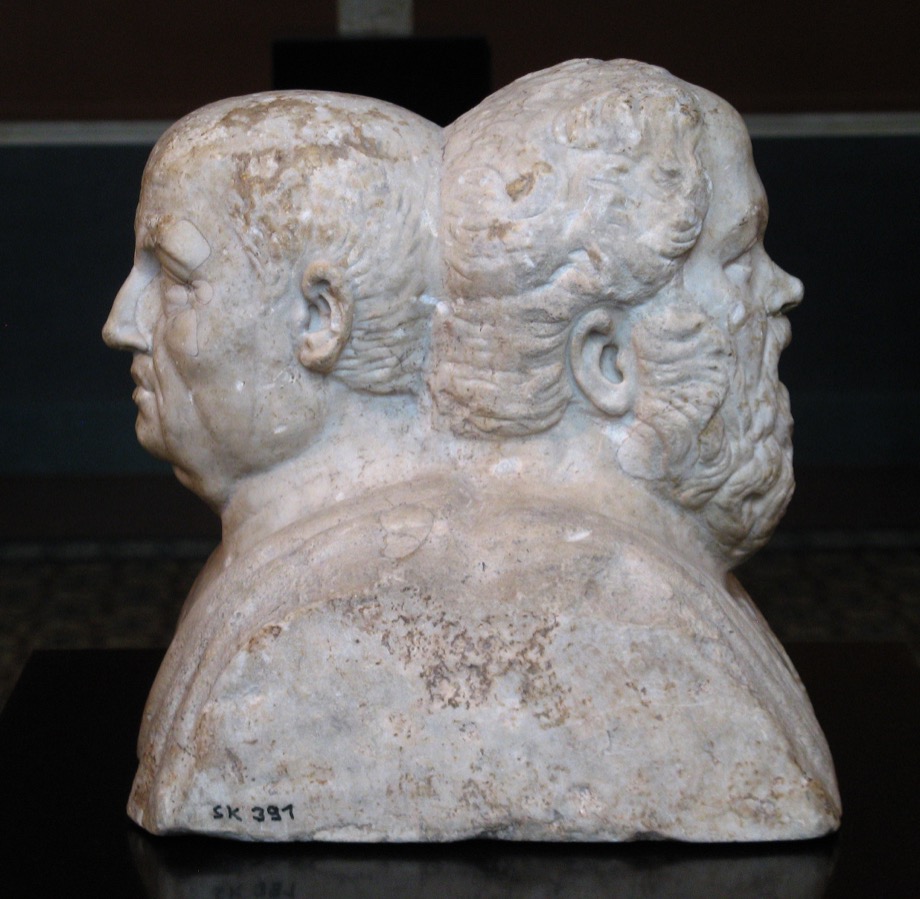
Portrait of Seneca
The Philosopher Who Stayed in the Room
Seneca wrote, more clearly and more often than almost anyone in antiquity, about what a good life required: indifference to wealth, contempt for fear, a steady inward composure that no tyrant's whim could touch. He also spent nearly a decade as the tutor, speechwriter, and moral cover for the man who became one of Rome's most notorious tyrants — and he did it while amassing a fortune large enough to help spark a rebellion in Britain when he called in the loans. The distance between the page and the man is not incidental to who he was. It is the whole story.
That gap is legible as INFJ — an interior moral architecture (Ni) so coherent it could generate the Letters to Lucilius almost as a closed system, paired with a social fluency (Fe) that let him believe, for years, that being inside the room with Nero was a form of stewardship rather than complicity. He was not a hypocrite in the crude sense. He seems to have believed both things at once: that virtue was the only good, and that his proximity to power was doing good work. The second belief curdled slowly, and by the time it collapsed — Agrippina murdered, Nero unrestrained, Seneca himself ordered to die — the writing was still standing, more or less intact, as if it belonged to someone else.
An INFJ vision of virtue this exacting does not usually survive contact with a throne room — Seneca's dominant Ni built the architecture; his Fe talked him into thinking he could inhabit the throne room without it collapsing.
A System Built From the Inside Out
The Stoic corpus Seneca produced — the Letters to Lucilius, On the Shortness of Life, On Anger, the tragedies — is remarkable less for its originality than for its consistency. Across decades and wildly different circumstances (exile on Corsica, imperial favor, retirement, condemnation), the same architecture holds: externals are indifferent, death is not to be feared but rehearsed, the only wealth worth having is the mind's own order. This is Ni doing what it does best — building an internal model so unified that it can absorb any new fact without needing to be rebuilt. Seneca did not revise his philosophy to fit his circumstances; he kept explaining his circumstances in terms of a philosophy that had already been settled years earlier.
That same interior certainty shaped his sense of what Nero's reign could become. Seneca and Burrus governed the empire's early years with real competence — the "good quinquennium" was not a myth, and Seneca seems to have held a genuine long-range vision of a Rome guided quietly by philosophical restraint, with the emperor as a instrument rather than the architect. It was a vision he never abandoned even as the evidence against it accumulated. Ni holds a picture and waits for the world to catch up to it; Seneca kept waiting years past the point when the picture was falsified in front of him.
It shows too in the manner of his death. When the order to die arrived in 65 CE, Seneca staged it — the opened veins, the hemlock, the steam bath, the friends gathered to record his last words — as if it were the final proof of a thesis he had been composing his whole life. That the argument and the performance be perfectly aligned mattered enormously to him; whether the life that preceded it had earned the argument mattered rather less.
The Voice That Made Power Sound Reasonable
Fe is the function that reads a room and speaks the words that hold it together, and Seneca used it to remarkable effect at the center of the Roman state. He drafted Nero's speeches, shaped the young emperor's public image, and for years supplied the moderating tone that made an unstable regime look, from outside, like a stable one. When Agrippina recalled him from exile to tutor her son, she was buying exactly this — a mind that could make the throne sound wise.
That same instinct is what let him rationalize staying. Fe wants harmony and influence over withdrawal; it will find a story in which remaining close to the source of harm is itself the responsible, even virtuous, choice. Seneca appears to have told himself this story for years — that his presence restrained Nero more than his absence would have helped anyone. The clearest, and worst, evidence of where that reasoning led is 59 CE: after Nero had Agrippina murdered, Seneca is reported to have helped compose the letter to the Senate justifying it. The philosopher who had written so precisely about the psychology of anger and cruelty put his own voice in service of a matricide's cover story.
He did eventually pull back, retiring from public life as Nero's excesses became impossible to narrate around — but the retreat came only once the social fabric he had spent a decade shaping had already frayed past repair, and it did nothing to undo the years of cover he had already provided.
The Argument He Could Always Win With Himself
Seneca's prose is prized for its precision — short, aphoristic sentences that dissect a psychological state (anger, grief, the fear of death) with surgical clarity. That is Ti in its tertiary role: sharp enough to build airtight local arguments, but subordinate to the larger Ni vision and Fe social sense that actually steered his life. He could reason his way, brilliantly, to the conclusion that a Stoic should meet death without flinching. He could also reason his way, less admirably, to the conclusion that a Stoic tutoring an emperor was performing a public service rather than laundering a tyranny.
The same faculty is visible in the most uncomfortable fact of his career: a philosopher who wrote entire essays on the corrupting danger of wealth accumulated one of the largest private fortunes in Rome, largely through interest-bearing loans, including sums lent into Roman Britain whose sudden recall is reported to have helped ignite the Boudican revolt. He had, no doubt, a logically consistent account of why this was compatible with his teaching — money itself is indifferent, only attachment to it corrupts, and so on. Ti is very good at producing that account. It is less good at noticing when the account exists only to protect a conclusion the person has already decided to keep.
The Body's Argument, Finally Accepted
Inferior Se surfaces under acute pressure, and pressure is exactly what the Pisonian conspiracy of 65 CE delivered. Seneca's involvement in the plot against Nero was thin — probably peripheral, possibly nonexistent — but Nero had wanted an excuse for some time, and the order to die arrived regardless. There was no room left for interior deliberation; the moment demanded a physical, present-tense act.
What is striking is how deliberately Seneca staged that act as a bodily performance — the veins opened, the hemlock taken when bleeding proved too slow, the final steam bath, arranged in front of witnesses so the scene itself would testify. It is Se conscripted into the service of Ni: a lifetime of abstract argument about how to face death converted, at the very end, into a single physical tableau meant to prove the argument had been sincere all along. It is the one moment in his life where the philosophy and the man are asked to occupy the same room with no possibility of talking their way out — and by most contemporary accounts, including Tacitus's, he met it with genuine composure.
Why INFJ Over INFP
Why not INFP?
An INFP's dominant Fi holds personal values as non-negotiable identity — compromising them, even quietly, even for a larger good, produces an internal rupture an INFP struggles to tolerate for long. Seneca did the opposite for the better part of a decade: he treated proximity to Nero's court as a stewardship project, a way to bend power toward virtue from the inside, and his Fe let him keep believing that story well past the point an Fi-dominant would have walked away or gone silent in protest. His writing is impersonal and systemic — moral philosophy addressed to the world, not a private confession — which is Ni-Fe architecture, not Fi-Se. The compromise was not a betrayal of his values from outside; it was generated by the values themselves, filtered through a function built to manage appearances and relationships rather than guard a private conscience.
INFJ explains both halves of Seneca without needing to excuse either: the extraordinary coherence of the philosophical system, and the extraordinary length of time he spent living against it. An INFP would have found the court unbearable far sooner. Seneca found it, for years, survivable — even purposeful — and that is the diagnosis, not a mitigation.
Connected Figures
Further Reading
- Letters from a Stoic — SenecaThe primary source — his own moral philosophy in his own voice.
- The Annals of Imperial Rome — TacitusThe essential contemporary account of Nero's court, and of Seneca's role in it.
- The Greatest Empire: A Life of Seneca — Emily WilsonA biography that takes the contradiction between his writing and his life seriously.
- Dying Every Day: Seneca at the Court of Nero — James RommFocused study of the years of complicity and the final, staged death.
