 Historical Figure MBTI
#651 · 5-12-26 · The Julio-Claudians
Messalina
Empress of Scandal · The Bigamous Wedding · Executed at Twenty-Two
17/20 — 48 CE
10 min read
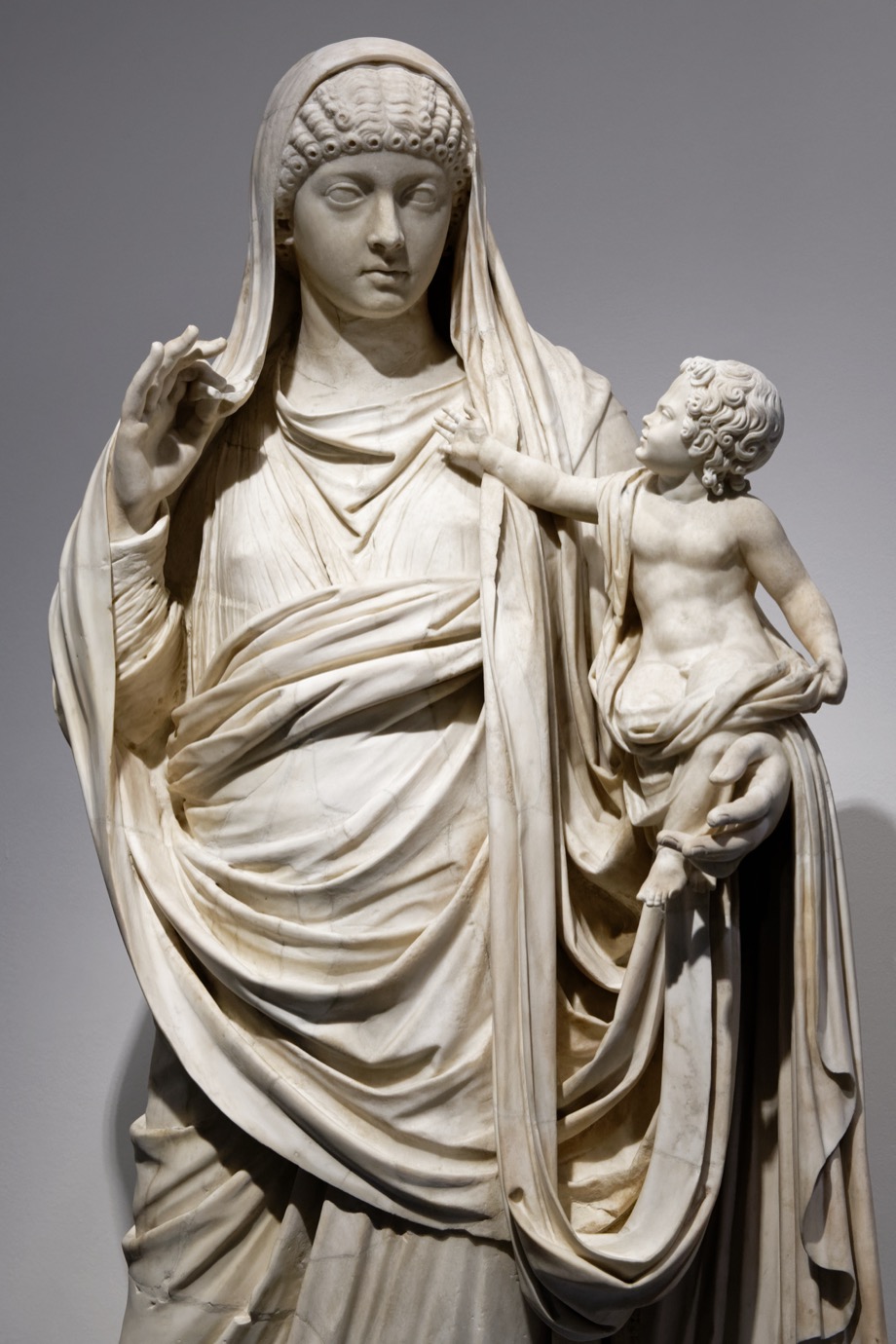
Portrait of Messalina
The Wedding at Rome, the Husband at Ostia
In the autumn of 48 CE, while the Emperor Claudius was twelve miles away at the port of Ostia inspecting the grain supply, his wife married someone else. Not secretly. Messalina staged a full wedding to the consul-designate Gaius Silius in Rome, with witnesses, a marriage contract signed, auspices taken, a wedding feast, and — Tacitus insists, though later writers doubted the detail could really have happened in daylight before an audience — the customary rites carried through to their conclusion. Word reached Claudius by courier. Within hours, acting through the freedman Narcissus before the emperor could change his mind, soldiers had Silius killed and Messalina cornered in the Gardens of Lucullus, where a tribune ran her through as she failed to complete her own suicide. She was perhaps twenty-two.
It is the one incident every hostile source agrees on, because it needed no invention: a woman who held more real proximity to power than almost anyone else alive did something with no possible upside, in public, while the danger was still walking around Ostia in the shape of her husband. Everything else in the record — the catalogue of lovers, the ruined rivals, the auctioned favors — comes to us from writers (Tacitus, Suetonius, Juvenal) who had every institutional reason to make an empress look monstrous, and modern historians such as Sandra Joshel have shown how neatly "sexual excess" served as the era's shorthand for female political overreach. Strip the moralizing away and one fact still stands unshaken: she did the bigamous marriage, in daylight, in front of Rome.
Read plainly, that single verified act is the whole psychological portrait. This was ESFP, and specifically an ESFP with no brake pedal: a woman who lived entirely in the present tense of what she wanted and who was in the room, acting on immediate feeling with total disregard for the five-years-out consequence a more strategic mind would have priced in instantly.
Messalina did not scheme toward a future. She married Silius on a Tuesday because she wanted to be married to Silius, and Tuesday was when the feeling and the opportunity were both in the room — ESFP, dominant Se, running with no governor on it at all.
The Wedding in Full View
Dominant Se is a hunger for the immediate and the physical, and Messalina's recorded behavior reads as almost a pure culture of it. She did not conduct her affair with Silius quietly, the way a cautious person angling toward some future advantage would have. She had him divorce his wife, moved into his house, and finally married him outright — each step a further public commitment, each one raising the stakes of getting caught, none of it buying her anything she did not already have except the immediate satisfaction of having it in the open. That is the signature of a sensing-dominant type running unchecked: the experience itself is the entire point, and the experience is better, more real, when it's witnessed.
The same pattern shows in what the sources — however unreliable in the particulars — agree was a recurring style: sudden, escalating, present-tense action rather than patient positioning. The freedman Narcissus, by contrast, worked exactly the way a strategist works — quietly building a case, waiting for the right moment, moving only when he could move fast and cleanly. He beat Messalina not because he had more power but because he had a plan and she had an appetite. Se without a strong judging function to slow it down doesn't calculate the field before acting; it reads the room in front of it and moves.
Even her death fits the pattern of a life lived at full sensory pitch and abandoned there. Given the chance to take her own life with some dignity on her mother's urging, she reportedly could not bring herself to complete the act — the same person who could stage a wedding in front of witnesses froze at the one moment that required calm, private, forward-looking resolve rather than an audience.
Wanting Silius, Regardless
Auxiliary Fi supplies the private conviction underneath the public spectacle: a fierce, personal sense of what she wanted, answerable to no external code and not particularly interested in being talked out of it. Ancient writers reduced this to simple appetite, but the more interesting reading is that Messalina's attachment to Silius, whatever its origins, seems to have functioned as a genuine and singular commitment rather than one more transaction. She did not merely take him as a lover among several; she moved to make the relationship total and exclusive, pushing his wife out and pushing toward marriage. That is Fi's fingerprint — an inward loyalty to a feeling so strong it overrides every external signal telling her to stop.
It is worth being honest about the source problem here rather than passing it over. Tacitus, Suetonius, and Juvenal wrote for audiences that found female sexual appetite in a woman with political power to be self-evidently monstrous, and centuries of retelling amplified the most lurid claims — nightly excursions to a brothel, contests of endurance with prostitutes — into something closer to legend than history. Scholars like Sandra Joshel have argued persuasively that "insatiable Messalina" was less a documented woman than a rhetorical figure built to discredit imperial women generally. What can be said with confidence, because multiple independent, otherwise hostile sources converge on it despite having every reason to disagree on lesser points, is only the one incident: the bigamous public wedding while Claudius was at Ostia. That core needs no embellishment to make the psychological case.
And that core is enough. A person guided by strong external strategy — a dominant Te or Ni type positioning for a longer outcome — does not marry her lover in a public ceremony while the man she would need to remove still commands the Praetorian Guard. Only a deeply felt, internally driven certainty, uncoupled from any external risk assessment, produces that specific act.
Wielding the Court, Crudely
Tertiary Te is a functional but unpolished tool for an ESFP — enough to get things organized and executed in the moment, not enough to sustain a coherent long-range strategy. Messalina clearly could operate the machinery of the imperial court: she is credited (again through hostile sources, but with a ring of plausibility given her position) with arranging the destruction of rivals such as Julia Livilla and Appius Silanus, using accusation and the emperor's ear as functional levers of power. This is Te in the sense of "get the outcome done through the system available" — direct, transactional, results-oriented in the short run.
But it is Te bolted onto a dominant sensing-feeling engine, not running the show, and it shows in how tactical rather than strategic her use of power reads. She removed threats as they became personally inconvenient or as her feelings toward them soured, not as part of any coherent long-term consolidation of her own position or her son Britannicus's succession. A dominant Te type in her position would have spent the decade building an unassailable structural claim for Britannicus against the shadow of Agrippina's ambitions. Messalina instead spent it on Silius.
The tertiary quality is precisely why the court could out-organize her when it mattered. Narcissus assembled testimony, secured the guard, and moved with bureaucratic precision the moment the marriage became known — using the very same instrument, imperial administrative machinery, that Messalina had used more crudely and for smaller ends. Her Te could win a rival's exile. It could not, and did not, save her.
The Blind Spot at Ostia
Inferior Ni is the faculty an ESFP is least equipped to use under pressure: stepping back from the immediate scene to see where a pattern of behavior is heading, and adjusting course before the pattern completes itself. Messalina's entire downfall is a case study in this blind spot. Even granting the version of events in which she believed Claudius's position was genuinely fragile and that marrying Silius was itself a bid for the throne, the plan — if it deserves the word — required no vision of how the days after the wedding would actually unfold. There was no contingency for Narcissus, no read on how fast the machinery of the Praetorian Guard could turn, no sense that a bigamous marriage announced to all of Rome could not simply be walked back if it went wrong.
Some ancient accounts try to rescue her with foresight after the fact, suggesting the marriage was a calculated coup attempt rather than a lapse of judgment. But a genuine long-range strategist, even a reckless one, plans an exit. Messalina's actions after the wedding was discovered show no exit at all — flight to the Gardens of Lucullus, an attempt to reach Claudius directly and appeal to feeling rather than any prepared fallback, and finally an inability even to complete her own end when the moment for that arrived. The absence of a plan B is the tell of undeveloped Ni: she could feel her way brilliantly through a single scene, but she could not see two scenes ahead.
Why ESFP Over ENFP
Why not ENFP?
An ENFP's dominant function is Ne, not Se — a restless generation of possibilities aimed at some larger pattern, some future the person is building toward, however loosely. Nothing in Messalina's recorded life shows that shape. There is no arc of accumulating options in service of a bigger design, only an escalating series of present-moment risks — the affair, the cohabitation, the divorce of Silius's wife, the wedding itself — each one bolder than the last with no evidence any of it was steps toward a further goal. An ENFP schemes forward, even messily. Messalina simply wanted, immediately, and acted on it.
The distinction matters because it is easy to read "reckless imperial affair" as visionary ambition gone wrong, and ancient sources themselves sometimes frame the Silius marriage as a coup plot to make her seem more calculating and therefore more dangerous. But the coup theory requires a strategic mind that the actual sequence of events does not support: no fallback, no confederates positioned to secure power once Claudius returned, no evident awareness that a freedman with an army at his disposal existed and might move first. That is not a bid for empire executed by a possibility-driven visionary. It is a headlong plunge into the most desirable present available, made by someone whose engine ran entirely on Se and Fi and never once consulted the function that might have asked "and then what happens."
Connected Figures
Further Reading
- The Annals of Imperial Rome — TacitusThe fullest surviving narrative of the Silius affair and Messalina's fall, though written by a senator hostile to the Julio-Claudian court.
- The Twelve Caesars — SuetoniusGossip-driven imperial biography; corroborates the public wedding while amplifying scandal for effect.
- Roman History — Cassius DioA later, more distant account that nonetheless agrees on the core sequence of the bigamous marriage and swift execution.
- Female Desire and the Discourse of Empire: Tacitus's Messalina — Sandra JoshelA modern scholarly reassessment of how Roman historiography used sexual excess as a coded attack on female political power.
