 Historical Figure MBTI
#652 · 5-12-26 · The Julio-Claudians
Poppaea Sabina
The Second Empress · Ambition's Long Maneuver
30 — 65 CE
5 min read
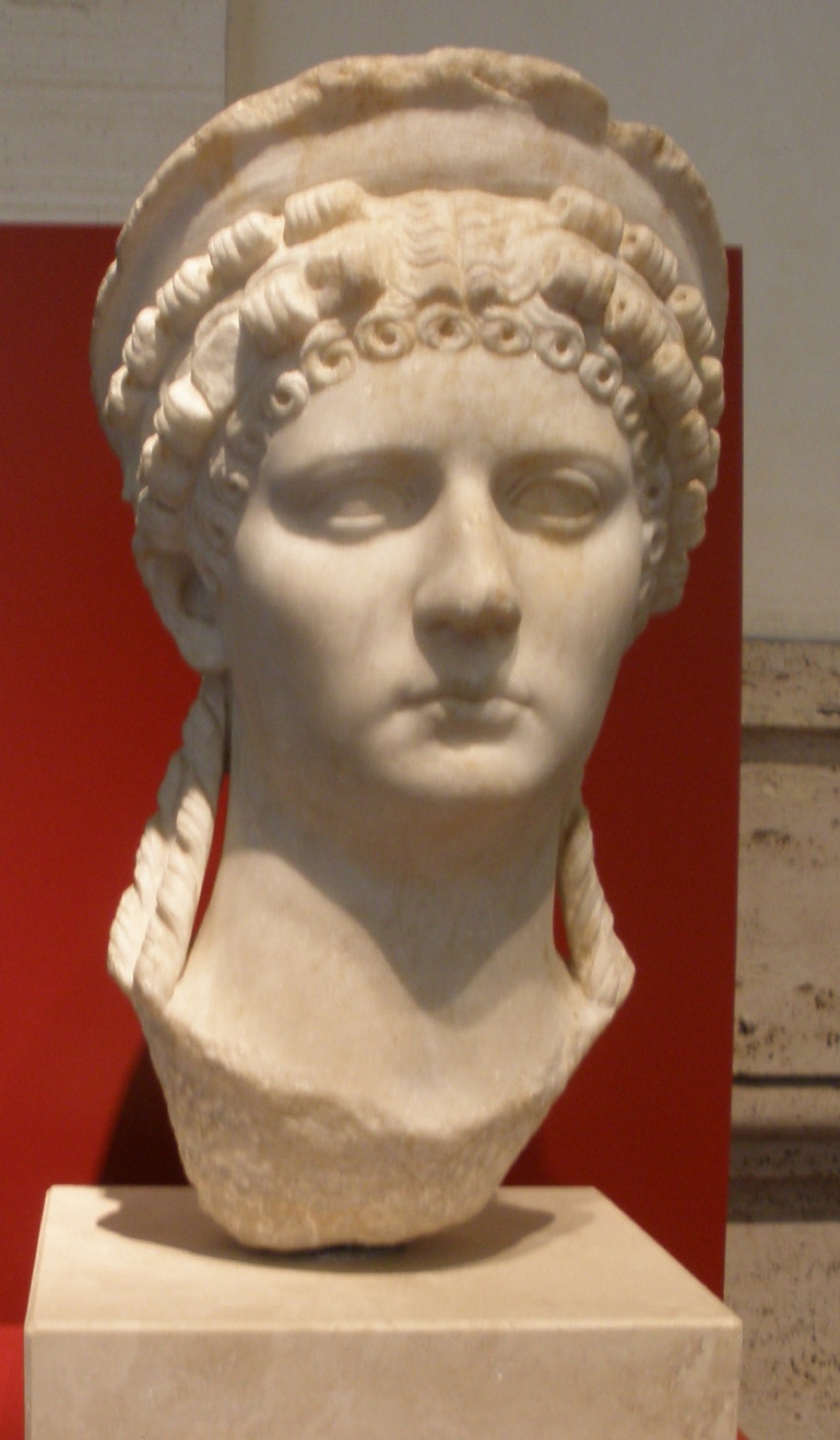
Portrait of Poppaea Sabina
The Beauty Who Planned in Decades
Rome's gossips called Poppaea Sabina the loveliest woman of her age and left it there, as if a face alone could account for her career. It cannot. What the sources actually describe, when read past their moralizing, is a woman who identified a distant objective — proximity to imperial power — and then built toward it across years and two marriages, discarding each husband once he had served his purpose in the itinerary. That is not the record of a woman swept along by admirers. It is the record of a planner.
She married Rufrius Crispinus, a former Praetorian prefect, and bore him a son; useful enough for standing, not for altitude. She then left him for Otho, a close companion of the young emperor Nero — a marriage historians from Tacitus onward have read as a calculated bridge, since it placed her inside Nero's own circle of intimates rather than merely inside Roman society. Once there, she made herself indispensable to the emperor directly, and Otho, no longer required, was maneuvered out of Rome to a governorship in Lusignan Spain. Every move reads less like romance than logistics.
This is the shape of an ENTJ: a mind organizing present relationships as instruments toward a long-held, half-glimpsed endpoint, then executing the plan with a coldness that unsettled even hostile chroniclers.
Poppaea did not fall into Nero's bed. She built the road to it, one marriage at a time, and then walked it — the unmistakable signature of Te commanding Ni's long horizon.
The Marriage as Instrument
Poppaea's dominant Te shows up not in any single dramatic act but in the sheer efficiency of her sequencing. She did not simply wish for imperial favor; she engineered the social architecture that would deliver it, treating marriage itself as a tool to be picked up and set down as circumstance required. Crispinus provided respectability and distance from scandal after her first union dissolved. Otho provided the one thing Crispinus could not: a standing invitation into Nero's inner set.
Once inside, she moved with the same executive clarity against Nero's existing wife, Claudia Octavia. Suetonius and Tacitus both describe Poppaea pressing Nero relentlessly — not with tears but with arguments, taunts about his manhood, and ultimatums until he divorced Octavia on trumped-up charges of adultery and, within months, had her killed. Whatever one makes of the sources' hostility, the pattern they preserve is consistent: obstacles identified, then removed, methodically, until the outcome she wanted was secured.
Even her reported influence over Nero's later, harsher policies fits this same instinct for control of outcomes — courtiers alleged she pushed him toward decisions that consolidated her own position at court, indifferent to the human cost, exactly as a Te-dominant operator treats sentiment as a variable to manage rather than a constraint to honor.
The Endpoint Held in View for Years
What separates Poppaea from a merely ambitious social climber is the evidence of Ni working beneath the Te — a fixed, distant image of where she was headed, held steady while the visible circumstances around her kept changing. She did not react opportunistically to whichever door happened to open; she built the doors herself, in sequence, toward one destination she seems to have fixed on early: not merely wealth or comfort, but the position of empress itself.
That horizon explains details the gossip alone does not. Why abandon a stable marriage to Crispinus, who posed no threat and offered no scandal, for the reputational risk of leaving him for Otho? Because Otho was not the goal — he was a waypoint, chosen for exactly one strategic property: his closeness to Nero. A shorter-sighted operator settles for the comfortable marriage in front of her. Poppaea saw past it to what it could become three moves later.
It is this same Ni that let her read Nero correctly — not as a man to be managed hour to hour, but as a personality whose long-term dependence she could cultivate, patiently, until divorcing and then executing his existing wife came to seem, to him, like his own idea.
Why ENTJ Over ESTP
Why not ESTP?
An ESTP reading would cast Poppaea as an opportunist riding her beauty from one advantageous bed to the next, seizing whatever door happened to swing open. But the timeline does not support pure improvisation: her campaign ran across years and two full marriages, each one chosen for a specific structural function rather than immediate pleasure or gain. An ESTP does not marry a man for the sole purpose of the company he keeps and then discard him once that company has been infiltrated — that is a plan executed on Ni's schedule, not Se's.
The distinction matters because it changes what Poppaea's life actually demonstrates. She is not a cautionary tale about beauty exploited in the moment; she is a case study in patient, multi-stage strategy pursued by someone willing to spend years and other people's marriages as the raw material of her own ascent — the coldest possible expression of Te in service of a single, long-held Ni image of the throne.
Connected Figures
Further Reading
- The Annals of Imperial Rome — TacitusThe principal ancient source for Poppaea's maneuvering against Octavia and her death in 65 CE.
- The Twelve Caesars — SuetoniusGossip-driven but vivid account of Poppaea's marriages and her hold over Nero.
- Roman History — Cassius DioA later Greek-language perspective on the Neronian court, useful for cross-checking Tacitus and Suetonius.
