 Historical Figure MBTI
#648 · 5-12-26 · The Julio-Claudians
Claudius
The Stammering Scholar · Conqueror of Britain · Underestimated Emperor
10 BCE — 54 CE
9 min read
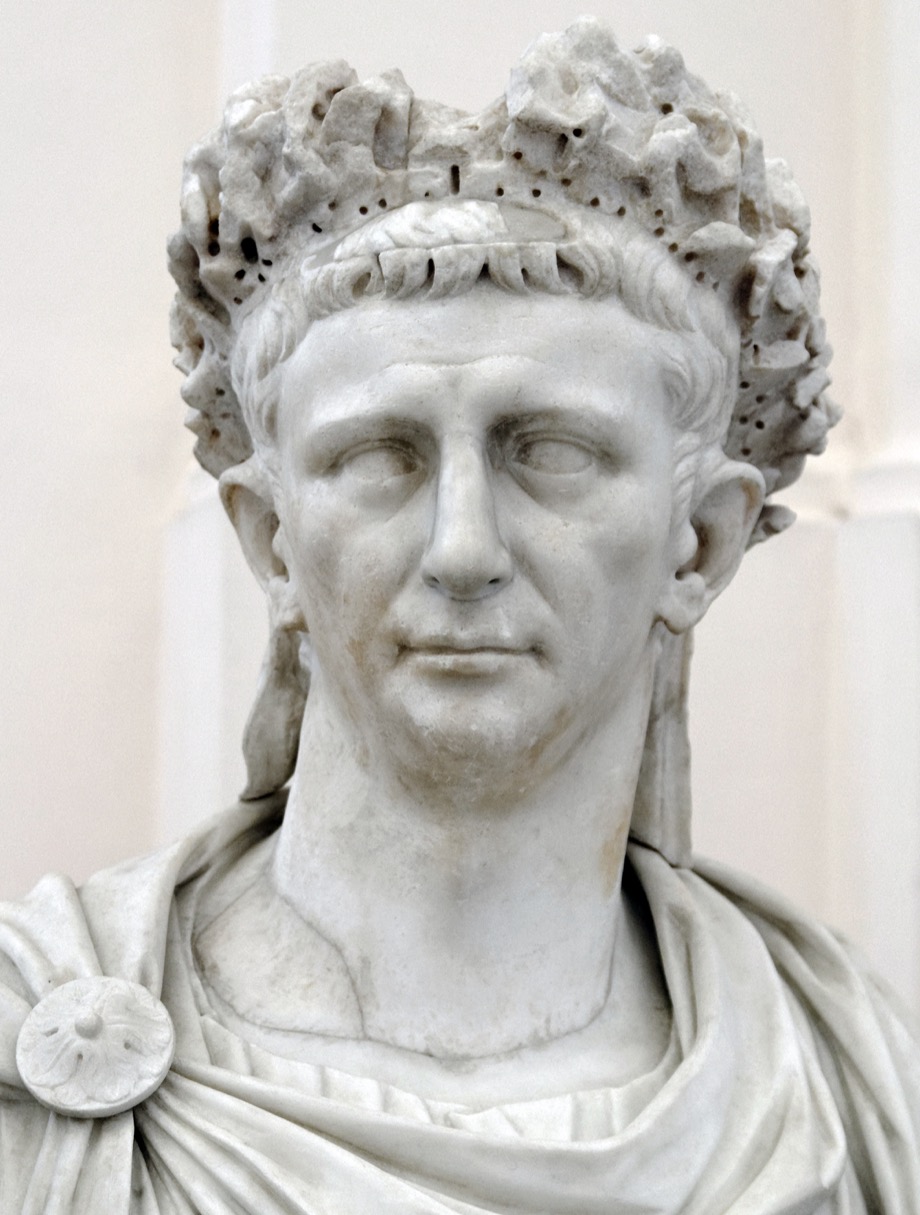
Portrait of Claudius
The Fool Who Was Reading the Whole Time
For nearly fifty years, the Julio-Claudian family agreed on one thing: Claudius did not count. He limped, he drooled when excited, his head jerked, and his speech came out in a stammering scramble that made strangers assume he was simple. Augustus, embarrassed, kept him from public appearances. Livia called him a monster of a man, not finished by Nature but only half made. Tiberius, Caligula, the whole gallery of relatives who traded the empire back and forth by murder and marriage, gave him titles without substance and jokes at every family dinner. Nobody expected him to matter, and for most of his life nobody was more relieved by that than Claudius himself.
Because while everyone watched the theater of succession, Claudius was in a library, doing something no one in his family would have thought to do and few had the patience for: writing an eight-volume history of the Etruscans and a twenty-volume history of Carthage, in each case from primary sources in languages that were already dying, and inventing three new letters for the Latin alphabet to represent sounds he thought Latin spelling handled clumsily. Nobody commissioned this. Nobody read it. It served no faction, flattered no patron, and won him no office. He built it anyway, methodically, for decades, because a coherent system was owed to a body of fact whether or not anyone was watching. That is the whole of the man in miniature, well before the accident of 41 CE that made him emperor.
Claudius is INTP down to the marrow — dominant Ti building a private, exhaustive system out of dead languages nobody asked him to preserve, for no reader, no patron, and no reward but the rightness of the structure itself.
A System for Every Dead Thing
Claudius's histories of Etruria and Carthage were not popular narrative in the manner of his contemporaries. They were reconstructions — an attempt to recover the internal logic of two civilizations whose own accounts were vanishing, built from inscriptions, secondhand testimony, and whatever fragments of the Etruscan and Punic languages still survived teachers old enough to remember them. He learned Etruscan well enough to write it. He composed in a mode almost nobody around him could evaluate, and he refined it for the length of a normal Roman political career, treating the project as its own justification.
The invented letters make the same point in smaller scale. Claudius decided Latin orthography failed to represent certain sounds accurately, so he designed three new characters, argued for their necessity, and pushed for their adoption in official inscriptions during his reign. This is Ti at its purest: the conviction that a system should be internally consistent, and the willingness to rebuild a piece of it from scratch rather than tolerate a mismatch between symbol and sound, regardless of whether the change would ever outlive him. It did not outlive him. He built it anyway.
As emperor, the same instinct became administrative. Claudius personally reviewed legal cases in exhausting detail, reorganized the machinery of imperial bureaucracy into specialized departments run by trained freedmen rather than aristocratic favorites, and took an evident, almost private pleasure in getting the structure of government right — not to be loved for it, but because a poorly built system offended him the way bad grammar offends a philologist.
Chasing Every Language, Every Thread
Ne is what turned Claudius's scholarship outward instead of inward. He did not settle on one subject and mine it forever; he ranged, restlessly, toward whatever historical thread seemed unresolved — Etruscan civilization one decade, Carthaginian history the next, an alphabet reform on top of both, a treatise on dice-playing for good measure. Each project opened new questions faster than he closed old ones, and he chased the openings rather than the credit.
That same appetite for possibility, oddly, is what let him govern well when circumstance finally forced the issue. Where a narrower mind might have simply muddled through the machinery of empire, Claudius treated Roman administration as an open system with real room for reinvention: he expanded citizenship into the provinces, built new harbor works at Ostia, drained the Fucine Lake in an enormous engineering gamble, and pushed the empire's border into a place none of his predecessors had bothered to finish conquering.
That last point is Britain. The invasion of 43 CE was not a soldier's dream of glory — Claudius had no military reputation to protect and did not need one — it was a live theoretical problem: could Rome absorb this island, administratively and militarily, and how. He supplied the logistics, the elephants for psychological effect, the four legions, and then largely handed execution to competent generals while he processed the strategic picture. The empire got a durable province. Claudius got a hard problem solved, which mattered more to him than the parade.
Precedent as Armor
Claudius's Si shows up as reverence for precedent rather than any real appetite for tradition's texture. He restored ceremonies that had lapsed, revived old religious offices, and made a visible show of continuity with Augustus's constitutional forms — not because the past felt sacred to him personally, but because a documented precedent was usable evidence, a stable citation he could point to when his own legitimacy was thin. An emperor found hiding behind a curtain needs history on his side, and Claudius, the historian, knew exactly how to supply it.
It also shows in his caution as an administrator. He kept meticulous records, followed established legal procedure even when it was tedious, and preferred the incremental expansion of an existing system — citizenship rolls, the Senate's membership, the civil service — to any single dramatic reinvention. This is Si serving Ti: the past was raw material for building a sound structure, not a comfort in itself.
A Man Read by Everyone Who Wanted Something
Fe was Claudius's blind side, and his family exploited it twice over — first by dismissing him because he could not perform confident public charm, then by marrying him to women who supplied the social management he lacked and quietly used it against him. Messalina ran a court of scandal and executions in his name while he apparently believed the version of events reported to him. Agrippina the Younger, once his wife, read the entire emotional terrain of the Roman court well enough to sideline his own son Britannicus and install her son Nero as heir, all while Claudius, absorbed as ever in matters he could actually verify, failed to see the maneuver until it was functionally finished.
He was not incapable of warmth — freedmen who served him with competence earned real loyalty and reward, an inversion of the usual Roman social order that scandalized the aristocracy — but he extended it on the basis of demonstrated usefulness, not social instinct. Reading a room, sensing an atmosphere shift, managing a rival's ego: these were never native skills, and the family that mocked him for stammering as a boy also, unknowingly, kept using the same weakness against the pliable old man on the throne. He may have died by poison from the wife who out-maneuvered him socially in a way he never learned to counter.
Why INTP Over ISTJ
Why not ISTJ?
An ISTJ forced onto the throne would have made a careful, duty-bound administrator, and Claudius did govern with real discipline. But an ISTJ does not spend fifty unwatched years writing histories of dead civilizations in their own vanishing languages for no audience and no institutional reward — that is Ne chasing open questions across unrelated fields, harnessed by Ti to build coherent systems for their own sake, not Si discharging an inherited duty. Claudius's scholarship had no practical use and no patron; it existed because leaving the Etruscan record incoherent bothered him personally. That restless, useless, self-directed curiosity is the tell.
The Britain campaign makes the distinction sharper still. An ISTJ commander wants the concrete achievement and the credit that legitimizes his rule. Claudius wanted the province administered correctly, treated the invasion as an engineering and logistics problem to be solved, and was content to let generals carry the actual glory. Where ISTJ conserves an established order, Claudius kept restructuring the one he inherited — new alphabet, new bureaucratic departments, new provinces, new precedents grafted onto old rules. That is dominant Ti and auxiliary Ne working exactly as they should, whether or not the Senate ever noticed.
Connected Figures
Further Reading
- The Twelve Caesars — SuetoniusThe primary ancient biography, including the family's mockery of Claudius before his accession.
- The Annals of Imperial Rome — TacitusThe fullest surviving account of Claudius's reign, court intrigues, and death.
- Claudius — Barbara LevickThe standard modern scholarly biography, reassessing his administrative record.
- I, Claudius — Robert GravesHistorical fiction, not history — a novelized first-person account that shaped his popular image.
