 Historical Figure MBTI
4 min read
#103 · 3-11-26 · The Founding Generation of USA
Mariamne Ewell Craik
Virginia gentlewoman and matriarch of the Craik household.
c. 1737 — c. 1800
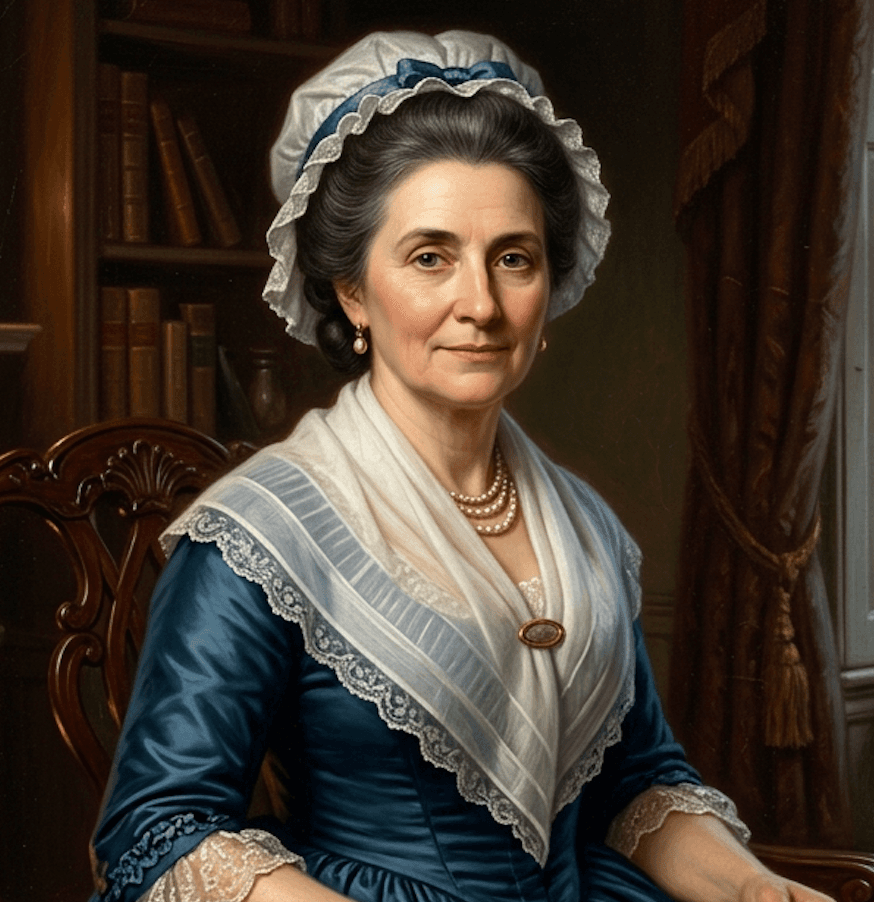
AI-assisted portrait of Mariamne Ewell Craik.
The Quiet Pillar
Born into the established Ewell family of Virginia, Mariamne Ewell Craik belonged to a lineage deeply rooted in the traditions of colonial gentry life. The Ewells were landowners and members of the planter elite, a social world defined by duty, reputation, and careful stewardship of family legacy.
Mariamne married Dr. James Craik, a Scottish physician who had immigrated to Virginia and become a respected member of the colony's professional class. Together they established a household that would remain stable through the tumultuous decades of the American founding.
While historical records rarely dwell on women in Mariamne's position, the absence of drama around her life is itself revealing. Her household endured across war, political transformation, and generational change. In an era when reputations were fragile and families easily fractured, the Craik household remained steady — a quiet testament to the discipline and continuity of its matriarch.
That's the ISTJ signature: Si stewardship paired with Te discipline — the households that held history together weren't loud, they just endured.
Si — Dominant
Mariamne's upbringing and life trajectory strongly reflect the influence of dominant Si.
Raised within the Ewell family, she inherited a culture defined by tradition and continuity. The Virginia gentry placed enormous value on maintaining established social structures: land stewardship, family lineage, and household order. Rather than seeking novelty or reinvention, individuals in this environment were expected to preserve and uphold what previous generations had built. Mariamne's life appears to follow this pattern closely.
Te — Auxiliary
Alongside this orientation toward tradition was the practical competence required to manage a large household — reflecting auxiliary Te.
Planter households in eighteenth-century Virginia functioned as complex logistical systems. Food production, labor coordination, financial management, and domestic operations all required structured oversight. Women in Mariamne's position often supervised these systems directly, ensuring that the household operated smoothly and efficiently.
Fi — Tertiary
Although little survives in the historical record about Mariamne's inner life, the stability of her family relationships suggests a quiet but consistent value system — reflecting tertiary Fi.
Her marriage to Dr. Craik appears to have been long and stable, and the family maintained strong ties within the Virginia gentry network. One of their sons was named George Washington Craik, reflecting the deep personal connection between the Craik household and the family of George Washington.
Ne — Inferior
Mariamne's life shows little indication of the exploratory or novelty-driven tendencies associated with inferior Ne.
Rather than pursuing new social roles or unconventional paths, she remained grounded in the established structure of Virginia society. Her responsibilities centered on preserving continuity within the household and family lineage, reflecting a preference for proven traditions over experimentation.
Why ISTJ Over ISFJ
Why not ISFJ?
At first glance, the role of a household matriarch might suggest ISFJ, particularly given the importance of hospitality and community relationships in planter society. However, historical descriptions of Mariamne do not emphasize the emotional or relational leadership typically associated with Fe-dominant personalities. Instead, the available evidence points more strongly toward structural responsibility and household management — functions that align closely with Si–Te dynamics. While both types share a foundation in Si, the emphasis on structure over social facilitation suggests ISTJ as the more likely interpretation.
Connected Figures
Further Reading
- The Death of George Washington: He Died as He Lived — Peter R. HenriquesDocuments the closeness of the Craik and Washington households that Mariamne shared alongside her husband James.
- Washington: A Life — Ron ChernowCovers the Virginia gentry world Mariamne inhabited as the wife of Washington's personal physician.
- Liberty's Daughters: The Revolutionary Experience of American Women, 1750-1800 — Mary Beth NortonContext for the social role of a Virginia physician's wife within the founding generation's domestic networks.
