 Historical Figure MBTI
#384 · 4-4-26 · Elizabethan England
Mary, Queen of Scots
Queen of Scots · Elizabeth's Catholic Rival · The Tragic Captive
1542 — 1587
9 min read
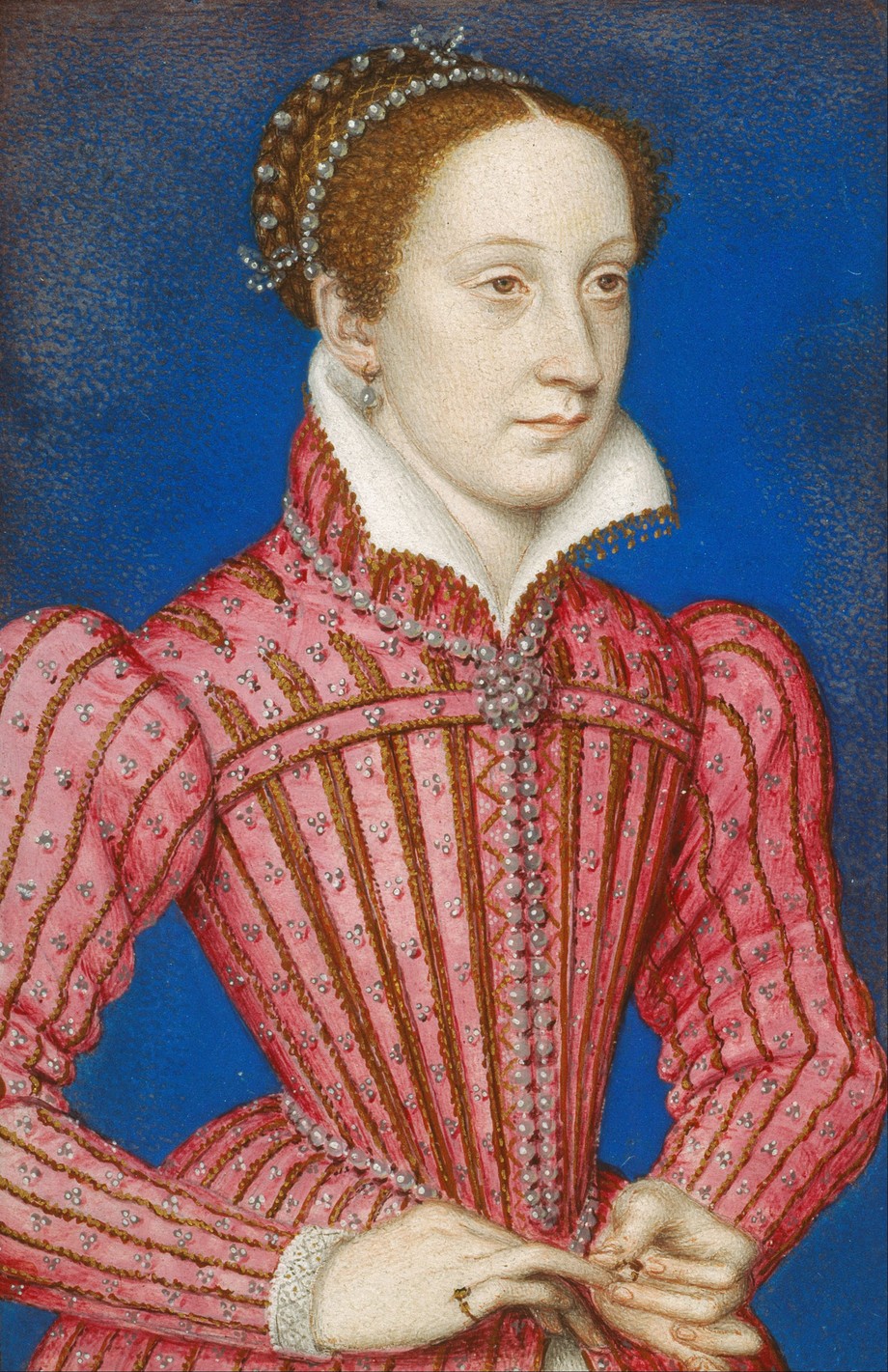
Portrait of Mary, Queen of Scots
The Queen Who Ruled With Her Heart
She was six days old when she became a queen. Her father, James V, died broken after Solway Moss, and the crown passed to an infant in her cradle. Where Elizabeth I was schooled in suspicion and learned that survival meant revealing nothing, Mary was schooled in light. Promised to the French dauphin and shipped to France at five, she grew up at the most glittering court in Europe—petted, adored, the tallest and most charming princess in any hall. At sixteen she married the dauphin; at seventeen she was Queen of France as well as Scotland. When he died in 1560, the eighteen-year-old widow sailed home to a grey, Calvinist Scotland she barely knew, still trailing the warmth of the only world she had ever loved.
What followed was catastrophic, and almost all of it flowed from a single trait: Mary made decisions by passion, never by the cold ledger. She married the vain, worthless Lord Darnley because she desired him, and lived to watch her secretary David Riccio dragged from her supper table and stabbed fifty-six times before her eyes. When Darnley himself was murdered—the house he lay in blown up with gunpowder—Mary then did the one thing that guaranteed her ruin: within three months she married the chief suspect, the Earl of Bothwell, scandalizing Europe and igniting open rebellion. Defeated, she abdicated and in 1568 fled to England, throwing herself on Elizabeth's mercy.
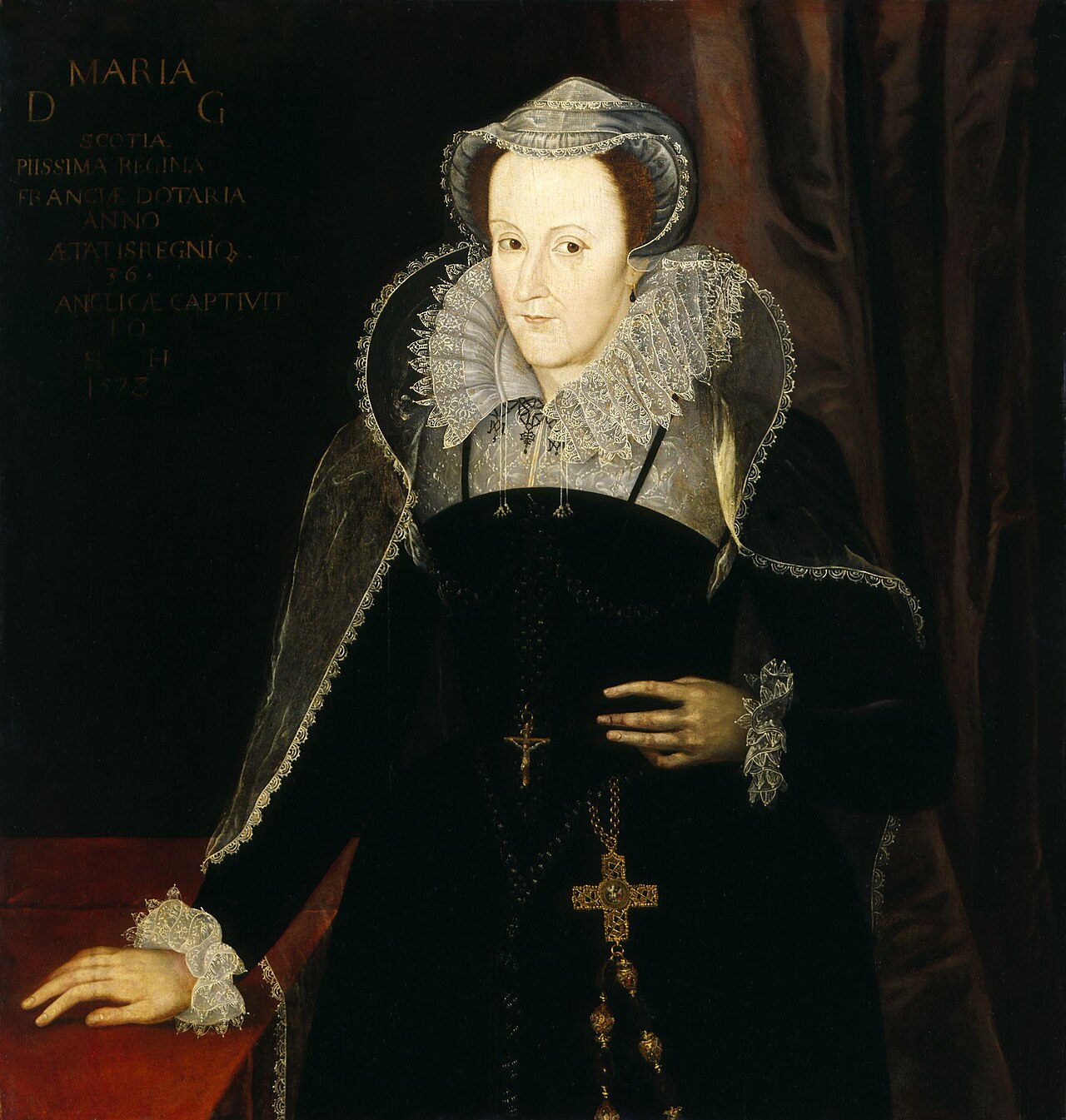
It was a fatal gamble. Elizabeth could neither restore a queen accused of murder nor release a rival with a claim to the English throne. Mary spent nineteen years a captive and the brightest magnet for every Catholic plot against Elizabeth's life. In the end Walsingham let her hang herself: he fed her the Babington conspiracy, intercepted the letters in which she blessed Elizabeth's assassination, and laid them before a tribunal. She went to the block at Fotheringhay in February 1587 in a crimson petticoat—the color of Catholic martyrdom—and turned her execution into stagecraft that haunted Protestant Europe for a century. She was an almost textbook ESFP: a creature of beauty, romance, and the vivid present, governed by what she felt and what she wanted, and blind—fatally, repeatedly—to where any of it would lead.
Where Elizabeth was all ice and calculation, Mary was all heart and ruin—the ESFP at full flame: dominant Se devouring beauty, music, and the moment; Fi pouring itself into one ruinous love after another; and no foresight at all, no reading of the road ahead, until the axe.
The Appetite for the Present
Se — dominant
No witness who ever met Mary failed to register its force. Nearly six feet tall, striking, electric with physical confidence—a superb horsewoman, graceful dancer, lover of music and masques—she absorbed the French court's world of spectacle and sensation into her bones. Where Elizabeth sat still and watched, Mary moved. When she returned to a Scotland of bare kirks and shouting preachers, the deprivation was not just political but sensory, a starvation of the very medium in which she lived.
Se is also the function of the bold, present-tense action. Mary rode out personally at the head of her troops when her lords rebelled. When Bothwell lay wounded miles away, she galloped across the country to him in a single reckless dash. Even in the worst hour of her life—Riccio butchered before her, her husband's pistol pressed against her pregnant belly—her nerve held; she talked, charmed, and physically escaped by rope down the castle wall and rode through the night. The crisis that paralyzes a future-oriented mind energized Mary, because Se thrives where the situation is immediate and demands the body to act.
The same instinct that ruined her as a politician transfigured her as a martyr. Her execution was pure Se theater: the slow removal of her black gown to reveal the blood-red petticoat, the crucifix held high, the small dog found hiding in her skirts after the axe fell. She performed her death, command of the moment intact, and made of it an image so physically arresting that it outlived every legal argument against her.
The Heart That Would Not Be Governed
Fi — auxiliary
Auxiliary Fi gave Mary the inner compass she actually steered by—a deep, private sense of whom she loved and what felt right, held absolutely and often in defiance of every external consequence. She did not marry for advantage; she married for desire, twice, disastrously. She chose Darnley because she was infatuated, against every counselor's advice. She clung to Bothwell with a loyalty that survived his crimes, because her heart had committed and her heart did not retreat.
The same Fi shows in her more sympathetic attachments—to Riccio, the musician she trusted and mourned; to her faithful four Maries; to the Catholic faith she refused to abandon even when conformity would have bought her ease. Through nineteen years of captivity she never once renounced the Mass, never once played the politic Protestant to soften Elizabeth. That is Fi in its purest form: a value held for its own sake, immune to pressure. The steadfastness that doomed her also dignified her.
But Fi paired with dominant Se and starved of any feel for consequences is a dangerous engine. After Darnley's murder, the only conceivable salvation was to be seen distancing herself utterly from the crime. Instead she followed her heart straight into marriage with the man all Scotland believed had killed her husband. To Elizabeth, weighing every move against the board, the choice was incomprehensible. To Mary it was not a calculation at all—it was a feeling, and feelings, for an ESFP, are sovereign.
The Borrowed Competence
Te — tertiary
Tertiary Te gave Mary intermittent flashes of real capability—enough to make her early Scottish reign genuinely promising, never enough to govern the whole arc of her life. Guided by the Earl of Moray and her secretary Maitland, she pursued a religious tolerance shrewder than her zealots on either side wanted, managed the fractious Protestant lords, and pressed her claim to be recognized as Elizabeth's heir. When she leaned on competent advisers and let their frameworks structure her rule, Mary could function as a queen.
But tertiary functions collapse under stress, exactly when they are most needed. Her Te held while she was content; it deserted her the instant her heart was engaged. The moment desire or grief took the wheel—Darnley, Bothwell—the cool instrument went silent. Even in captivity the pattern held: she could manage a clandestine correspondence, but she could not assess whether the Babington plot was real or a trap. She could write a sharp letter and run the machinery in front of her; she could never subordinate her wants to a long strategy the way Elizabeth subordinated everything. Her cousin's dominant judgment governed her life; Mary's merely visited it.
The Road She Could Not See
Ni — inferior
Here is the function that killed her. Introverted intuition is the faculty of foresight —the inner sense of where a situation is tending, of how a chain of events must end. It was Elizabeth's dominant strength. In Mary it was the inferior function, and it shows in a life that reads as a sequence of decisions made with no thought for tomorrow. She married Darnley without imagining what a jealous, drunken consort would do to her. She married Bothwell without grasping that Europe would read it as a confession of murder. She fled to England without considering that a Catholic claimant on English soil could never simply be set free. At every fork she chose what felt right now and was blindsided by what came next.
Inferior Ni produces not merely a lack of foresight but a positive blindness—a confidence in the present that mistakes the absence of visible danger for safety itself. Walsingham understood her flaw perfectly and weaponized it: he gave her a conspiracy to bless and waited, certain she would walk in, because a woman who had spent her whole life unable to see two moves ahead was not going to start now. She wrote the words authorizing Elizabeth's assassination in her own cipher, never imagining the eyes already reading over her shoulder.
Her one moment of foresight came only at the end. Once the trap had closed, Mary grasped with sudden clarity exactly what it meant—and chose to die as a Catholic martyr, scripting an execution whose long-range consequences she finally saw. Foresight came to her as it comes to all who lead with inferior Ni: too late, and only when there was nothing left to foresee but the fall of the axe.
Why ESFP Over ISFP
Why not ISFP?
The ISFP shares Mary's Se-Fi spine but turns it inward: the quiet aesthete, drawn to small circles and solitude, keeping the world at distance to protect the inner one. Mary was the opposite—gregarious, dazzling, the brightest figure in any hall, hungry for company, courtship, and admiration. She charmed compulsively and could not bear to be alone or unloved. The ISFP guards the inner world; Mary threw herself headlong into the outer one, again and again, and the world destroyed her for it.
The extraversion is decisive. Mary's ruin was a series of loud, public, headlong leaps made in front of all of Europe—the sudden marriages, the dash to a wounded lover, the armored ride to war. She needed an audience the way she needed beauty and motion, and made every fatal choice outward and in the open. Mary and her cousin were the same coin inverted: Elizabeth, the INTJ, led with the very foresight Mary lacked and buried the very heart Mary wore in the open. One saw everything and felt nothing she would show; the other felt everything and foresaw nothing—and only one of them died on a block.
Connected Figures
Further Reading
- Mary Queen of Scots — Antonia FraserThe definitive modern biography — comprehensive, sympathetic, and grounded in the primary sources.
- Queen of Scots: The True Life of Mary Stuart — John GuyA revisionist reassessment that draws on newly discovered documents to complicate the traditional martyr narrative.
- The Life of Mary Queen of Scots — Agnes StricklandA 19th-century standard that shaped the romantic legend; useful for understanding how Mary's myth was constructed.
- Elizabeth and Mary: Cousins, Rivals, Queens — Jane DunnReads the two queens together, letting their parallel personalities illuminate each other across the border.
