 Historical Figure MBTI
#380 · 4-4-26 · Elizabethan England
Elizabeth I
Queen of England · Gloriana, the Virgin Queen · Architect of the Golden Age
1533 — 1603
8 min read
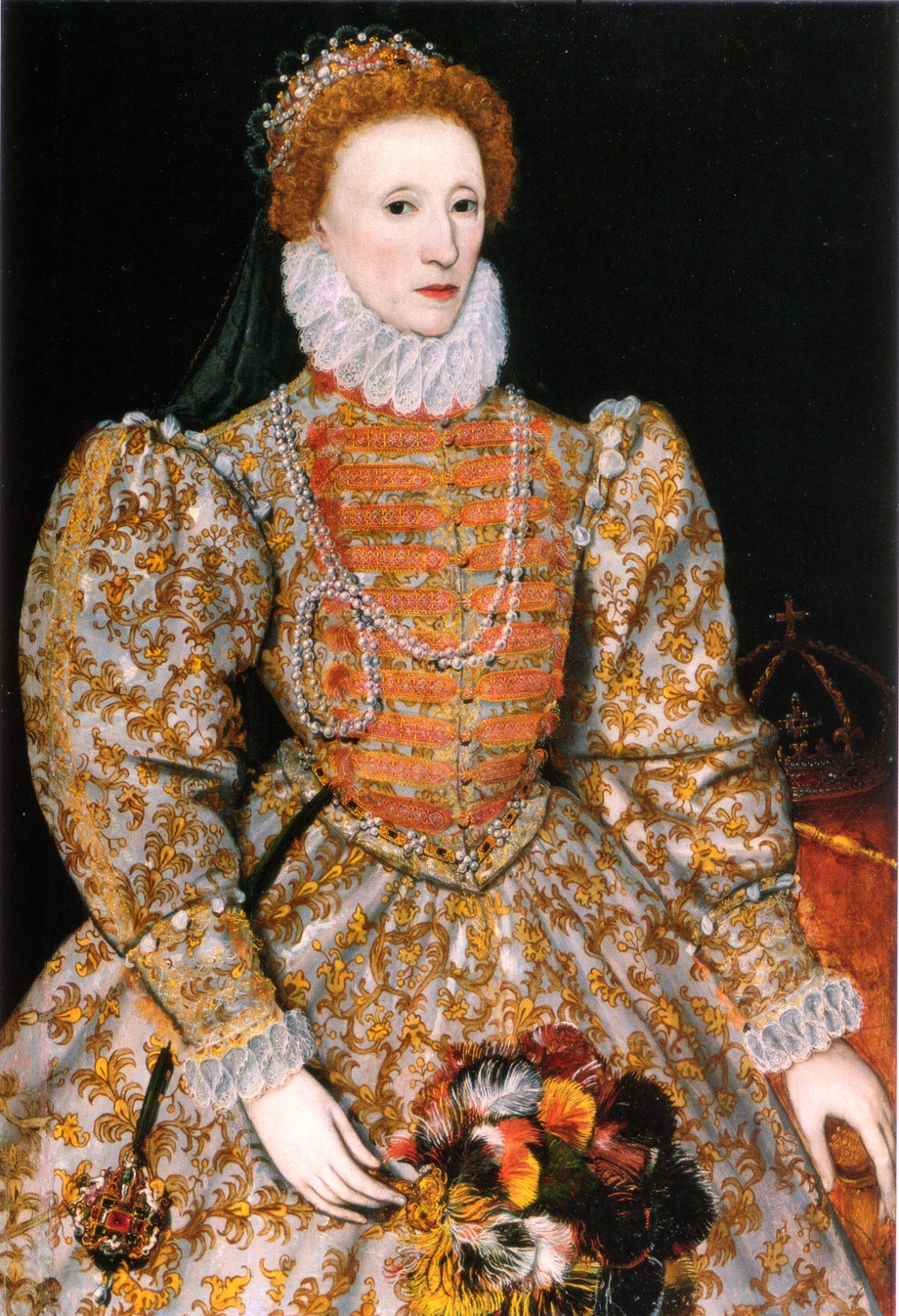
Portrait of Elizabeth I
The Girl Who Learned to Reveal Nothing
She was two years old when her mother lost her head. In May 1536 Anne Boleyn was carried to the scaffold on Tower Green and beheaded on a charge of adultery that almost no historian now believes; within weeks the marriage that had torn England out of Rome was annulled, and the small red-haired princess who had been heir to the throne was declared a bastard. Her father, Henry VIII, did not look at her again with much warmth. Over the next decade her status whipsawed with the king's appetites: restored to the succession behind her half-siblings Mary and Edward, demoted and elevated by turns, raised in a series of country households at a careful distance from a court where the wrong word could be fatal. A child does not survive that education without learning its single great lesson: that what you feel must never be the same as what you show.
The lesson was sealed in adolescence. At fourteen she was the ward of Catherine Parr, whose new husband Thomas Seymour conducted a half-flirtation, half-predation with the teenage Elizabeth that ended in scandal—and, after Seymour overreached into treason, in his execution. The Privy Council sent interrogators to break the girl, to extract an admission that she had conspired with him. She gave them nothing. Cool, precise, unshakeable, she parried every leading question and turned the inquiry back on her accusers—at fourteen. Five years later, under her Catholic sister Mary I, the stakes were higher still: suspected of complicity in Wyatt's rebellion, she was rowed through the Traitor's Gate into the Tower where her mother had died. She survived the only way she knew—admitting nothing, signing nothing, leaving her interrogators no thread to pull. The watchful queen of legend was forged in those rooms, in the discovery that ambiguity is armor and silence cannot be used in evidence against you.
When she finally came to the throne in 1558, at twenty-five, she ruled for forty-five years and presided over the age that bears her name—the Elizabethan Renaissance of Shakespeare and Spenser and Marlowe, the sea-dogs and the New World, the defeat of the Spanish Armada in 1588. But the method beneath the glory was the method of the frightened, brilliant girl: calculated ambiguity, strategic delay, a refusal ever to commit that she elevated into the central instrument of statecraft. This is the portrait of an INTJ: a dominant intuition playing a decades-long game, an auxiliary thinking that governed shrewdly, a guarded inner self that would have one mistress and no master, and a near-pathological horror of the irrevocable act.
Her motto was Video et taceo—“I see and say nothing.” There is no better four-word description of the INTJ in the world: the mind that perceives the whole board, reads every player, foresees how the game must end—and gives away absolutely none of it.
The Long Game and the Manufactured Legend
Ni — dominant
Dominant introverted intuition lives in the unseen future—it perceives where a course of events must end, holds a converging vision across years, and waits with a patience that looks, to everyone else, like indecision. Elizabeth's whole reign was an exercise in it. A young queen was expected to marry, and quickly, to secure the succession. Elizabeth turned that expectation inside out. She dangled her hand before half the princes of Europe—Philip of Spain, the Archduke Charles, two French dukes, the Duke of Anjou whom she courted into her forties and called her “frog”—conducting each negotiation in earnest, extracting concessions, delaying, and never once committing. “I am already bound unto a husband,” she told Parliament, “which is the kingdom of England.” That is not the absence of a decision. It is Ni recognizing that a permanently open possibility is worth more than any resolved one.
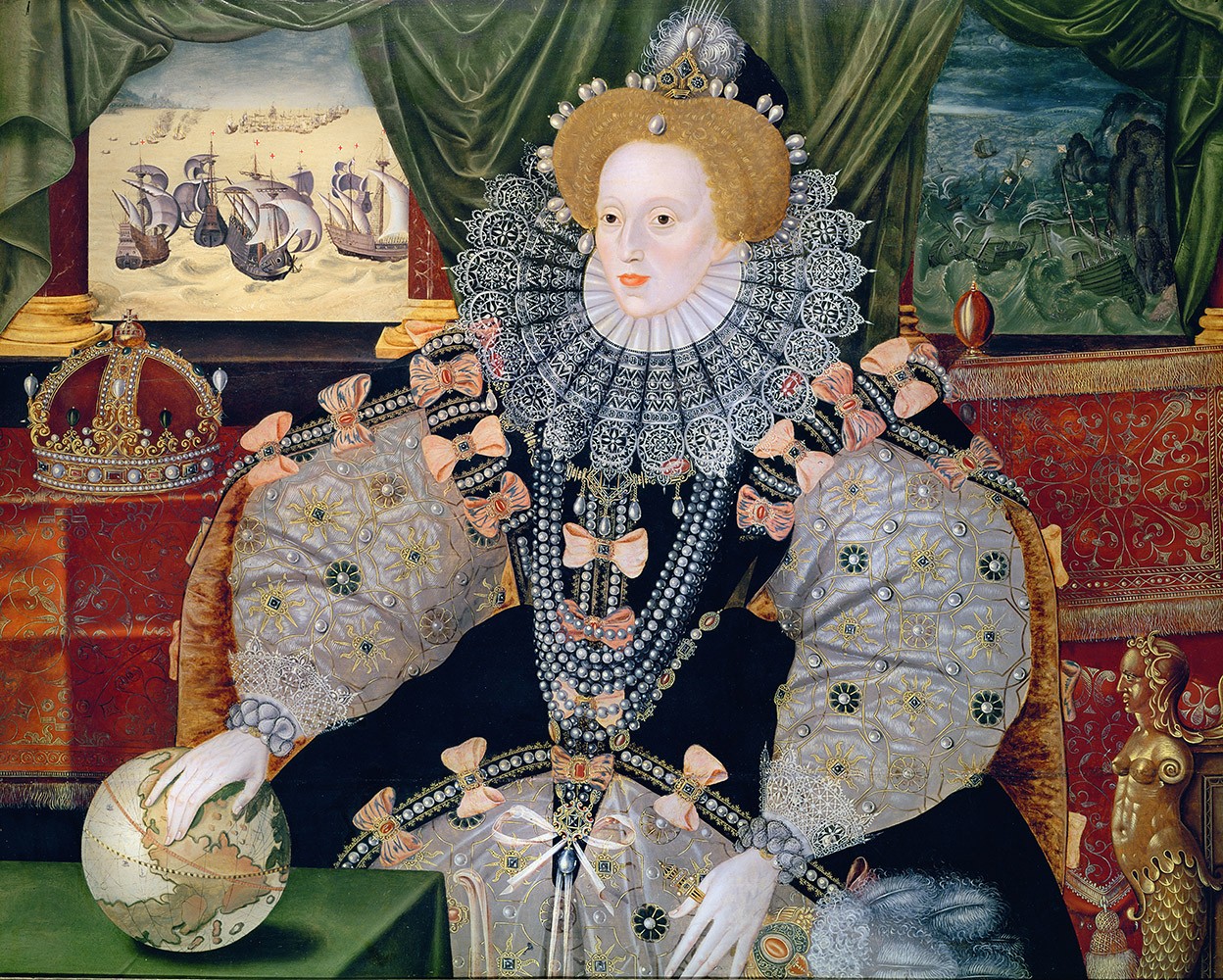
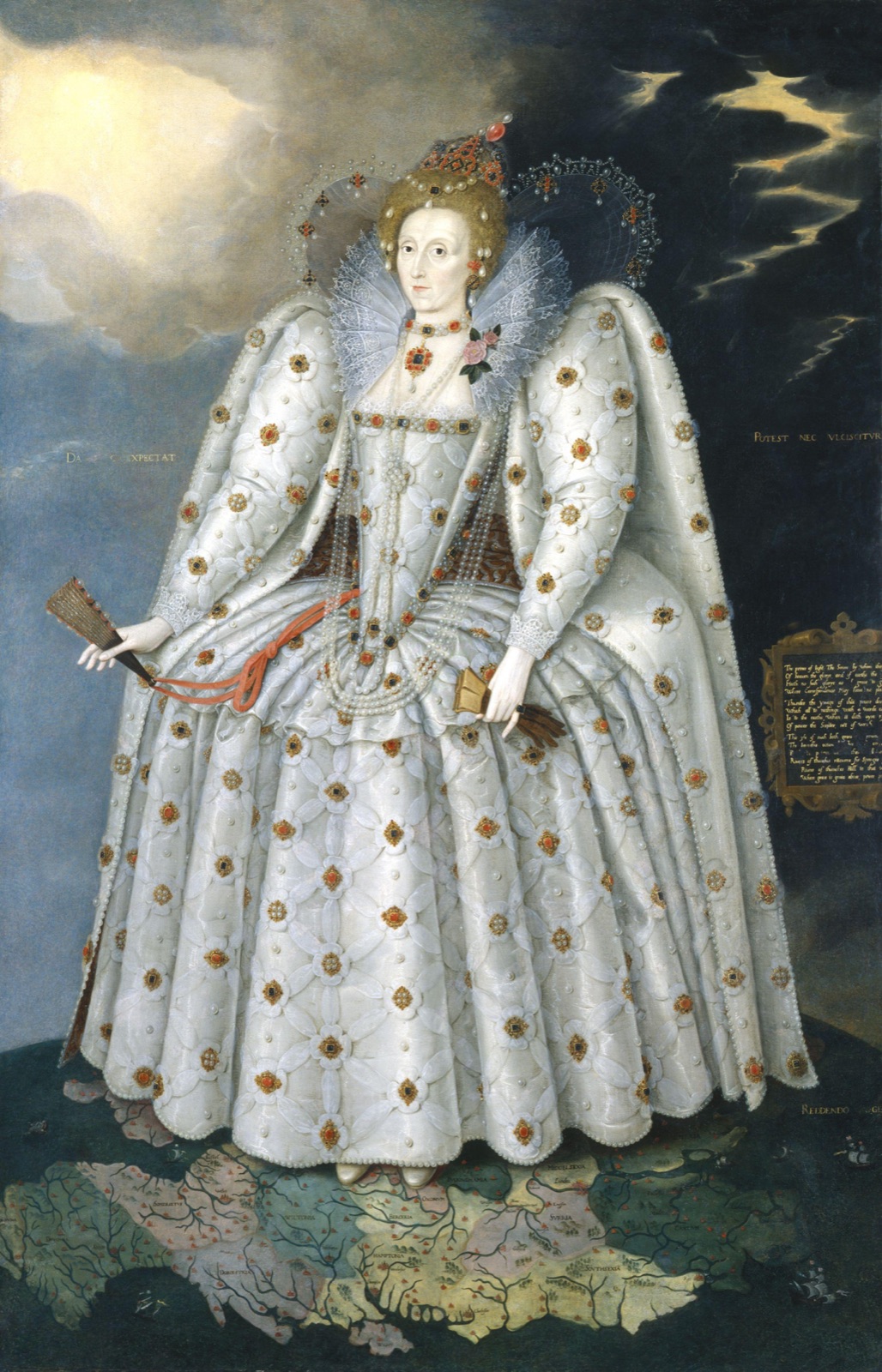
The same function built the legend. Elizabeth understood, with an intuitive's eye for symbol and meaning, that a queen who could not rely on the brute facts of male kingship would have to manufacture a different kind of authority—and she engineered, deliberately and across decades, the cult of the Virgin Queen. Gloriana, Astraea, the Faerie Queene: it was a coherent mythology sustained through portraiture (the Armada Portrait, the Rainbow Portrait, the white-faced ageless mask of the later images), through chivalric Accession Day tilts, through the progresses by which she displayed herself to the realm. The image was load-bearing. An ordinary monarch inherits legitimacy; Elizabeth foresaw that she would have to construct hers, and spent forty years building it into something that outlived her.
And the long game ran beneath every crisis. Her treatment of Mary, Queen of Scots—the Catholic claimant who fled into England in 1568 and sat as a magnet for plots against Elizabeth's life for the next nineteen years—was an agony of deferral precisely because Elizabeth could see all the way down the chain of consequence: to execute an anointed queen was to license regicide, to hand Catholic Europe a martyr. She kept Mary alive long past the point of prudence, not because she could not decide but because Ni would not stop showing her the ramifying future the act would unleash. When she finally signed, she tried to take it back.
The Frugal, Lawyerly Machinery of Rule
Te — auxiliary
If Ni supplied the vision, auxiliary extraverted thinking supplied the apparatus that turned vision into government. From the first day of her reign she bound to herself William Cecil, the steady, detail-mastering secretary who served her for forty years, and later the spymaster Francis Walsingham, whose network of intelligencers ultimately produced the intercepted correspondence that proved Mary Stuart's complicity. She did not do the grinding administrative work herself; she selected men who would, listened to them, and overruled them when her own judgment of the longer game differed—which is exactly how auxiliary Te in service of dominant Ni operates.
Her frugality was legendary and entirely deliberate. Elizabeth hated spending money, especially on war, and she ran her Treasury with a parsimony that exasperated her commanders—underpaying her sailors after the Armada, starving her Irish campaigns of funds. It was something colder than mere thrift: a Te assessment that solvency was power, that a crown free of debt was a crown free of Parliament and foreign creditors, and that England's real advantage against Habsburg Spain lay not in matching its armies but in outlasting it.
The religious settlement is Te and Ni working as one. Coming to a realm that had lurched from her father's idiosyncratic Catholicism to Edward's Protestantism to Mary's Roman restoration and its burnings, Elizabeth engineered a deliberately moderate middle way—the 1559 Acts of Supremacy and Uniformity, a Protestant church with much of the old liturgical furniture left standing, conformity required in outward practice but inquisition into private conscience refused. “I would not open windows into men's souls,” she said: both a Ni perception (that belief cannot be compelled and the attempt only breeds martyrs) and a Te solution (the state needs functional outward order, not the impossible policing of the heart).
One Mistress and No Master
Fi — tertiary
Tertiary introverted feeling in an INTJ is a fiercely guarded private core—a set of inner convictions about autonomy and self that the person defends to the death and rarely articulates. In Elizabeth it shows first as an absolute refusal to be possessed. “I will have here but one mistress and no master,” she told Robert Dudley, the favorite she loved most and would still not marry—and the sentence is the whole of her tertiary Fi compressed into nine words. The refusal of marriage was, beneath the diplomacy and the legend, also this: a queen who had watched her mother destroyed by a husband and her sister made politically captive by one would not now hand a man the keys to her person and her crown. Her independence was not a policy. It was the inmost thing she had.
The other face of tertiary Fi is possessiveness, and Elizabeth's emotional life ran on it. She kept favorites—Dudley, and later Robert Devereux, the Earl of Essex, the dazzling, reckless young man who was Dudley's stepson—bound to her in a charged, jealous intimacy that she controlled absolutely. When Dudley married in secret she was incandescent for months. This was the inward, intense attachment of tertiary Fi—love experienced as a private possession to be hoarded rather than a bond to be shared.
And when a favorite finally chose his own will over hers, the guarded core showed its limit. Essex—indulged, forgiven again and again—at last abandoned his Irish command, burst unannounced into her bedchamber before she was dressed, and ultimately raised a botched rebellion in the streets of London in 1601. Elizabeth, old and grieving and betrayed by the one person she had let closest, signed his death warrant and let it stand. The Fi that demanded one mistress and no master could absorb a great deal of recklessness, but not a direct assault on her sovereignty and her self.
The Horror of the Irrevocable Act
Se — inferior
Inferior extraverted sensing is the INTJ's blind spot—the function of the immediate, the bold physical commitment, the irreversible plunge into the concrete present. Where her father Henry VIII lived in dominant Se and struck the instant he was thwarted, his daughter inverted him completely: she dreaded the decisive, unrecallable act with a depth that bordered on the pathological. To do a thing in the world of Se—to sign, to strike, to commit the body and the deed—was to lose the open future that her whole psychology was built to preserve.
The death warrant of Mary, Queen of Scots is the case study. For nineteen years she would not do it. When Walsingham's evidence finally made Mary's guilt undeniable and Parliament clamored for the execution, Elizabeth temporized for months more, even hinting to Mary's keepers that a quiet assassination would spare her the irrevocable public signature. She signed at last in February 1587—and the moment the deed was done at Fotheringhay, she flew into a genuine fury, claiming she had never meant the warrant to be carried out, imprisoning the secretary who had dispatched it. Through the lens of type it is neither pure performance nor pure remorse: it is inferior Se recoiling in horror from the concrete, finished, unrecallable thing that her own hand had at last set in motion.
It is no accident that her single most famous moment of physical boldness—riding out to her troops at Tilbury as the Armada loomed in 1588 and declaring, “I know I have the body of a weak and feeble woman, but I have the heart and stomach of a king”—was a piece of theater, a gesture of Se courage summoned and performed at the supreme crisis by a woman whose whole instinct ran the other way. The inferior function can rise magnificently to the great occasion. It simply cannot be relied on as a way of life.
Why INTJ Over ISTJ
Why not ISTJ?
Her caution looks SJ—frugal, legalistic, risk-averse—but the tell is her comfort with sustained ambiguity and her self-mythologizing. An ISTJ craves resolution and follows the expected script; Elizabeth made never-resolving her superpower, dangling marriage for decades without committing and breaking the deepest tradition of all (a queen must marry and breed an heir) to engineer an unprecedented role: the Virgin Queen, Gloriana. That is Ni constructing a future and a myth, not Si guarding the past.
The frugality and legalism are real; they are simply auxiliary Te doing the housekeeping for an intuition that was always, fundamentally, playing for a future no one else could see. Si is anchored in the remembered, established past—it conserves and replicates what has worked, seeks the settled answer. Elizabeth's defining moves were the opposite of settling. She refused to resolve the marriage that every precedent demanded she resolve; she held an open, unfinished future in her hands for forty years because she grasped, where an SJ could not, that the unresolved possibility was worth more than any closed one.
Connected Figures
Further Reading
- Elizabeth the Great — Elizabeth JenkinsThe classic literary biography — reads like a novel while remaining rigorously historical.
- The Life of Elizabeth I — Alison WeirDetailed, accessible narrative from one of Tudor history's most prolific scholars.
- Elizabeth I — David StarkeyFocuses on the formative years — the girlhood trauma that made the queen.
- Elizabeth I — Anne SomersetA comprehensive single-volume biography balancing personal life and high politics.
