 Historical Figure MBTI
#381 · 4-4-26 · Tudor England
Mary I
Queen of England · 'Bloody Mary' · The Catholic Restoration
1516 — 1558
9 min read
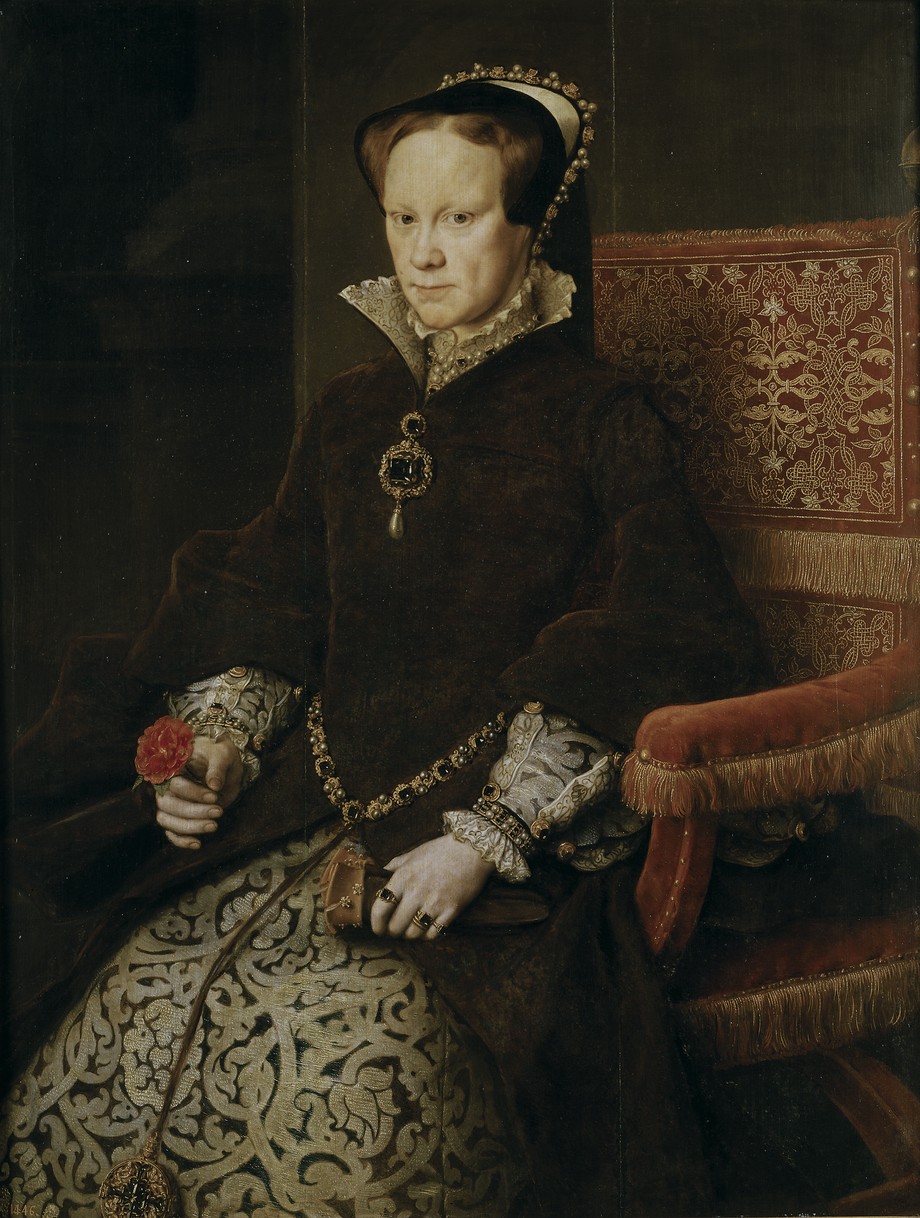
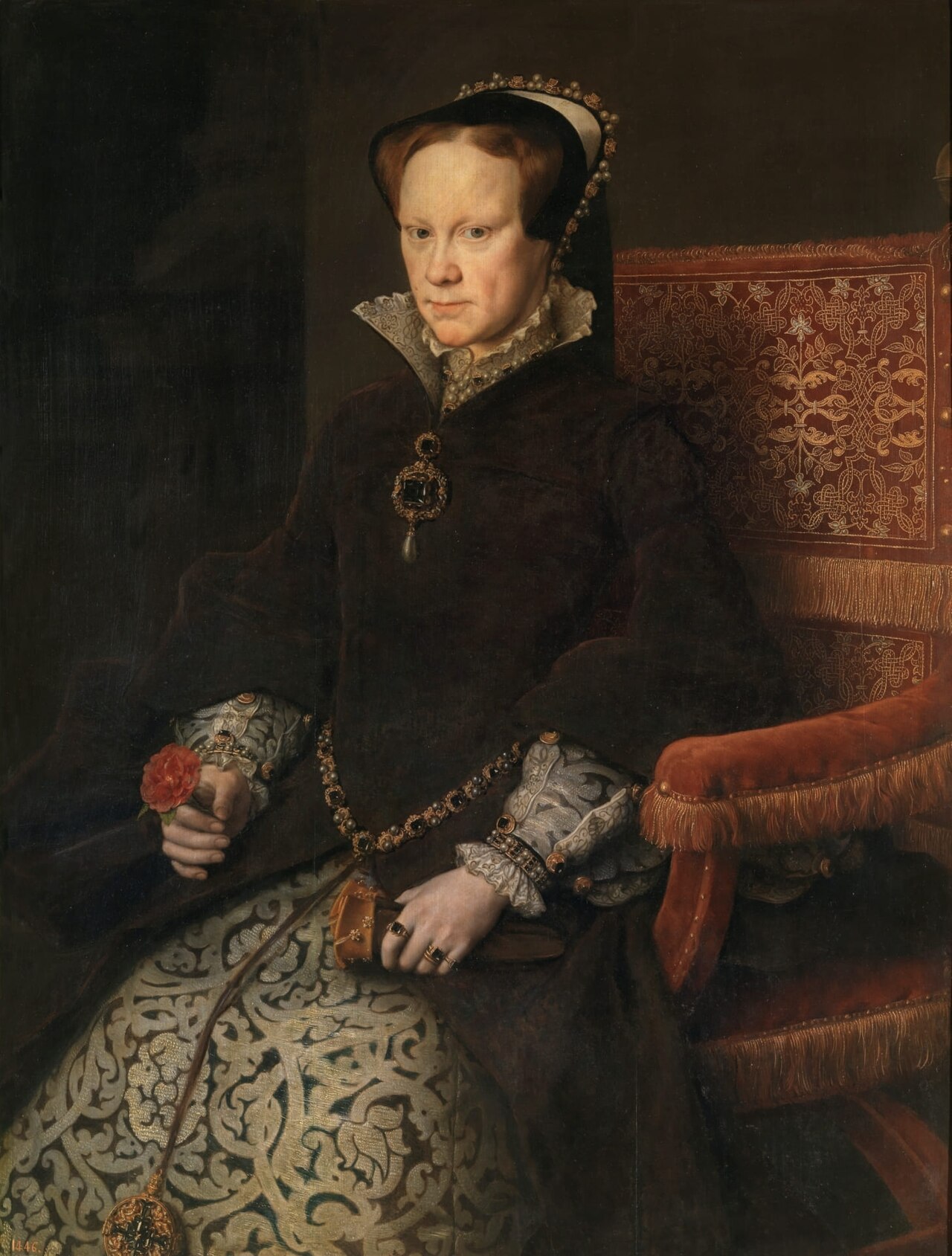
Portrait of Mary I
The Wound That Became a Fire
She was born in February 1516, the only surviving child of Henry VIII and Catherine of Aragon, and for the first decade of her life she was the jewel of the realm. Then the ground gave way. When Henry resolved to set Catherine aside and marry Anne Boleyn, the marriage that had made Mary was declared void; she was pronounced a bastard, forbidden to see the mother she adored even as Catherine lay dying, and sent to serve in the household of her infant half-sister Elizabeth. Pressed for years to sign away her faith and her legitimacy, she broke at last and submitted. She never forgave herself, and she never forgot.
Out of that humiliation she emerged rigid, devout, unbending, with her mother's Catholic faith fixed at the dead center of a wounded life like the one solid thing in a house that had collapsed. To restore the old religion was, for Mary, to restore her mother, herself, and the truth Henry had spent twenty years trying to call a lie. When the throne came to her in 1553—on a wave of popular love against the plot to crown Lady Jane Grey—she set out to undo the Reformation and return England to Rome. What she could not foresee was the cost, or that the cost would be paid in fire.
Nearly three hundred Protestants burned in under four years, among them Thomas Cranmer, who had blessed her parents' annulment, recanted under pressure, and then thrust the offending hand into the flames first. She endured two phantom pregnancies and produced no child; she lost Calais and is said to have wept that the word would be found graven on her heart; she died in November 1558, leaving the crown to the half-sister she distrusted. The psychology beneath the tragedy is unmistakably the ISFJ: a dominant Si anchored in fixed faith and long memory of injury; an Fe devotion poured out on her people as she imagined them; and an inferior Ne so unable to picture another mind that her care curdled into the conviction she could save Protestant souls by burning their bodies.
Mary I was the ISFJ turned to stone by grief—a dominant Si fixed forever on a wounded past and a sacred faith, and an Fe devotion so total it could no longer tell the difference between saving a soul and burning a body. The faithful, grieving constancy of a daughter became a pyre.
The Faith That Did Not Move
Si — dominant
Dominant Si builds the self out of what has been—the tested, the remembered, the inherited—and holds the past not as sentiment but as the foundation on which the present must stand. For Mary that fixed point was the Catholic faith of her mother, the religion of England before her father tore it apart, the proof that her parents' marriage had been valid and holy. Everything after the annulment was, to her Si, a deviation from the real and the rightful. When she became queen she did not regard the restoration of Catholicism as policy. She regarded it as repair: undoing a quarter-century's aberration and returning England to the settled, sacred order her mother had died defending.
Where a more flexible mind might have read 1553 England and concluded that two generations had grown up without the old Mass, that the monastic lands were gone, that the country had drifted further from Rome than nostalgia could reach—Mary saw none of it. She trusted the remembered thing absolutely. And the long memory of injury ran through everything. Thomas Cranmer, who had pronounced her parents' marriage void, she pursued to the stake even after he recanted, because for Si the old injury does not expire with a change of circumstance; it is filed, permanent, awaiting its reckoning. Her constancy was real and, in its way, magnificent—but it was the constancy of a woman who governed a changed country as though the change had never happened.
Devotion That Turned to Cruelty
Fe — auxiliary
Auxiliary Fe is, in most ISFJs, the warm and binding faculty. Mary had it in abundance. She loved her mother with fierce, grieving completeness; she was kind to her servants, generous to the poor, capable of real gentleness. Her whole sense of herself as queen was an Fe sense: the mother of her people, bound by sacred duty to lead them back to salvation. The devotion was sincere. She did not want to be feared.
But Fe needs to read the actual hearts and moods of actual people—and here Mary's function failed her. Her devotion was directed at her people as she imagined them, not as they were. When the living country resisted—when London grumbled, when the Protestants would not recant, when the Spanish marriage was hated—she could not feel the resistance for what it was. Pushed by an inferior intuition that could not imagine another mind, her devotion arrived at a conclusion that to her was an act of love and to history reads as butchery: that a heretic burned was a soul perhaps still rescued from a far worse fire. The burnings were not, in her own conscience, cruelty. They were duty—Fe's care turned pitiless because it was certain. There is no colder thing in the whole of her story than the warmth at the root of it.
The Logic in Service of the Wound
Ti — tertiary
Tertiary Ti gave Mary a real capacity for argument. She was educated by her mother and by the humanist scholars Catherine gathered around her, fluent in Latin, well read in the scriptures and the Church Fathers—and she could hold a doctrinal position with precision. She saw exactly why, on her premises, the Protestant position was not a difference of opinion but a deadly error. The Ti was genuine. It gave her certainty a frame.
But tertiary Ti is recruited to defend convictions the dominant function already holds, not to arrive at them independently. Mary did not reason her way to Catholicism and then become devout. She was devout—by inheritance, by memory, by the lived bond with her mother—and her thinking labored to justify what her Si already knew. A personality ruled by Ti might have asked whether burning the obstinate produced conformity or produced martyrs. Mary's thinking never turned that skeptical lens on its own program. It was a faith her memory guarded, and the reasoning was its servant—a clever mind put wholly at the disposal of a wound.
The Minds She Could Not Imagine
Ne — inferior
Inferior Ne is the ISFJ's blind spot—the faculty of alternative possibilities, of other minds, of futures that diverge from the remembered past. In Mary it was almost wholly shut. She could not picture a sincere conscience that differed from her own. To her, a Protestant was not someone who had honestly arrived at a different reading of the same scriptures; he was a soul in error refusing salvation plainly on offer. The burnings followed with terrible logical inevitability from the inability to conceive that the heretic might believe as truly and as deeply as Mary believed. Had she been able to imagine her way into another mind—the precise gift inferior Ne denies the ISFJ—the whole horror might have been unthinkable to her.
The same closed door explains her political blindness. Mary could not foresee how the country would receive the Spanish marriage, nor imagine that two generations raised outside the old Church might not welcome its return as joyful homecoming. She read the future as a return to the past and was repeatedly ambushed by a present that refused to cooperate. The phantom pregnancies were a cruel literalization: the swelling, the conviction, the bells rung for an heir, and then the slow, humiliating nothing. She had imagined a Catholic heir who would seal the restoration forever. Inferior Ne could not supply the contingency, the second plan. So she died believing the work secure, and left it to the half-sister she distrusted, who imagined a great many futures and undid Mary's in a single reign.
Why ISFJ Over ESFJ
Why not ESFJ?
Mary's dutiful, faith-driven devotion can look at first like the ESFJ's Fe-dominant warmth. But the ESFJ leads with extraverted feeling: it reads the room, tracks the mood of the group, and shapes itself to the social atmosphere. Mary did the opposite. Her devotion was inward, rigid, and conscience-driven—a private faith she meant to impose by duty rather than a sensitivity attuned to what the people around her actually felt. She was famously, fatally poor at reading the realm's mood, blindsided by the resentment her marriage and her burnings provoked. An Fe-dominant would have felt that resentment coming; Mary never saw it. Her certainty was anchored in Si's remembered past, not in Fe's living read of the present. That is ISFJ, not ESFJ.
Connected Figures
Further Reading
- Mary Tudor: The First Queen — Anna WhitelockA balanced, sympathetic biography that recovers Mary from the 'Bloody Mary' caricature and reads her reign on its own terms.
- Mary I: England's Catholic Queen — John EdwardsA detailed scholarly life placing Mary's religious restoration in its European context.
- The Myth of Bloody Mary — Linda PorterReassesses Mary's reputation and the Protestant martyrological tradition that fixed her nickname in history.
- Catherine of Aragon: The Spanish Queen of Henry VIII — Giles TremlettIndispensable background on the mother whose faith and fate defined Mary's character.
