 Historical Figure MBTI
#383 · 4-4-26 · Tudor England
Lady Jane Grey
The Nine Days' Queen · Protestant Scholar · The Pawn on the Throne
1537 — 1554
5 min read
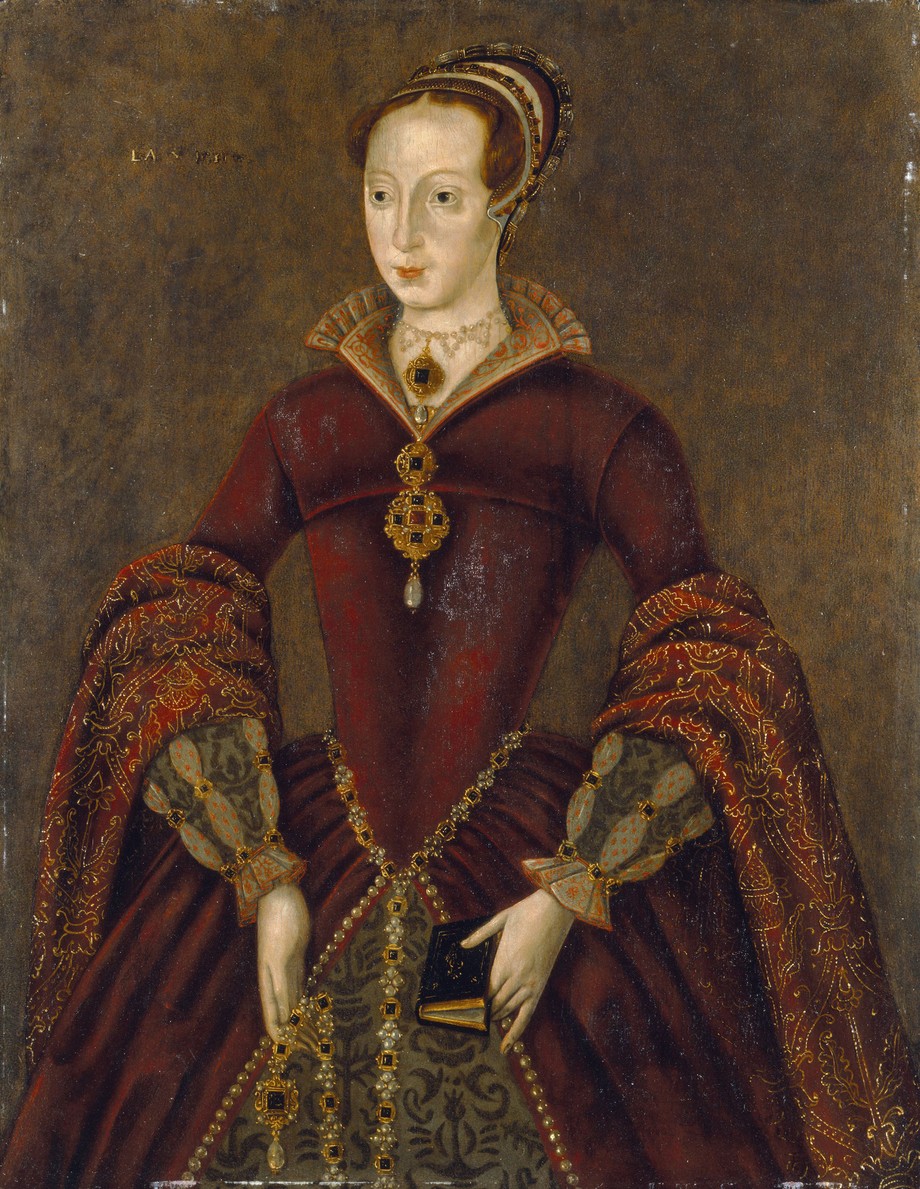
Portrait of Lady Jane Grey
The Scholar Who Was Made a Queen
Lady Jane Grey reigned for nine days and was dead before she turned eighteen, yet she is remembered less for the throne than for the mind that held it in evident contempt. A great-niece of Henry VIII, she was a prodigy: Greek and Hebrew for pleasure, Latin correspondence with continental Reformers. When Roger Ascham visited the Grey household and found the family out hunting, he discovered Jane alone reading Plato's Phaedo in the original. She told him she found more pleasure in Plato than the others found in all their sport — and that her harsh parents had made the schoolroom her only refuge.
When Edward VI lay dying in 1553, Northumberland engineered a succession that passed over the Catholic Mary and named Jane queen. She resisted, wept, and accepted only under pressure. Within nine days the country rallied to Mary and the scheme collapsed. Imprisoned in the Tower, Jane could have saved her life by converting. She refused — disputed theology with the confessor sent to persuade her, and went to the scaffold in February 1554 at seventeen. The type is the INTP: dominant Ti that would die rather than betray its own reasoning; auxiliary Ne in the reach of her reading; tertiary Si in the scholar's discipline; inferior Fe that left her unequipped for the political game played around her.
Lady Jane Grey was the INTP in its purest and most defenseless form—a Ti intellect that had reasoned its way to conviction and would not surrender it, paired with an Ne curiosity that lived more happily among ideas than among the people who meant to use her.
The Conviction She Would Die For
Ti — dominant
Jane's Protestantism was not inherited faith but a position argued into from first principles, defensible line by line. She disputed doctrine with adults twice her age, treating the controversies of the Reformation as questions with right and wrong answers. When Mary sent her almoner, John Feckenham, to argue her toward Catholicism, Jane met him not with the piety of a condemned prisoner but with structured argument — on the sacrament, on Scripture against the Church. She conceded he was kind; she conceded nothing of substance. To a Ti mind, recanting what one knows to be true is not prudence but corruption. Jane chose the scaffold over the lie because the lie was the worse death.
More Pleasure in Plato
Ne — auxiliary
If Ti supplied the rigor, Ne supplied the appetite. She read Plato in Greek, the Reformers in Latin, taught herself Hebrew, and was reaching toward Arabic before her death. When the household went out to hunt, Jane stayed behind with the Phaedo — Socrates reasoning his way toward death with an equanimity she would one day need herself. She genuinely preferred the book because the play of concepts was where her mind felt most alive.
That same openness fitted her for argument and unfitted her for rule. Ne ranges over ideas, not the schemes of ambitious men. The same imagination that traced the architecture of the Reformation never grasped, until far too late, that she had become a piece on a board, moved by hands whose motives lay entirely outside the realm of honest argument.
The Discipline of the Schoolroom
Si — tertiary
Brilliance alone does not give a teenager command of Greek, Latin, and Hebrew; that requires the daily grind of grammar and memorization. Behind the prodigy's flash were years of methodical study — Si building mastery through routine. The schoolroom was also her sanctuary: her parents were so harsh that only study offered peace, and the books were where she went to be left alone with something that made sense. That steadiness held at the end — the composure on her way to the scaffold, the orderly final days, the careful letters, all carry the imprint of a mind that met chaos with method.
The Pawn Who Could Not Read the Board
Fe — inferior
Inferior Fe is the INTP's blind side: an underdeveloped grasp of the unspoken games of loyalty and advantage. Jane's catastrophic public career is that function overwhelmed. Northumberland engineered her onto the throne because she was so legible to him and he so illegible to her. She could parse a theological argument; she could not parse the political theater staged around her body. She was right about the legality, and utterly defeated by the politics, because being right was the only weapon her stack reliably handed her.
And yet the same weakness produced a kind of grace. The interrogators appealing for conversion were reaching for exactly the faculty she had least of: the wish to belong, to be approved. Jane felt that pull so faintly it never overrode her Ti. Her social naivety made her a pawn; her freedom from social need made her, at the very end, unconquerable.
Why INTP Over ENTP
Why not ENTP?
Jane and the ENTP share the same two top functions in different order. But the ENTP leads with Ne and turns outward — it provokes, gathers an audience, thrives on the social friction of the contest. Every account we have of Jane points the other way: she withdrew from the hunt to read alone; she resisted the throne rather than seizing the stage it offered. Hers was a Ti-first intellect that built its convictions in private — the inward scholar, not the outward performer. They sought the room; she sought the page.
Connected Figures
Further Reading
- Lady Jane Grey: A Tudor Mystery — Eric IvesThe definitive modern biography, placing Jane in the full context of Tudor succession politics.
- The Nine Days Queen: Lady Jane Grey and Her Times — Mary LukeA narrative account of Jane's brief reign and the political machinations surrounding it.
- The Tudors: A Very Short Introduction — John GuyA compact overview of the Tudor dynasty and the religious upheavals Jane embodied.
- Elizabeth I — Anne SomersetCovers the broader Tudor succession crisis that Jane's nine-day reign precipitated.
