 Historical Figure MBTI
#385 · 4-4-26 · Elizabethan England
William Cecil
Lord Burghley · Elizabeth's Chief Minister · The Architect of the Regime
1520 — 1598
7 min read
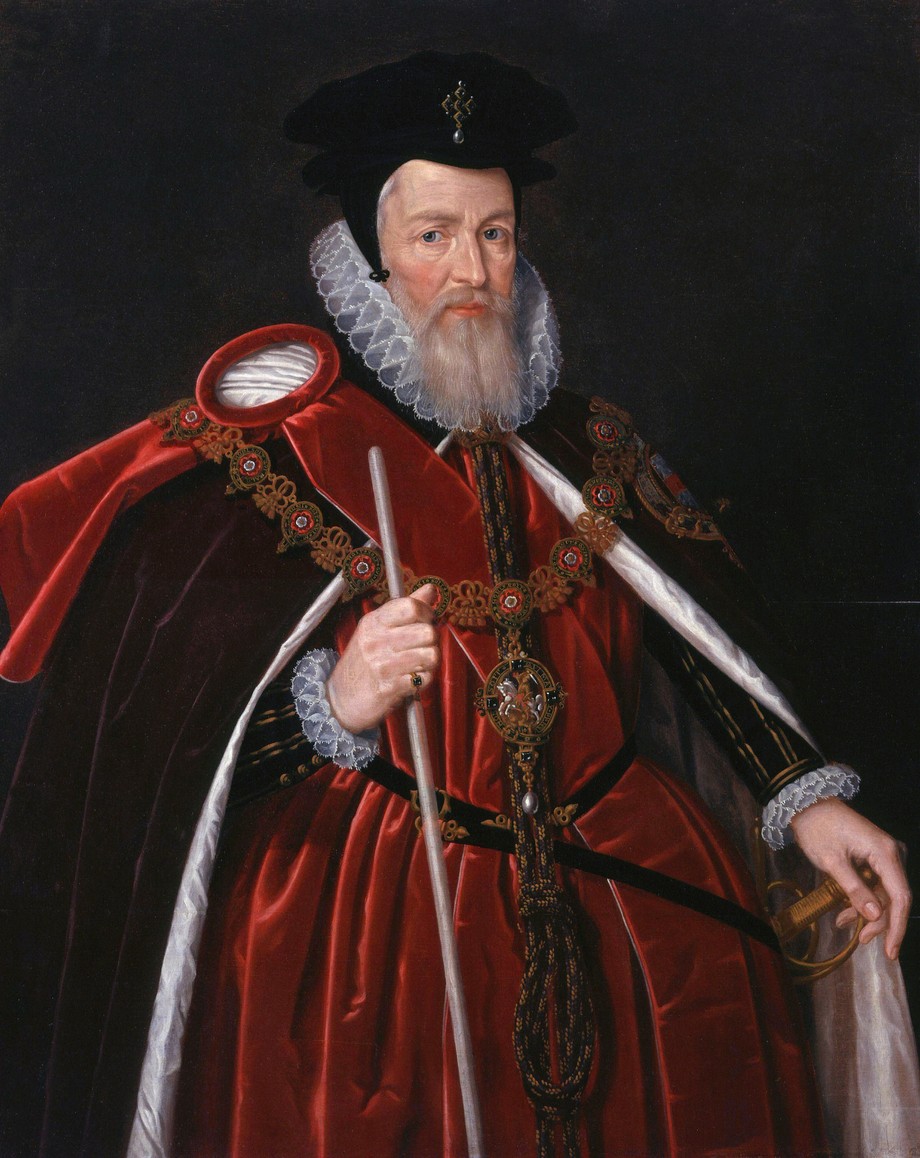
Portrait of William Cecil
The Indispensable Man Behind the Throne
He was never the most dazzling figure in the room, and he never tried to be. While Robert Dudley danced and the sea-dogs sailed off into legend, William Cecil sat at a desk in a plain gown, sorting papers and drafting memoranda. Born in 1520, educated at Cambridge and trained in the law at Gray's Inn, he rose not by charm or arms but by methodical competence. When the twenty-five-year-old Elizabeth came to the throne in November 1558, the first appointment she made was to name Cecil her Principal Secretary. He would serve her for very nearly forty years—until his death in 1598.
Elizabeth supplied the strategic vision; Cecil supplied the steadiness, the mastery of detail that turned royal intention into working government. He ran the Treasury with frugality as severe as her own, managed the intelligence that kept the regime alive, and weighed every great decision in the two-columned memoranda for which he became famous—arguments for and against set side by side. The dazzle of the age was hers; the machinery that made it possible was his—a textbook ISTJ.
Cecil was the ISTJ in his purest administrative form—a dominant Si memory that held the whole precedent and detail of the state, harnessed to a tireless auxiliary Te that organized a kingdom; he did not seek to rule, only to serve and steady, and he was therefore worth more than any man who merely commanded.
The Long Memory of the State
Si — dominant
Dominant introverted sensing accumulates detail with prodigious fidelity and reveres precedent. No statesman of the sixteenth century embodied it more completely than Cecil. Contemporaries marveled at his memory: he seemed to carry the whole machinery of the realm in his head—the terms of half-forgotten treaties, the precedents governing a disputed point of law, the figures of the Exchequer down to the shilling. His authority rested less on eloquence than on the crushing fact that he had read everything and remembered it all. His vast archive of state papers, preserved at Hatfield, remains one of the richest sources for the Tudor period precisely because Cecil kept everything: the documentary instinct of a mind that feels exposed without the written, the filed, the retrievable.
The conservatism ran all the way down. His Protestantism was sincere but moderate, suspicious of Rome and of the reformer who would tear down too much too fast. His instinct in every crisis was to preserve what was working—not timidity, but the Si conviction that established order is a hard-won inheritance whose first duty is to keep it standing.
The Tireless Administration of a Kingdom
Te — auxiliary
Auxiliary extraverted thinking gave Cecil the means to impose order on the external world. His working life was a forty-year demonstration: he mastered finance, intelligence, foreign policy, and the management of Parliament not in bursts of inspiration but through relentless daily diligence. As Lord Treasurer from 1572 he ran the royal finances with parsimony that rested on a clear calculation: solvency was power, and England's real advantage against Spain lay not in matching its armies but in outlasting them.
Above all, Te made Cecil the manager of the regime. He oversaw the intelligence apparatus that, under Walsingham, would penetrate the Catholic plots and doom Mary Stuart; he steered the religious settlement of 1559 through a fractious Parliament and coordinated councillors, ambassadors, and informers into something that actually functioned—the unglamorous housekeeping of an entire realm.
The Quiet Loyalty Beneath the Service
Fi — tertiary
Tertiary introverted feeling in an ISTJ is a private set of convictions about duty, held quietly and acted on without display. In Cecil it took the form of an almost unshakeable personal loyalty: to the queen, to the Protestant realm, to the cause of order and law he had given his life to. Beneath the gray administrative surface ran a genuine fidelity that explains why he kept serving long after gout might have excused him from the desk.
That loyalty had a hard edge, because Fi convictions, once formed, do not bend. On the question of Mary, Queen of Scots, Cecil was immovable: he pressed for her death across nearly two decades. When Elizabeth hesitated over the signed warrant, it was Cecil who quietly convened the Council and saw the execution dispatched—earning her furious displeasure. He bore it. The security of the realm outweighed even the favor of the sovereign he loved. He felt these attachments profoundly. He simply never thought it seemly to say so.
The Distrust of the Wild Gamble
Ne — inferior
Inferior extraverted intuition is the ISTJ's blind spot: the function of open-ended possibility and bold improvisation. What looks to others like an exciting opportunity looks to Cecil like an unaccounted risk. The two-columned memorandum was his defense against it—a way of dragging the unknown future into the domain of the weighable and the known.
This made him a brake on the more adventurous spirits of the age. His statecraft was attrition and patience, not the lightning stroke. The imaginative triumphs of the era—the voyages, the gambles, the dramatic victories—belonged to riskier men, while Cecil quietly kept the solvent, defensible ground from which they could afford to take their chances. The age did not need him to be its visionary; it needed him to be the careful counterweight who kept the enterprise from flying apart on someone else's reckless dream.
Why ISTJ Over ESTJ
Why not ESTJ?
The administrative mastery, the reverence for order, the frugality and the systematic competence all overlap with the ESTJ, and the temptation is to read Cecil as the great organizer-in-chief who ran a kingdom by force of will. But the ESTJ leads with extraverted thinking—it commands outwardly, takes charge of the room, imposes its order on people and events directly. Cecil's power was the opposite: quiet, inward, and infinitely patient, the diligence of the desk rather than the authority of the podium. He led with Si—the prodigious memory, the mastery of precedent and detail, the documentary, conserving instinct—and let his Te serve it, working through paper and process rather than personal command. He served and steadied; he did not dominate. That ordering—Si first, Te second—is introverted, and it makes him ISTJ, not ESTJ.
The contrast is sharpest beside the man who shared his great cause. Walsingham was the visionary of the partnership—driven by burning intuitive conviction, weaving audacious webs of intrigue. Cecil worked in a different key: papers, precedent, the patient accumulation of fact, the slow attrition of caution. He did not burn with vision; he steadied what vision had set in motion—the quiet, inward, dutiful power of the man at the desk.
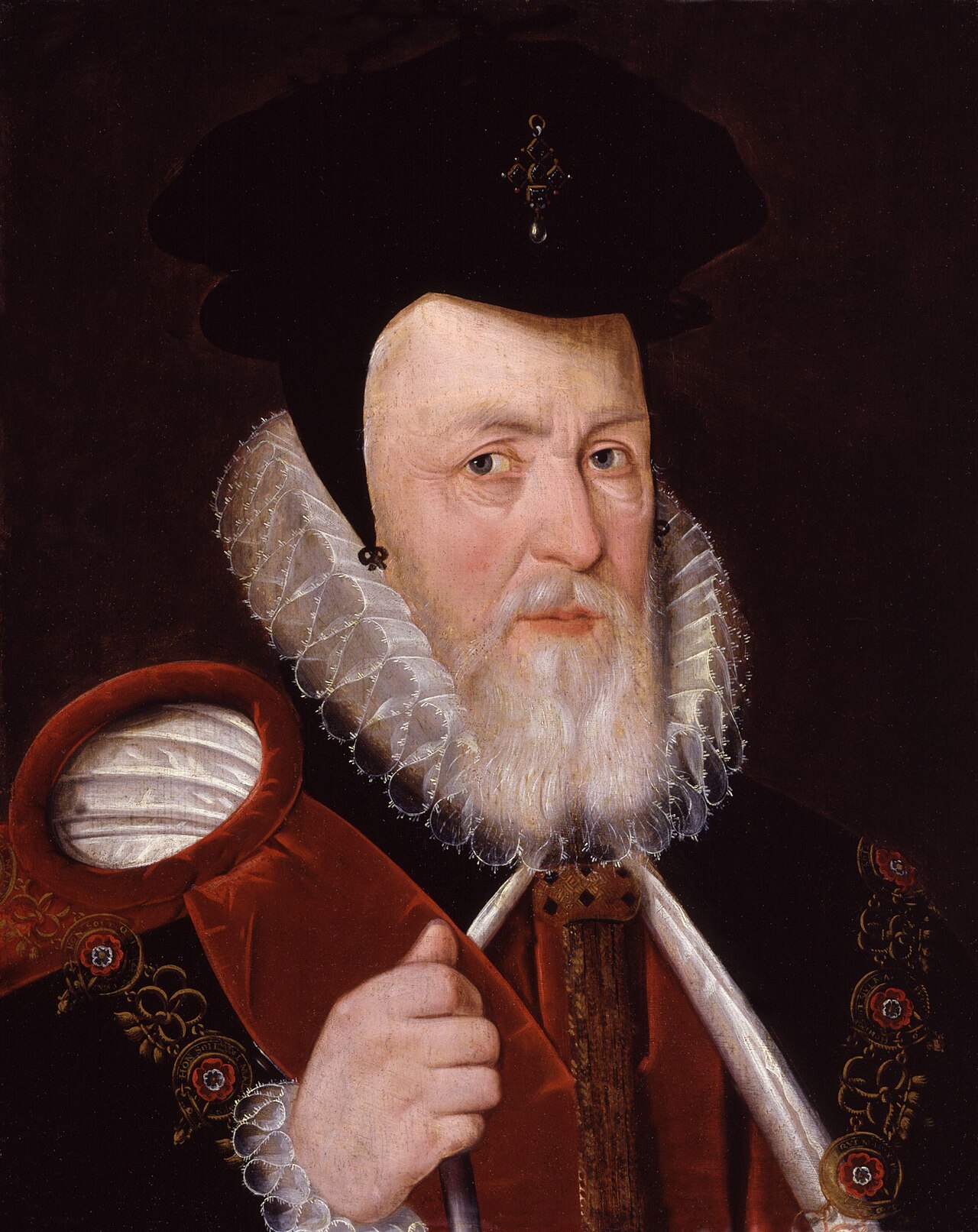
Connected Figures
Further Reading
- Lord Burghley and Queen Elizabeth — Conyers ReadThe definitive biography of Cecil's long tenure as Elizabeth's chief minister, exhaustive in its use of the Hatfield archive.
- The Cecils: Privilege and Power Behind the British Throne — David LoadesTraces the Cecil political dynasty from William through to later generations, placing Burghley in the context of the family's long state service.
- Elizabeth: The Struggle for the Throne — David StarkeyA vivid account of the years leading to Elizabeth's accession, illuminating the political world in which Cecil made himself indispensable.
- The Elizabethan Secret Services — Alan HaynesExamines the intelligence apparatus that Cecil and Walsingham built to protect the Protestant regime from Catholic conspiracy.
- Elizabeth I — Anne SomersetA thorough biography of the queen that gives full weight to Cecil's role as the administrative backbone of her reign.
