 Historical Figure MBTI
#1241 · 9-12-26 · The Mughal Empire
Murad Bakhsh
Mughal Prince · Claimant · Ally Turned Captive
1624–1661
5 min read
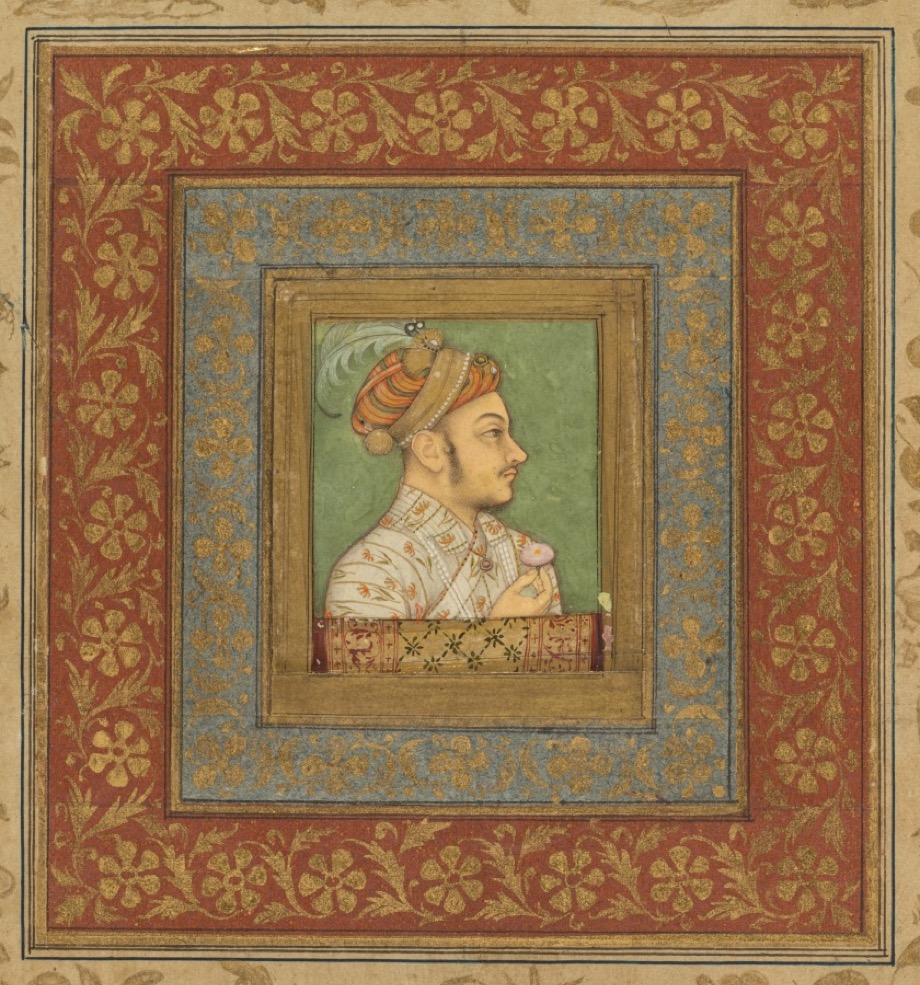
Portrait of Murad Bakhsh — c. 1635; borders c. 1700s
The ally who expected a crown
Murad Bakhsh entered the succession war as a claimant, not as the supporting character that his defeat later made him. When Shah Jahan’s illness opened the question of imperial power in 1657, the youngest of his four surviving sons declared himself king in Gujarat. He possessed a provincial base and the expectations of a Mughal prince. His alliance with Aurangzeb was a way to make that claim effective, even if the partnership eventually supplied the means of destroying it.
Accounts written after his capture easily divide the brothers into intelligence and appetite: Aurangzeb calculates, Murad charges and drinks. François Bernier’s portrait strongly encourages the contrast, praising Murad’s courage while criticizing his judgment. The narrative is memorable because it makes the outcome seem to arise naturally from character. That neatness should put us on guard. A defeated prince was especially vulnerable to being explained by the man who survived him.
The low-confidence ESTP interpretation rests on rapid commitment to immediate opportunities and direct participation in the contest. It does not rest on drinking stories, a love of pleasure, or the assumption that a brave soldier must prefer sensation. The record gives us a succession strategy more securely than a stable private temperament.
The tentative ESTP reading emphasizes dominant Extraverted Sensing in Murad’s readiness to seize an opening and commit his own position to action before the political future was settled.
The opening becomes a declaration
Murad’s declaration of kingship in Gujarat made an uncertain situation into a public claim. It was a consequential act because Shah Jahan had not died, and reports of his illness did not establish a universally accepted transfer of authority. A prince who acted could attract followers and resources; one who waited could see his competitors define the contest without him. Speed had political uses quite apart from temperament.
Dominant Extraverted Sensing is therefore only one possible interpretation of his move. It suggests a readiness to engage the available situation directly and convert opportunity into action. But the incentive was built into Mughal princely competition. Other brothers also asserted claims, and a declaration could be considered, opportunistic, or both. The type lean emerges from the combination of early assertion and the visibly active role he then took, not from the first act alone.
In 1658, the allied forces of Aurangzeb and Murad defeated the army sent to oppose them at Dharmat and then Dara’s forces at Samugarh. Murad was not merely a name attached to somebody else’s campaign. His forces and princely standing contributed to the alliance’s strength. A portrait that makes him incompetent in every respect cannot explain why his cooperation was useful before it became dangerous to his partner.
The bargain and its concealed difference
The partnership gave both men an immediate military advantage. It did not give them the same final objective: a throne could not remain equally possessed by two independent claimants. That difference was the alliance’s central danger. Murad could cooperate rationally in defeating a stronger opponent and still misjudge how the distribution of power would change after victory. A useful bargain does not guarantee the future cooperation on which it rests.
Auxiliary Introverted Thinking is the tentative interpretive name for the narrower logic of this arrangement: combine strength to overcome the present obstacle. There is little basis for reconstructing a developed private theory behind it. The evidence permits a description of the bargain and its consequences, while stories about promises and professions of brotherly loyalty must be assessed in their particular sources.
Murad’s arrest in June 1658 turned the successful alliance into captivity. Reports make a banquet and the removal of his weapons part of the episode; the most sensational details should remain attributed rather than reproduced as privileged access to the room. The secure result was that Aurangzeb neutralized a fellow claimant who had helped him advance. The advantage Murad had sought was gone, and his own independence could no longer protect him.
Why this tentative reading?
Why not ESFP?
The conventional image of Murad as a pleasure-loving, generous warrior might invite that reading, but those traits arrive through interested descriptions and do not establish a judging preference. ESTP is the tentative lean because the public sequence centers on an immediate practical alliance and a direct contest for advantage. That is a narrow argument, and the record does not strongly discriminate between the alternatives.
His failure should not be converted into proof of an inferior capacity for foresight. An ally controlled resources, information, and the means of arrest; a political structure permitted the removal of rival princes. Personality may have affected his choices, but the successful use of power by another man also explains why he lost.
Connected Figures
Further Reading
- Travels in the Mogul Empire, A.D. 1656–1668 — François BernierAn interested contemporary account of the succession war; separate witnessed events from court reports and moral judgments.
- The Mughal Empire — John F. RichardsPlaces princely competition, imperial government, and expansion within their institutional setting.
- The Anecdotes of Aurangzeb — Jadunath Sarkar, translator and editorCollected reports and correspondence to read with attention to transmission, attribution, and the purposes of imperial self-presentation.
