 Historical Figure MBTI
#1239 · 9-12-26 · The Mughal Empire
Aurangzeb
Mughal Emperor · Administrator · Deccan Campaigner
1618–1707
7 min read
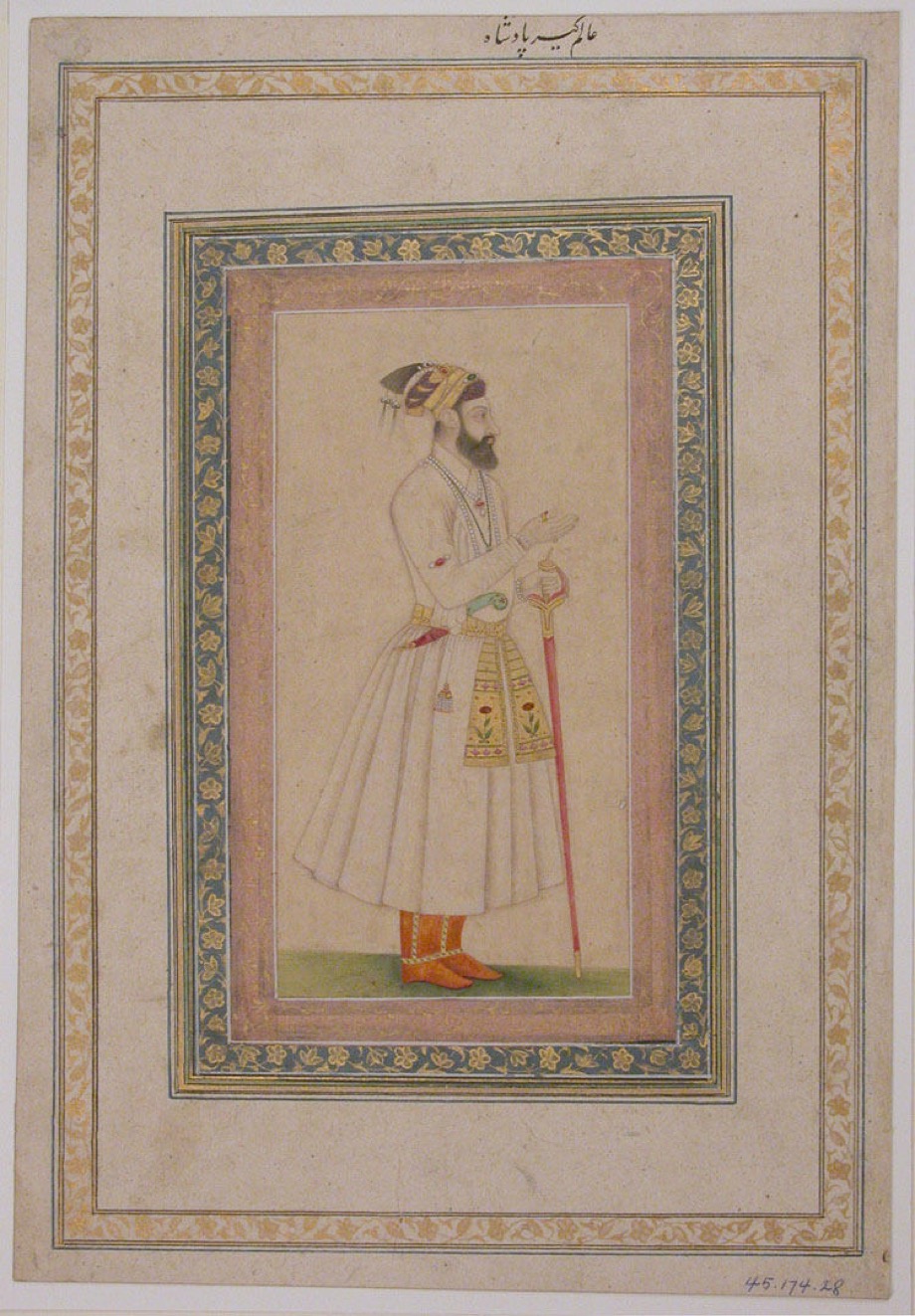
Portrait of Aurangzeb — 17th century
The discipline that could not finish the empire
Aurangzeb could continue long after a less disciplined ruler might have stopped. He worked through correspondence, campaigns, appointments, and judgments across a reign of almost fifty years, holding the claim of imperial authority against problems that never became permanently solved. The capacity was formidable. So was the danger within it: persistence could sustain government, but it could also keep an increasingly expensive undertaking alive after conquest had failed to produce obedience.
His accession in 1658 followed a war among Shah Jahan’s sons. He defeated Dara Shikoh, imprisoned his father, and removed the brother whose alliance had helped him advance. Those acts belong to the history of coercive succession, not to a picturesque story of a pious administrator reluctantly summoned to power. Religious commitment and political calculation occupied the same life. Neither can simply be used to explain away the other.
The ISTJ interpretation emphasizes a recurrent attachment to authoritative standards and an extraordinary willingness to maintain their practical enforcement. It remains an editorial reading, not a diagnosis. Religious orthodoxy does not establish Introverted Sensing, and violence does not establish a thinking preference. The argument has to rest on how he pursued and administered his purposes, while leaving room for the uncertainty of the record.
The ISTJ reading places dominant Introverted Sensing in Aurangzeb’s persistent return to established standards of duty, supported by the administrative endurance needed to enforce them.
The standard before the exception
Aurangzeb’s religious policies gave Sunni legal authority a more pronounced place in imperial government. The compilation of the Fatawa-i Alamgiri, undertaken under his patronage, brought learned jurists into a major effort to assemble Hanafi legal opinions. This was not a constitution that mechanically determined every imperial decision. It was nevertheless a substantial statement about where authoritative judgment should seek its foundations.
The psychological inference is limited but useful. Rather than treating inherited standards as material to be endlessly rearranged, he repeatedly sought to make them active measures of government. Introverted Sensing, in this reading, concerns the reference point that makes a judgment intelligible: the ruler should answer to an established conception of right order. A legal compilation alone cannot establish a type, but it belongs to a broader pattern of regulating conduct and returning to duties that he regarded as binding.
His reimposition of the jizya in 1679 made religious distinction materially visible in taxation. Temple destructions and restrictions also formed part of his reign, including prominent actions at Mathura and Banaras. These policies were discriminatory and could intensify political conflict. Their application varied, and Hindu officials remained important to imperial service; neither fact makes the discrimination unreal. The serious question is how a ruler combined such commitments with the practical dependence of his empire on people whom those policies marked unequally.
The labor of making orders real
Aurangzeb’s command rested on more than issuing a stern instruction from a palace. Appointments, revenue arrangements, military supplies, and intelligence had to connect the ruler to distant provinces. His long administrative career before accession and his sustained involvement afterward gave him experience of that machinery. The tentative auxiliary Extraverted Thinking argument concerns this attention to implementation, rather than the mere fact that an emperor employed officials.
He could also use alliances that served a concrete objective and then dispose of them when that objective changed. In 1658, cooperation with Murad Bakhsh helped overcome forces defending Shah Jahan’s government and Dara’s position. Murad was subsequently arrested and ultimately executed in 1661. The sequence reveals purposeful manipulation of a partnership. It should not be admired as an abstract display of efficiency: the result was the destruction of a brother who had been useful as an ally.
His success in taking Bijapur in 1686 and Golconda in 1687 similarly enlarged the territory under imperial claim without eliminating the difficulty of controlling it. Annexation brought new responsibilities and new demands on resources. The gap between an achieved objective and a sustainable settlement becomes a defining problem of the reign. Administrative determination could carry the empire into a conquest; it could not guarantee that every additional conquest made the whole easier to govern.
The accession itself required more than winning one encounter. Dara’s defeat at Samugarh did not remove every rival, and Shah Shuja continued his own campaign. Aurangzeb had to establish control while the dynasty’s competing claims remained active. Shah Jahan also remained alive in captivity until 1666, a reminder that the new ruler had seized authority from a father whose sovereignty could not simply be treated as a completed past. The sequence shows practical follow-through under uncertain conditions. It also prevents a neat separation between the supposedly calculating prince and the supposedly conscientious emperor: the ruler’s authority emerged from decisions that his later obligations had to accommodate.
A duty that belonged to the ruler
The private language of obligation is difficult to separate from the public work of legitimacy. Aurangzeb’s correspondence and the anecdotes preserved about him repeatedly present responsibility, accountability, and concern with proper conduct. Such material gives a different angle from court chronicles or European portraits, but it must also be read as language used by a sovereign. A letter can express conviction and manage how the writer is understood at the same time.
Tertiary Introverted Feeling is a tentative way to describe the personal weight of those obligations within the proposed type. It is not an explanation that absolves him because he believed himself justified. A ruler can feel answerable to a demanding moral standard while imposing grave suffering. The deaths of Dara and Murad, the imprisonment of Shah Jahan, and the violence of imperial expansion remain acts with victims, whether his own account was framed by necessity or conscience.
His determination to remain in the Deccan during the later decades of his life puts that question under pressure. Continuing could be experienced as fidelity to a task that must not be abandoned. It could also mean failing to revise the task when the means no longer delivered the hoped-for end. The same endurance that makes him impressive makes the judgment difficult. We cannot decide that every persistence was principled merely because it lasted.
Why this tentative reading?
Why not INTJ?
Aurangzeb’s succession maneuvers and campaigns certainly demonstrate planning, and his eventual imperial reach can suggest an overarching vision. The preference for ISTJ rests on the recurrent prominence of established legal and dynastic duties, together with painstaking maintenance, rather than on a clearly documented personal reimagining of the political order. Strategic ability is available to both readings and does not settle the distinction.
The weakest inference is any claim that his later overextension proves an inferior function. Long wars emerged from enemies, terrain, finance, and an imperial system that rewarded expansion, not simply from one man’s inability to imagine alternatives. The type reading should illuminate a pattern without becoming an explanation for every outcome.
Connected Figures
Further Reading
- Travels in the Mogul Empire, A.D. 1656–1668 — François BernierAn interested contemporary account of the succession war; separate witnessed events from court reports and moral judgments.
- The Mughal Empire — John F. RichardsPlaces princely competition, imperial government, and expansion within their institutional setting.
- The Anecdotes of Aurangzeb — Jadunath Sarkar, translator and editorCollected reports and correspondence to read with attention to transmission, attribution, and the purposes of imperial self-presentation.
- Aurangzeb ‘Alamgir and the Mughal Empire — Munis D. FaruquiA recent scholarly reassessment of the emperor’s rise, policies, and long reign.
