 Historical Figure MBTI
#1235 · 9-11-26 · The Mughal Empire
Dara Shikoh
Mughal Prince · Scholar · Seeker Across Traditions
1615–1659
6 min read
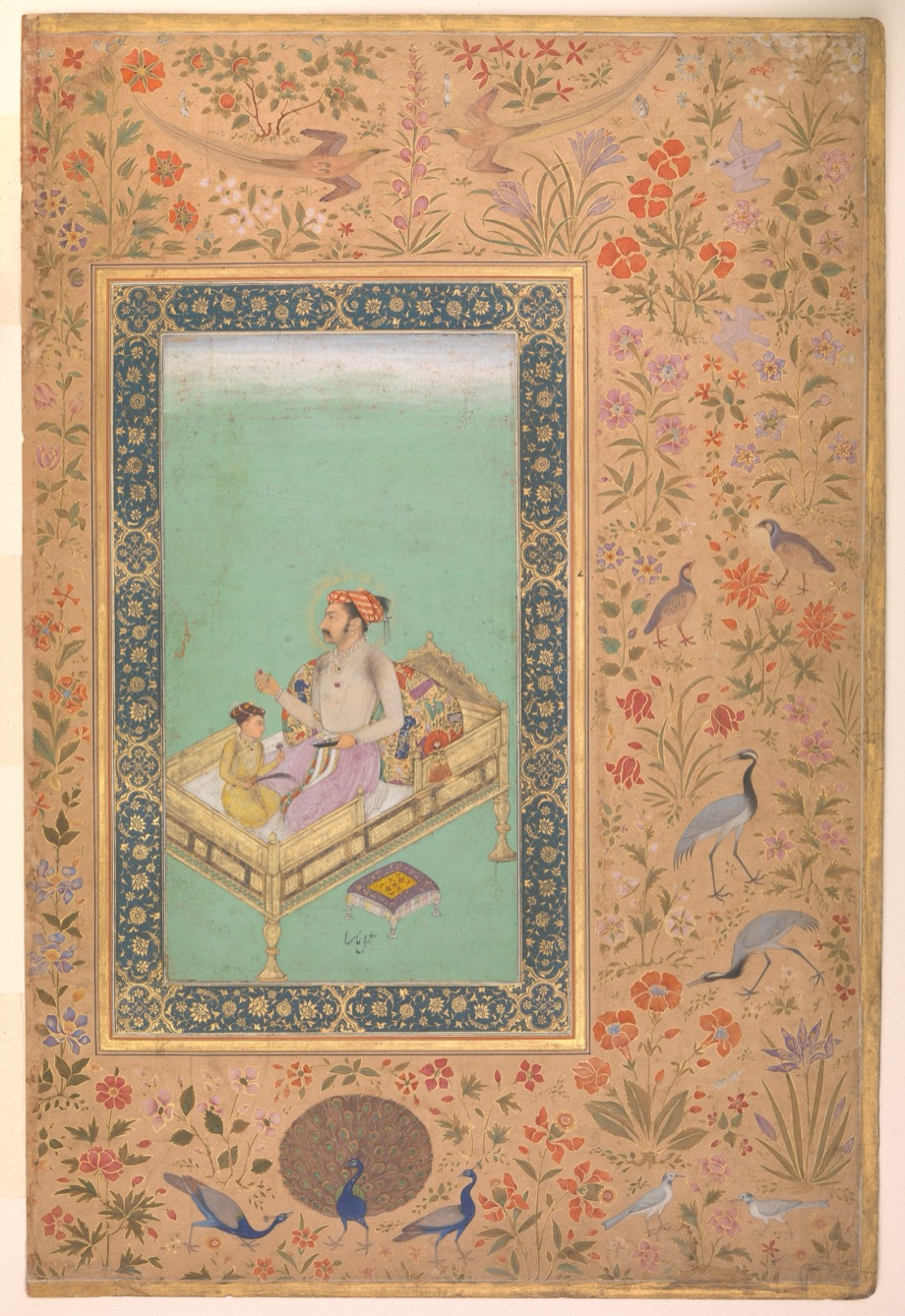
Portrait of Dara Shikoh with his father Shah Jahan — c. 1620
The Truth He Expected to Find
Dara Shikoh did not approach the Upanishads as a detached collector adding another specimen to a library. He expected them to disclose a truth he already believed existed: the unity beneath apparently different religious languages. In 1657 he completed a Persian translation with the assistance of pandits, placing Sanskrit teachings within reach of readers for whom Persian was the language of scholarship and court. The enterprise joined curiosity to conviction. He crossed a boundary because he believed that, at a deeper level, it need not divide the seekers on either side.
The title Sirr-i Akbar, the great secret, located the work within his own search. His introduction associated the Upanishads with the concealed book mentioned in the Quran. This was neither a rejection of Islam nor an argument that religious commitment should leave public life. Dara interpreted one tradition through another, carrying his Sufi understanding into the comparison. That approach could open new intellectual relations while also making difference seem smaller than the people he consulted might have considered it.
Born in 1615, the eldest surviving son of Shah Jahan and Mumtaz Mahal, he pursued these interests as a favored prince. His position supplied access to teachers, books and collaborators; it also placed every distinctive commitment within a contest over kingship. The proposed personality interpretation has medium confidence because his own writings reveal a sustained project, though writing still presents a fashioned self rather than an unguarded mind.
The tentative INFP reading begins with Introverted Feeling: Dara’s intellectual explorations repeatedly returned to a spiritually compelling truth he sought to recognize across inherited boundaries.
Discipleship Before the Comparison
Dara’s comparative work grew from a particular devotional history. He revered Mian Mir and became a disciple of Mulla Shah Badakhshi in the Qadiri tradition. His sister Jahanara also entered that spiritual circle. The association was more than an intellectual taste. Initiation, guidance and the remembrance of teachers made the pursuit a practiced commitment within a chain of transmission. His early works on saints and later accounts of his own guides gave that commitment a public literary form.
Introverted Feeling is proposed here as a way of understanding the personal weight he attached to spiritual recognition. The argument does not rest on the fact that he was religious; his brothers were religious too. It rests on the continuity between a chosen devotional allegiance and the effort to identify its truth in unfamiliar texts. He did not simply survey opinions and leave them at equal distance. He selected, interpreted and connected them through convictions that mattered to him.
That conviction had princely advantages and risks. A favored son could make a teacher’s reputation more visible through manuscripts and patronage. He could also make his own attachments seem inseparable from the future of the dynasty. The presence of ascetics and unconventional thinkers around him therefore invited reactions beyond theological disagreement. Supporters could see spiritual distinction; opponents could turn the same circle into evidence of unfitness to rule.
Words Between Two Oceans
In Majma al-Bahrayn, completed in 1655, Dara compared terms and concepts from Islamic mysticism and Hindu thought. The book’s two oceans were not communities blended by decree. They were systems of expression whose correspondences he tried to establish. The work attends to such matters as the soul, sound, divine names and liberation, making comparison a sequence of intellectual decisions rather than a vague declaration that every religion says the same thing.
Auxiliary Extraverted Intuition fits this effort to discover connections across vocabularies. One formulation could suggest another, and an apparent separation could become an invitation to inquire. His translation project extended that movement into collaborative labor. Pandits were essential interlocutors, not silent suppliers of material for a solitary genius. Their participation places the enterprise within an existing world of Sanskrit and Persian exchange rather than treating Dara as the first person to think across traditions.
Exploration did not make his conclusions neutral. Finding unity was his purpose, so he could emphasize resemblance and pass more quickly over divergence. That limit belongs inside the achievement. The comparison enlarged access and provoked thought without settling every philosophical difference. A useful personality reading recognizes imaginative connection while resisting the assumption that openness guarantees accuracy or that curiosity dissolves the authority of the person asking the questions.
A Chain of Remembered Teachers
Dara’s Safinat al-Auliya collected lives of Muslim saints; his Sakinat al-Auliya concentrated on the spiritual world of Mian Mir, Bibi Jamal Khatun and Mulla Shah. These works placed current experience within an inherited sacred history. Even while looking beyond familiar boundaries, he preserved names, affiliations and remembered examples. The new comparison rested beside a continuing effort to establish who had taught whom and how a spiritual lineage should be remembered.
Tertiary Introverted Sensing is a cautious interpretation of that grounding in remembered models. The stronger historical conclusion is literary: Dara wanted his devotional commitments to possess an intelligible genealogy. Hagiography selects and orders memories to show sanctity, so its miracles cannot be read as independently verified events. They reveal the kind of spiritual authority he wished to preserve. The author’s devotion is more accessible than the exact behavior of every saint he describes.
Testing the INFP Reading
Why not INFJ?
INFJ is a serious alternative because Dara pursued a unifying spiritual vision and articulated it through relationships with teachers. INFP receives a modest preference because the surviving works move through personally compelling commitments and exploratory correspondences rather than clearly documenting an outward mission to guide a collective. His princely self-presentation complicates that distinction, so neither interpretation should be treated as settled.
Inferior Extraverted Thinking should not be used to explain away military defeat. Dara possessed offices, resources and the advantages of imperial favor; his losses arose within a contested field of commanders, armies and alliances. The failure of his Qandahar expedition and his later succession campaign requires historical explanation, not a claim that an imaginative personality cannot govern.
Connected Figures
Further Reading
- The Emperor Who Never Was: Dara Shukoh in Mughal India — Supriya GandhiA biography that reconnects the prince’s scholarship, religious commitments and imperial ambitions.
- Majma-ul-Bahrain, or the Mingling of the Two Oceans — Dara Shikoh; edited and translated by M. Mahfuz-ul-HaqRead the comparative argument itself, with attention to the choices made in aligning terms.
- The Princes of the Mughal Empire, 1504–1719 — Munis D. FaruquiExplains the princely institutions and networks that shaped the succession contest.
- Faces of God: Images of Devotion in Indo-Muslim Painting, 1500–1800 — Murad Khan MumtazExamines devotional images and the Qadiri circle surrounding Dara and Jahanara.
