 Historical Figure MBTI
#657 · 5-13-26 · The Five Good Emperors
Nerva
Caretaker Senator · Accidental Founder
30 — 98 CE
6 min read
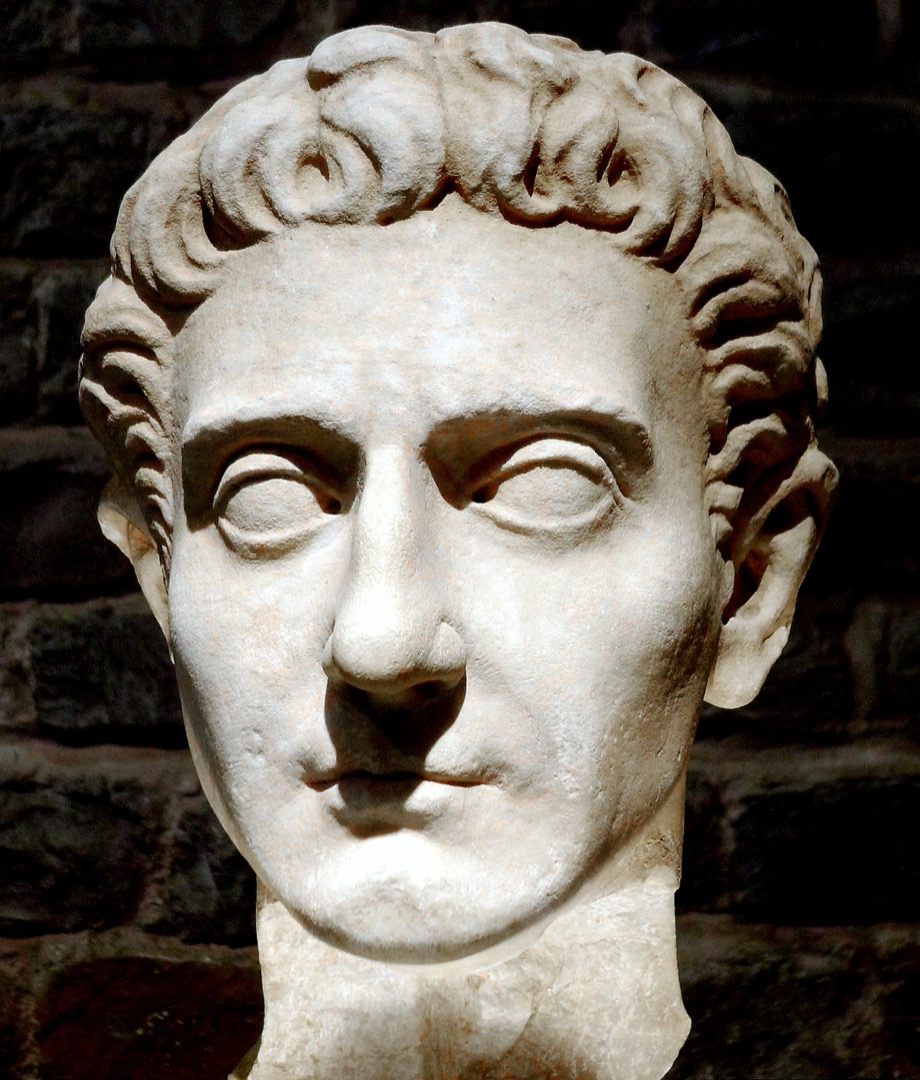
Portrait of Nerva
The Safest Man in Rome
Nerva became emperor of Rome for the same reason he had survived every regime before it: he alarmed no one. A career senator and legal advisor who had served Nero, then outlasted the year of four emperors, then served the Flavians without ever attracting Domitian's famous suspicion, he was sixty-five years old and childless when the Senate needed a name to put forward on the afternoon Domitian's own household finished him off with daggers. He was not a soldier, not a schemer, not the head of any faction — which was precisely the point. Rome had just endured fifteen years of a tyrant who trusted no one; the conspirators wanted an emperor who would trust everyone, or at least threaten no one.
What followed was not the triumphant restoration the Senate had hoped for but a slow, painful demonstration of what that safety actually cost. Nerva reversed Domitian's cruelties with real conviction — recalling exiles, returning confiscated estates, ending the treason trials that had turned Rome into an informer's marketplace — but he had no army of his own, no personal loyalty among the legions, and no capacity to frighten anyone into line. When the Praetorian Guard turned on him within a year, demanding blood for Domitian's death, he discovered that decency without power is a fragile inheritance. His genius, such as it was, lay in what he did next: not clinging to the throne through force he didn't have, but quietly handing the empire's future to someone who did.
Nerva was not a builder of empires but a keeper of them — an ISFJ whose dominant Si made him a custodian of precedent and whose auxiliary Fe, tested by humiliation, chose the empire's stability over his own pride.
A Restorer, Not a Reformer
Nerva's first instinct as emperor was not to invent but to undo. Every act of his brief reign reads as a restoration of a remembered, proper order rather than a new vision of one: he recalled the men and women Domitian had exiled on flimsy charges, returned property that had been seized under the treason laws, and abolished the informer culture that had made Roman aristocratic life a permanent trial. None of this was innovation. It was the instinct of a man who had spent decades as a legal advisor absorbing precedent, who understood the Senate's proper prerogatives from the inside, and who wanted Rome returned to a state it recognized, not reinvented into one it didn't.
That same fidelity to established form explains why the Senate trusted him in the first place. Nerva had spent his whole career as a discreet, procedurally correct figure — advising, not commanding; surviving Nero's fall and the Flavian rise by never overstepping his station. Dominant Si doesn't crave the spotlight; it accumulates trust through consistency. By 96 CE, that accumulated trust was Nerva's only currency, and it was enough to make him emperor even though he had never held military command and had no personal power base at all.
Adoption Under a Dagger's Shadow
The defining crisis of Nerva's reign came in 97 CE, when the Praetorian prefect Casperius Aelianus led his own guard in mutiny, besieging the emperor and demanding he surrender Domitian's assassins for execution. Nerva refused as long as he could, reportedly baring his own throat and offering it in place of the men he felt honor-bound to protect. It did not work. The mutineers got their executions, and Nerva was left publicly humiliated — an emperor who could not even protect the people who had made him one.
It is what he did in the aftermath that reveals the auxiliary Fe underneath the wounded pride. Rather than spend his remaining authority on retaliation or self-justification, Nerva looked outward at what Rome actually needed: a credible military man the legions would follow, so that no fresh crisis of confidence could unravel the state again. In October 97 CE he adopted Marcus Ulpius Traianus — Trajan, then commanding troops on the German frontier — as his son and heir, a choice that instantly calmed the Guard and the provinces alike. It was not a dynastic dream; Nerva had no blood claim to protect and evidently wanted none. It was an old man absorbing one more indignity so that the empire would not have to.
The Calculation Behind the Kindness
The adoption of Trajan is often told as pure sentiment, but it was also a shrewd, narrowly reasoned solution to a specific problem. Nerva did not merely need any successor; he needed one who could neutralize the exact threat that had just cornered him — an army-facing figure with real command experience and no association with the Senate's recent purges. Trajan, popular with the legions and untainted by the mutiny or by Domitian's court, was close to the only name that solved every variable at once. That is tertiary Ti working in service of Fe's aim: not System-building for its own sake, but a precise, almost legalistic fit between problem and remedy, chosen quietly and executed fast, within weeks of the humiliation that provoked it.
Why ISFJ Over ISTJ
Why not ISTJ?
An ISTJ reading of Nerva would cast him as an administrator restoring order through law and precedent for their own sake — dominant Te dressed up as duty. But Nerva's defining act was not systematizing; it was a personal, protective sacrifice made under duress, choosing the empire's wellbeing over his own standing at real cost to his dignity. Ancient sources describe him visibly pained and shaken by the Guard's violence, recoiling from it rather than processing it with an administrator's detachment. That is Fi-toned Fe, care and quiet self-sacrifice, not the impersonal rule-following of a Te-led type.
The distinction matters because it explains why Nerva succeeded at the one thing that counted. An ISTJ might have dug in, litigated the mutiny, or tried to outlast the Guard by the book. An ISFJ absorbed the humiliation and acted to protect what mattered more than his own vindication — and in doing so, quite by accident, invented the practice of merit-based adoptive succession that would carry Rome through its best century.
Connected Figures
Further Reading
- Roman History, Book 68 — Cassius Dio (trans. Earnest Cary)The principal ancient narrative of Nerva's brief reign and the Praetorian mutiny.
- Nerva and the Roman Succession Crisis of AD 96–99 — John D. GraingerThe fullest modern account of Nerva's accession, the mutiny, and the Trajan adoption.
- Panegyricus — Pliny the Younger (trans. Betty Radice)A contemporary's framing of the Nerva-to-Trajan transition as Rome's escape from tyranny.
- The Emperor Domitian — Brian W. JonesEssential background on the regime Nerva was installed to replace.
