 Historical Figure MBTI
2 min read
#242 · 3-23-26 · The Age of Alexander
Oxyathres
Prince · Loyal Brother · Macedonian Courtier
fl. 334 — 320s BC
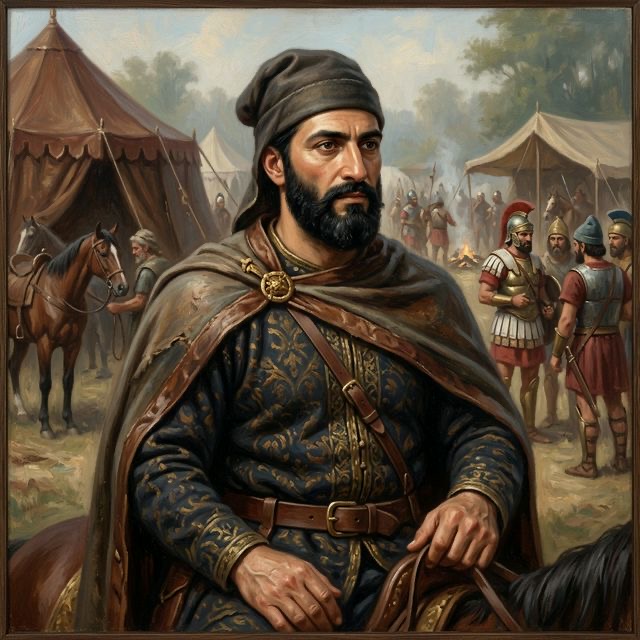
AI-assisted portrait of Oxyathres
The Brother Who Adapted
Oxyathres was the brother of Darius III and one of the most capable Persian cavalry officers of his generation. At the Battle of Issus (333 BC), when Alexander's cavalry wing threatened to encircle Darius, it was Oxyathres who led a counter-charge to protect the king's chariot. The act was recorded by ancient sources as conspicuously brave.
Oxyathres was an ESFP — physically courageous, socially adaptable, fully present in whatever world he inhabited. When his world changed, he changed with it.
The Soldier in the Moment
Dominant Se produces warriors who read the battlefield in real time and respond faster than deliberation allows. Oxyathres's charge at Issus was a Se-dominant response: the threat was immediate, the action was physical, the result was visible. He was not a strategic thinker — he was an exceptional cavalry commander, which is what the moment required.
After Darius's death, Oxyathres made a pragmatic transition to Alexander's court. He was given the governorship of Hyrcania. Alexander later married his niece Stateira II (daughter of Darius). The connection between the conqueror and the brother of the conquered became, over time, a functional working relationship. Oxyathres moved between worlds without apparent existential crisis — a Se strength.
The Loyalty Beneath the Adaptability
Auxiliary Fi in an ESFP provides a core of personal values that operates quietly beneath the social flexibility. Oxyathres served Alexander, but the ancient sources hint that he maintained his brother's honor — there is no record of him participating in the degradation of Darius's memory, or assisting in the hunt for Bessus as a tool of revenge. He adapted without betraying. The distinction is subtle but legible in the record.
Why ESFP Over ESTP
Why not ESTP?
The ESTP would have been more calculating about the transition — treating Alexander's court as an opportunity to leverage, seeking advantage and position aggressively. Oxyathres simply continued being a Persian noble in Macedonian service. His adaptability reads more like natural social ease (Se-Fi) than strategic repositioning (Se-Ti). He thrived because the new world was still a world of physical courage and social hierarchy — not because he engineered his survival.
Connected Figures
Further Reading
- Alexander the Great — Robin Lane FoxThe most vivid narrative of Alexander's campaign — covers the Persian royal family, Issus, and the fate of Darius's circle in depth.
- The Persian Empire — Pierre BriantThe definitive scholarly account of the Achaemenid dynasty; situates Oxyathres within the royal kin network and the empire's collapse.
- Alexander of Macedon: A Historical Biography — Peter GreenCritically examines Alexander's court and the integration of Persian nobles like Oxyathres into the Macedonian hierarchy.
