 Historical Figure MBTI
#573 · 4-30-26 · The Ottoman Zenith
Pargalı Ibrahim Pasha
Grand Vizier · The Sultan's Favorite · The Rise and the Bowstring
c. 1495 — 1536
9 min read
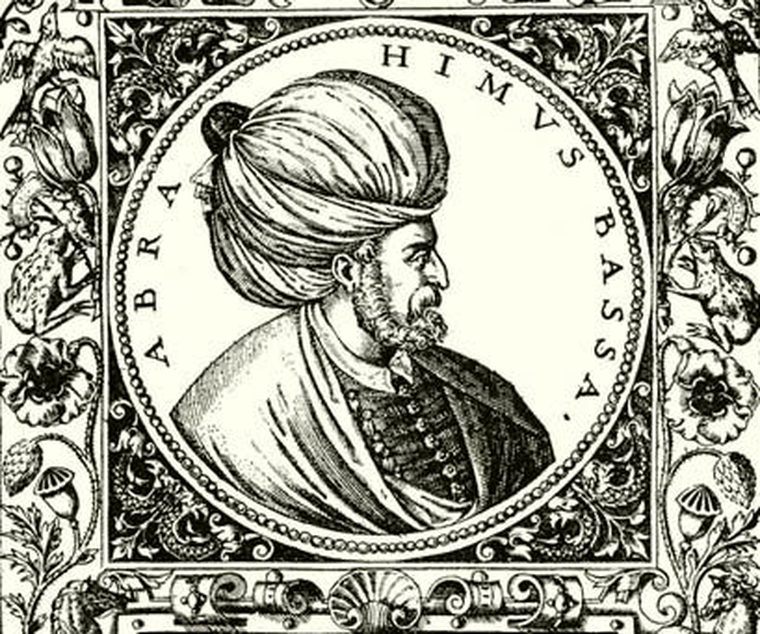
Portrait of Pargalı Ibrahim Pasha
The Man Who Could Do Anything
He was the friend the sultan could not do without — and then, one night, the friend the sultan strangled in his sleep. Between those two facts lies the most dazzling and the most cautionary career of the Ottoman golden age. Born a Christian fisherman's son on the Greek coast at Parga around 1495, enslaved as a boy and carried into the Ottoman world, Ibrahim rose not by blood or army but by sheer brilliance — and by the friendship of a prince. He and the young Suleiman were raised as intimates, and when Suleiman took the throne in 1520 he brought his companion up with him, naming him Grand Vizier in 1523 in a leap so steep it scandalized the whole court.
What made the leap survivable, for a while, was that Ibrahim really could do everything. He was a diplomat who out-talked Habsburg and French envoys, a general who led armies into Hungary and against Persia, an administrator who ran the machinery of a world empire, an aesthete and collector, a musician, a polyglot said to move between Greek, Turkish, Persian, and Italian with ease. For a decade he was the effective co-ruler of the largest state on earth — so close to Suleiman that the two reportedly shared apartments. He was the improviser who could master any brief the moment demanded it, and charm the room while he did. That gift is the ENTP's signature glory, and it was also, in the end, exactly the thing that killed him.
Ibrahim is the ENTP as universal favorite: Ne's astonishing range — diplomat, soldier, administrator, artist, linguist, the man who could pick up any role — welded to Ti's quick analytical edge, a mind that thrived on versatility and persuasion rather than on any single fixed design.
The Virtuoso of Any Brief
Ne — dominant
Dominant Ne is a mind that expands into whatever field it enters and finds it can do the work. Ibrahim's career reads like a catalogue of unrelated masteries held by a single man. In the council chamber he was a diplomat of the first rank, negotiating with the ambassadors of Charles V and with Francis I of France, playing the powers of Europe against one another to buy the empire space to grow. In the field he was a commander — leading the great campaigns into Hungary and taking supreme command against Safavid Persia, capturing Tabriz and Baghdad. Between wars he ran the administration of the realm; in his leisure he collected art, patronized music, and set up the bronze statues he carried back from Buda outside his own palace on the Hippodrome.
No single one of these was his "true" vocation, and that is the point. The ENTP does not specialize; it improvises, picking up each new domain as a fresh problem to be talked and reasoned into submission. Ibrahim was the man you could hand any brief — a treaty, a siege, a rebellion in Egypt, a court intrigue — confident he would master it fast enough to look as though he had trained for it all his life. His versatility was so total that contemporaries struggled to name what he was, because he was, functionally, all of it at once.
That same restless breadth is why his power felt limitless and became limitless in his own eyes. A man who has proven he can do anything begins to believe there is nothing he cannot do — and Ne, ungoverned, keeps reaching past the last boundary it cleared. Ibrahim's range was real. His sense of where it should stop was not.
The Sharp Edge Behind the Charm
Ti — auxiliary
Ne dazzles; Ti is what keeps the dazzle from being mere show. Ibrahim's charm was never empty flattery — it was backed by a genuinely acute analytical intelligence that could cut to the logic of a negotiation or a campaign and act on it faster than his rivals could think. The Venetian and Habsburg envoys who dealt with him left impressed not just by his eloquence but by how completely he grasped the leverage in a situation — where the real interests lay, which pressure would move which party, what could be conceded cheaply and what must be held.
Ti is also what let him hold so many offices at once without drowning. Running an empire's diplomacy, armies, and administration in parallel demands a mind that reduces each tangle to its working parts and solves it on its own terms. Ibrahim did this coolly, and the coolness could shade into a chilling detachment: when he crushed the great revolt in Egypt he reorganized the province's entire governance with the crisp efficiency of a man solving a puzzle, not soothing a wound. The intelligence was clinical, precise, and quick.
But auxiliary Ti serves a dominant that loves to reach, and here it became a liability. Ibrahim could always construct the clever argument for why the next boundary did not apply to him — why a slave-born vizier might take a near-royal title, why the sultan's friend stood outside the ordinary rules. A sharp mind that can rationalize its own overreach is more dangerous to its owner than a dull one, because it silences the doubt that might have saved him.
The Charm That Made Him and Unmade Him
Fe — tertiary
Everything Ibrahim was rested on a single relationship, and tertiary Fe is how he built and worked it. His whole ascent flowed not from an army or a faction but from the personal love of one man — the intimacy with Suleiman that began in boyhood and never, until the last year, cooled. Ibrahim could read the sultan, delight him, reassure him, be the one companion in a paranoid court who felt like a friend rather than a supplicant. That charm was his instrument of power more than any office; the grand vizierate merely formalized what the friendship had already granted him.
But tertiary Fe is charm without a fine sense of the wider room. Ibrahim could enchant the one man who mattered and remain oblivious to how his rise looked to everyone else — the older statesmen he vaulted over, the religious establishment he offended, the harem he ignored. He took the extraordinary title of serasker sultan, carried himself with a near-royal arrogance that grated on a court obsessed with hierarchy, and seems never to have registered the accumulating resentment as a real threat. He courted the affection he wanted and was blind to the enmity he was manufacturing.
Above all he underestimated Roxelana, the woman rising in Suleiman's heart as surely as he was rising in the state. She read the court's emotional currents with a mastery Ibrahim never matched, and she quietly worked them against him. He had won the sultan's love and assumed it was a permanent possession. He did not see that another person could compete for it — and win.
The Limit He Could Not See
Si — inferior
Inferior Si is the ENTP's blind side: the sense of precedent, of established limit, of what the accumulated weight of custom will and will not tolerate. In the Ottoman world that weight was everything — a court governed by rank, protocol, and the long memory of what a slave-born servant was permitted to be. Ibrahim, all forward-reaching Ne, seems to have felt these boundaries as suggestions rather than laws. The title, the arrogance, the near-parity with the sultan: each was a step past a line that the tradition-minded around him experienced as a genuine transgression.
The most fatal blindness was to the oldest Ottoman precedent of all — that no favorite is safe, that intimacy with the sultan is the most dangerous position in the empire precisely because it has no institutional floor beneath it. Every experienced courtier knew the bowstring waited at the end of too much power. Ibrahim, trusting the feel of a friendship that had never failed him, could not internalize a danger he had never personally experienced. His whole life had taught him that Suleiman's love was reliable. Si, had it been stronger, would have whispered that the past of every other favorite was also his future.
In 1536, after a Persian campaign in which he had reached even higher and given his enemies their opening, the whisper he never heard arrived without warning. Suleiman had him strangled in his sleep in the palace they had once shared. The most versatile man in the empire was undone by the one thing his mind was worst at seeing: the limit.
Why ENTP Over ENTJ
Why not ENTJ?
The ENTJ reading is tempting — Ibrahim commanded armies, ran an administration, and stood at the summit of a world empire, all of which look like Te-Ni empire-building. But the ENTJ is a systematic architect driving toward a fixed design, and Ibrahim never had one. His power flowed from wit, adaptability, and the sultan's friendship, not from a command structure he had built to serve a long-range goal. He was a virtuoso generalist who thrived on picking up any role, not a strategist executing a master plan — and where the ENTJ builds an institution to outlast himself, Ibrahim built nothing that survived him, because his entire position rested on one man's affection rather than on any structure of his own.
The distinction is the whole story of his fall. An ENTJ in Ibrahim's place would have spent those years quietly institutionalizing his power — building a faction, securing an independent base, engineering a position that did not depend on the sultan's mood. Ibrahim did the opposite: he leaned ever harder on the friendship, dazzled ever more widely, and reached for titles and honors as a virtuoso reaches for the next challenge, never building the floor that might have caught him when the affection gave way. His genius was breadth and charm, not architecture. That is Ne and Fe, not Te and Ni — and it is exactly why the most gifted man in the empire died with nothing beneath him.
Connected Figures
Further Reading
- Suleiman the Magnificent — André ClotThe fullest popular life of the sultan and his age — vivid on the friendship with Ibrahim and the palace world in which he rose and fell.
- The Imperial Harem: Women and Sovereignty in the Ottoman Empire — Leslie P. PeirceThe essential study of the court's inner politics — indispensable for understanding Roxelana's rise and the currents that carried Ibrahim down.
- The Ottoman Empire: The Classical Age, 1300–1600 — Halil İnalcıkThe standard account of the institutions of the classical Ottoman state — the structure of office, favor, and the grand vizierate in which Ibrahim operated.
