 Historical Figure MBTI
#571 · 4-30-26 · The Ottoman Zenith
Suleiman the Magnificent
Sultan of the Ottoman Empire · The Lawgiver · The Magnificent
1494 — 1566
11 min read
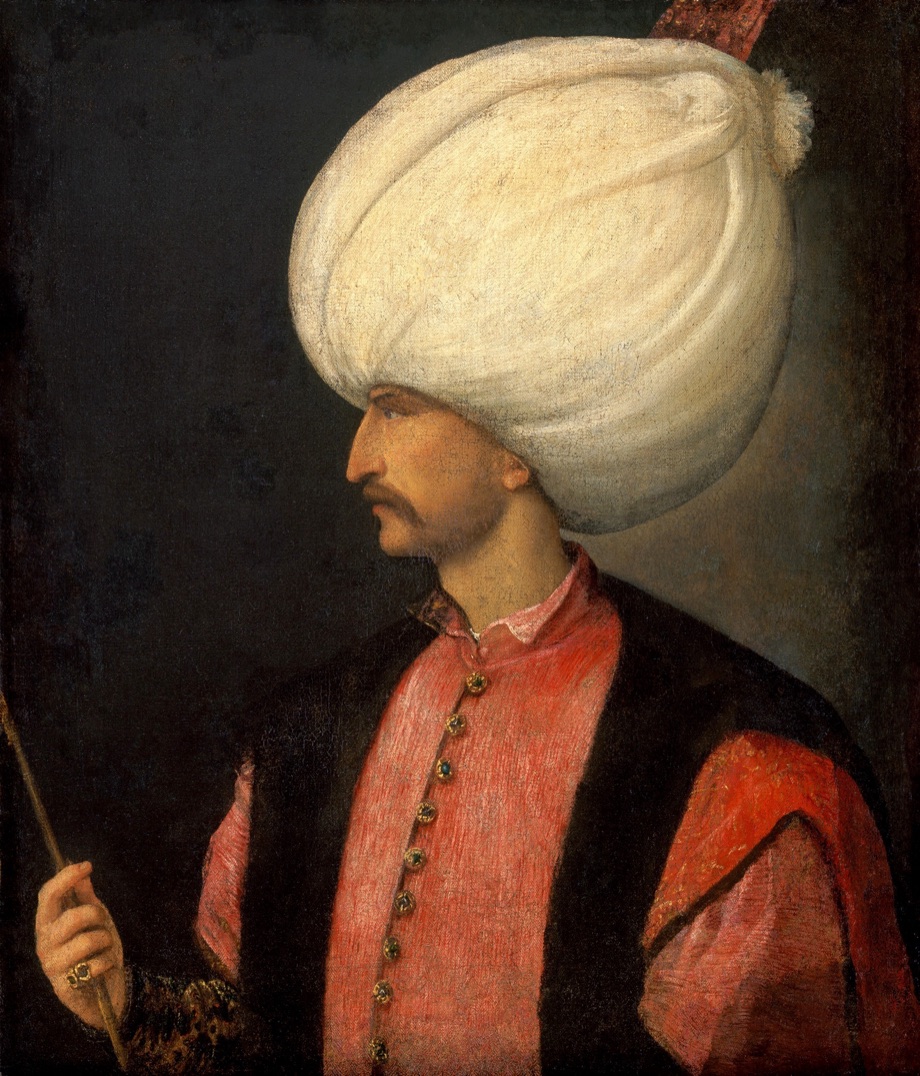
Portrait of Suleiman the Magnificent
The Man Who Inherited an Empire and Made It a Machine
His own people did not call him the Magnificent. That was Europe's name for him — the gilded terror across the Danube, the sultan whose armies reached the gates of Vienna and whose fleets ruled the Mediterranean. To the Ottomans he was Kanunî, the Lawgiver: the emperor who took the vast, half-digested conquest he inherited and gave it a spine of statute, taxation, and order. Both names are true, and the distance between them is the whole of the man. He was, at once, the most dazzling monarch of the sixteenth century and its most methodical administrator — a sovereign who conquered less because he loved war than because a well-run empire required defensible borders, and who codified more because a well-run empire required law.
Suleiman I (1494–1566) reigned for forty-six years, longer than any other Ottoman sultan, across the empire's absolute zenith. He came to a throne already made terrifying by his father, Selim I, who had doubled the empire in eight ruthless years and handed his only son a superpower with no rivals left inside the family. Where a conqueror's heir often squanders the inheritance, Suleiman did the harder and rarer thing: he organized it. He took Belgrade and Rhodes; he annihilated the Hungarian kingdom at Mohács; he twice marched on Vienna against the Habsburgs of Charles V; he took Baghdad from the Persians and, through his corsair admiral Hayreddin Barbarossa, made the middle sea an Ottoman lake. And then, between the campaigns, he sat down and rewrote the law of an empire that would run on his framework for three hundred years.
This is not the profile of a visionary who dreams a new world into being. It is the profile of an executive who perfects the world he is handed — who audits, systematizes, codifies, and commands. Suleiman is the great consolidator-emperor: where his ancestor Mehmed the Conqueror seized Constantinople out of a private, burning vision, Suleiman ordered what conquest had won. He is the ESTJ raised to imperial scale.
Suleiman is the ESTJ as world-emperor: dominant Te commanding the largest and best-governed state of the age, anchored in the auxiliary Si that earned him his true title — Kanunî, the Lawgiver, keeper and perfecter of an empire's order. He did not reimagine the empire. He made it work.
The Empire as Command
Te — dominant
Dominant Te governs the external world by system, hierarchy, and result — and no ruler of the age governed a larger world more effectively. Suleiman's Te shows first in the plain fact of scale: he administered an empire spanning three continents, from Hungary to Yemen and Algiers to Baghdad, and he ran it not as a loose collection of tributaries but as a graded machine of governors, tax-farms, law courts, and standing armies. The Ottoman system he perfected — the disciplined Janissary corps, the timar cavalry funded by assigned land revenue, the devşirme that recruited and trained the administrative elite — was, in its day, the most rational apparatus of state in the world. Where a Charles V drowned in the sprawling, ungovernable inheritance of the Habsburgs, Suleiman's realm answered to a chain of command that ran, ultimately, to one desk.
His generalship was Te made martial. He did not send his armies to Belgrade, Rhodes, and Mohács and wait for reports; he rode at their head. At Mohács in 1526 his forces destroyed the Hungarian kingdom in an afternoon and killed King Louis II in the rout, erasing a state from the map. He took Rhodes from the Knights Hospitaller by a methodical six-month siege, then let the garrison depart with honor — a calculation, not a mercy, that cost him nothing and bought him a reputation for reliability that opened other gates. Even his failures were the failures of an executive overreaching his logistics rather than a dreamer misreading reality: the two sieges of Vienna, in 1529 and 1532, broke not on any lack of will but on the hard arithmetic of distance, weather, and the campaigning season — the outer limit of what even the best-run army of the century could reach.
But the truest Te signature is not the conquest; it is the justice. Suleiman personally overhauled the administration of the whole empire — its taxation, its provincial government, its criminal and land law — and he did it in the spirit of an auditor closing the gaps in a ledger. He standardized what had been arbitrary, curbed the abuses of local officials, and made the machinery of the state answer to a single, written, enforceable standard. To a Te mind, an empire is not a possession to be enjoyed but a system to be made to function; injustice is not primarily a sin but an inefficiency, a place where the mechanism has seized. Suleiman spent his reign tightening the bolts.
Kanunî — The Keeper of Order
Si — auxiliary
Auxiliary Si is the memory that steadies Te — the reverence for precedent, continuity, and the accumulated tradition of how things are properly done. It is the reason Suleiman's people gave him the name that mattered most: Kanunî, the Lawgiver. He earned it not by inventing law from nothing but by harmonizing what already existed. The Ottoman world ran on two bodies of law that were forever threatening to contradict each other: the sacred sharia, unchangeable and divine, and the secular kanun, the sultan's own dynastic statute built up in a patchwork over generations. Suleiman's achievement was the reconciliation — a systematic gathering, pruning, and codifying of the kanun into a coherent whole that respected the sacred law without being paralyzed by it. This is Si's genius, not Ne's: he did not want a new law, he wanted the existing law made consistent, stable, and permanent.
The framework held. The codes Suleiman fixed governed the empire for three centuries after his death — long enough that later generations remembered his reign as the template of Ottoman order, the settled state of things against which all later decline was measured. That is the deepest mark of Si in a ruler: he built something meant to endure unchanged, and it did. He was not restless with his inheritance; he was its faithful and exacting steward, perfecting the given rather than replacing it.
The same conserving instinct shaped the golden age around him. Suleiman was the patron of Mimar Sinan, the greatest architect the empire ever produced, and under his reign Istanbul filled with the domes and mosques that still define its skyline. A visionary might have wanted to overturn the tradition; Suleiman wanted to crown it — to raise the classical Ottoman style to a magnificence that announced, in stone, the permanence and legitimacy of the order he kept. Even his grandeur was conservative: not a break with the past, but its consummation.
The Poet Behind the Sultan
Ne — tertiary
Tertiary Ne is the color, not the core — a capacity for imagination and possibility that runs beneath the executive surface and occasionally breaks through it. In Suleiman it took a surprising form for so martial a ruler: he was a genuine and accomplished poet, writing under the pen name Muhibbi, "the Lover." He left behind one of the largest bodies of verse of any sovereign in history — thousands of couplets on love, longing, the transience of power, the vanity of worldly glory. That a man who spent his days ordering campaigns and codifying tax law also spent his nights turning imagery over in Persian and Turkish meter tells us the interior life was richer than the machine of state ever showed.
It would be a mistake, though, to read the poetry as the man's center. Suleiman was not a dreamer who happened to rule; he was a ruler who wrote. The Ne surfaces as ornament and outlet — a private register of feeling and imagination that never competed with the executive function for control of the empire. His verse is conventional in its forms, working within the inherited traditions of the Ottoman-Persian lyric rather than reinventing them, which is itself telling: even his imagination bent toward the established and the perfected rather than the strange and the new. The poems were where the sultan felt; the codes were where he lived.
Roxelana, and the Sons He Killed
Fi — inferior
Inferior Fi is the ESTJ's buried personal core — the private loyalty that the systematizing mind normally overrides, but which, when it does take hold, takes hold with an intensity out of all proportion to the man's public self-command. In Suleiman it produced the single most precedent-breaking act of any Ottoman sultan's reign. He fell in love with a slave concubine from his harem, the woman Europe called Roxelana, and he did for her what no sultan had done in living memory: he freed her, legally married her, and was faithful to her alone for the rest of his life. Centuries of Ottoman custom, which kept the sultan's bed a matter of dynastic policy rather than affection, went out the window. It was the one great irrationality of a supremely rational ruler — the inferior function seizing the throne for once, and refusing to let go.
And here is the darkness of inferior Fi: because Suleiman's loyalties were few and absolute rather than broad and moderate, when they were turned they turned to catastrophe. His devotion to Roxelana and her line made him the instrument of her faction. Poisoned by suspicion — worked on by Roxelana and his grand vizier Rüstem Pasha — he came to believe that his popular and capable eldest son, Şehzade Mustafa, the child of another mother, was plotting against him. In 1553 he had Mustafa strangled with a bowstring in the imperial tent, in his own presence. He later had a second son killed as well, clearing the succession for Roxelana's children. The same buried tenderness that made him break every rule for one woman made him murder his own sons for her line.
The devotion to Roxelana and the strangling of Mustafa are the same function — inferior Fi in the ESTJ: personal loyalty so rare, so absolute, and so poorly integrated that when it finally overrode the executive mind, it did so without proportion, breaking a sacred custom for love and a father's heart for the same love's sake.
He never fully recovered from Mustafa. The same friend-turned-victim pattern had appeared earlier, when he raised his boyhood companion Pargalı Ibrahim Pasha to the summit of the empire and then, when Ibrahim grew too great, had him strangled in the palace too. For a man whose whole public life was the mastery of self and system, the private toll was a trail of the people he had loved most and destroyed. The Te machine could order an empire; it could not metabolize the feeling that, when it surfaced, ran the man rather than the reverse.
Why ESTJ Over INTJ or ISTJ
Why not INTJ?
The INTJ reading flatters him — the great strategist, the visionary who built an empire. But Suleiman did not build the empire; he inherited it, from Mehmed the Conqueror through his father Selim, and his genius was executive and administrative rather than visionary-strategic. He refined, codified, and governed the state he was handed; he did not reimagine it or drive it toward some private conception of a future no one else could see. That is Te–Si, the auditor and steward, not the Ni–Te of the architect who originates. The INTJ dreams the new order; Suleiman perfected the old one.
Why not ISTJ?
Everything traditional and codifying in him tempts an ISTJ reading — the Lawgiver, the keeper of order, the reverence for precedent. But the ISTJ's Si-dominance is inward and reserved, the temperament of the meticulous back-office functionary. Suleiman was the opposite in bearing: he led his armies to the gates of Vienna in person, projected imperial magnificence on a world stage, and commanded the largest state of the age from the front. That is extraverted Te in the lead, using Si as its ballast — not introverted Si quietly keeping the books.
The distinction that matters is the direction of the gift. Suleiman's intelligence pointed outward and downstream — at the empire as a system to be run, defended, standardized, and made to endure. He was not the conqueror who seizes from a burning inner vision, nor the recluse who perfects in private; he was the emperor who takes a finished conquest and turns it into a functioning, lawful, magnificent state. He is the Qalawun to Mehmed's Baibars — the consolidator who institutionalizes what the founder won. That is the ESTJ at the summit of history: command in the service of order, and order in the service of permanence.
Connected Figures
Further Reading
- The Ottoman Empire: The Classical Age, 1300–1600 — Halil İnalcıkThe definitive account of the institutions and administrative order Suleiman perfected — indispensable for understanding the machine of state he ran.
- Peerless among Sultans: A Life of Suleyman the Magnificent — Kaya ŞahinThe leading modern scholarly biography, careful about the man behind the legend and the making of his reputation across cultures.
- Suleiman the Magnificent — André ClotThe fullest narrative life in English — vivid on the campaigns, the court, and the tragedy of Ibrahim and Mustafa.
- The Imperial Harem: Women and Sovereignty in the Ottoman Empire — Leslie P. PeirceThe essential study of harem politics and dynastic power — the context for Roxelana's unprecedented rise and the succession she reshaped.
- Empires of the Sea: The Final Battle for the Mediterranean, 1521–1580 — Roger CrowleyA gripping account of the naval struggle against Habsburg Spain and the Knights — Rhodes, Barbarossa, and the contest for the middle sea.
