 Historical Figure MBTI
#577 · 5-1-26 · The Ottoman Zenith
Şehzade Mustafa
Prince of the Empire · The Beloved Heir · Victim of the Bowstring
1515 — 1553
7 min read
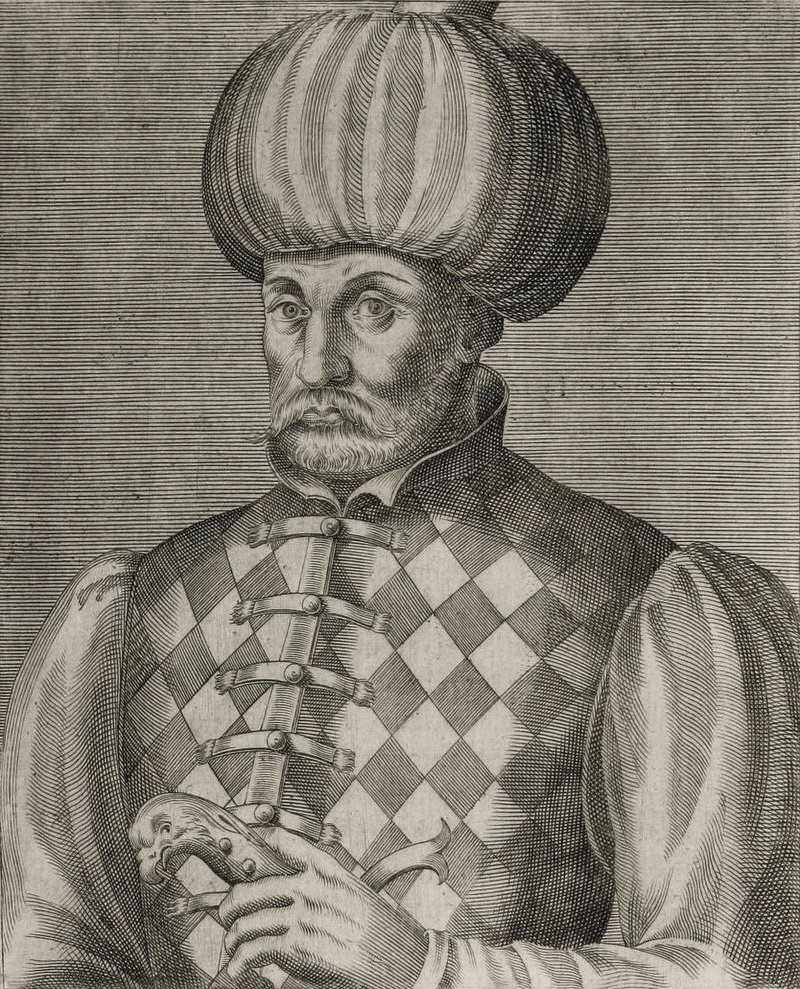
Portrait of Şehzade Mustafa
The Prince Who Was Loved to Death
Long before he had any throne, Şehzade Mustafa was the sultan the empire believed it was owed. Eldest son of Suleiman the Magnificent, he was everything a dynasty could wish its heir to be—handsome, learned, brave, and, above all, adored. The Janissaries spoke his name like a promise; governors, poets, and common people alike looked at the grave, gracious young man administering his province with such conspicuous justice and saw in him the reign to come, the great sultan after the great sultan. He was, in the fullest sense, the people's prince—the ENFJ whose singular gift was to gather a whole society's hopes onto himself and carry them as if they were his birthright.
Born in 1515 to Suleiman's first favorite, Mahidevran, Mustafa grew into the natural successor at the very moment a rival power was rising inside the harem. As the sons of Suleiman's beloved Roxelana came of age, she and her son-in-law, the grand vizier Rüstem Pasha, spent years dripping poison into the sultan's ear—rumors and reputedly forged letters painting Mustafa as a traitor scheming with Safavid Persia to seize the throne while his father still lived. His very popularity with the army made the charge terrifyingly plausible: a beloved prince is also a rival crown-in-waiting. In 1553, on campaign in the east, Suleiman summoned his son to the imperial tent—and had him strangled with a bowstring by the palace mutes as he stepped inside.
Mustafa is the ENFJ as living ideal: Fe's magnetism drawing the devotion of an army and a people, fused with Ni's princely sense of destiny—so that he was not merely liked but believed in, a rallying-point for the reign everyone wanted. It was exactly that gift that marked him for death.
The Adoration of an Empire
Fe — dominant
Dominant Fe reads a room, a court, a whole society—and tunes itself, almost without effort, to what that collective longs for and admires. In Mustafa this was not calculated charm but something closer to radiation. As governor of his province he ruled with a visible justice and open-handedness that made men feel seen and safe, and word of it traveled far beyond his borders; foreign envoys with no reason to flatter him wrote of a prince of extraordinary dignity who seemed built to be loved. The Janissaries were the truest measure of it. The empire's elite soldiers were notoriously hard to win, and they had fixed their hopes on Mustafa with a fervor no rival prince could match—he did not merely lead a faction, he became the vessel into which an entire military and populace poured their expectations, his person and their future fused into one.
And this was precisely the trap. In most lives, being universally beloved is a shield. In the Ottoman succession, where brothers strangled brothers and no throne was safe while a rival breathed, it was a death sentence. Mustafa's gift—the Fe magnetism that made a whole empire want him as sultan—was the very thing that made him intolerable to those guarding a different succession. He was loved into a threat, and the threat had to be destroyed.
The Sultan He Was Always Going to Be
Ni — auxiliary
What separated Mustafa from a merely popular prince was auxiliary Ni: a settled, almost serene certainty about the future he was walking toward. He did not court favor the way an anxious pretender does; he carried himself as the sultan-in-waiting because, in his own inner sense of things, the destiny was not a hope but a foregone conclusion. This princely gravity turned affection into something graver. People do not merely enjoy an Ni-backed Fe leader; they believe in him. He became a projected ideal—dignity, justice, the promise of a great reign—rather than just an agreeable young man.
That is why Mustafa was not simply liked but constituted a political cause. Ni fuses the present person to a coming order, so that to be loyal to the prince is to be loyal to the future he represents. The army did not rally to his wit or his handsomeness in the moment; they rallied to the reign they could already see in him—and a man who embodies the future is far harder to dislodge, and far more threatening to the guardians of a different one, than any mere favorite. The tragedy folded into this gift is that Ni's certainty also made him incautious. A prince who feels the throne is inevitable does not scramble to secure it; he waits, with the calm of a man who cannot imagine the story ending any other way. That confidence read, to his enemies, as arrogance ripe for the framing—and to Mustafa himself, it read as safety, right up to the flap of the imperial tent.
The Soldier's Prince
Se — tertiary
Tertiary Se gave Mustafa the physical, martial presence that made the army's devotion more than sentimental. He was a soldier's prince in the flesh—a governor who campaigned, rode, and commanded, who looked and moved like the warrior the Janissaries wanted at their head. In a military culture that measured a leader by his bearing in the field, this embodied vigor mattered. It was one thing to be admired as a just administrator; it was another to have the manifest presence of a man the troops could imagine leading them into battle. Se lent the Fe magnetism a concrete, physical anchor.
This grounding kept Mustafa from being a merely decorative ideal. He was not a cloistered prince but an active one, present in the world of horses and provinces and armies, and that presence made him real enough to fight for—the very substance that turned his candidacy into a live military fact rather than a courtly abstraction.
The Trap He Walked Into
Ti — inferior
Inferior Ti is the ENFJ's blind spot—the cold, calculating logic that a Fe-driven mind neither trusts nor deploys well. Mustafa could win the love of an empire, but he could not out-scheme the two people quietly engineering his destruction. Against the patient, instrumental machinery of Roxelana's ambition and Rüstem Pasha's bureaucratic cunning—the ENTJ strategist and the ISTJ administrator working in concert—he was outmatched on precisely the terrain he understood least. He could feel the room; he could not dismantle a conspiracy built out of forged letters and manufactured suspicion.
The fatal expression of that blind spot was the walk to the tent itself. A colder, more suspicious man might have weighed the risk, calculated his father's poisoned state of mind, and refused the summons. Mustafa, secure in the devotion he inspired and the destiny he felt, came openly, trusting in his innocence and his standing with the army. That trust was not weakness of character; it was the natural cost of a psyche organized around connection rather than calculation. He believed being beloved and blameless would protect him, when the whole logic of the plot was that being beloved was itself the crime—and so the strangling is not only a political murder but the inferior function meeting its master: the prince whose gift was to be trusted, undone by the one thing that gift could not compute.
Why ENFJ Over ESFP
Why not ESFP?
The case for ESFP notices the obvious: a magnetic, physically vivid prince who delighted everyone he met, at home in the sensory world of camps and courts. But the ESFP's appeal is charm of the moment—the gift of lighting up the room in front of him. Mustafa's pull was something graver. What men rallied to was not present-tense delight but a projected ideal: dignity, justice, and the promise of a great reign to come. That is Fe fused with Ni—magnetism organized around a future—not the here-and-now sociability of Se–Fi. He inspired loyalty toward a tomorrow, and became a political cause, which the ESFP's in-the-moment charisma rarely does.
The distinction is the whole tragedy. An ESFP prince who merely delighted the army would have been a pleasant favorite, easily eclipsed once the delight faded. Mustafa was dangerous because the devotion he commanded pointed forward: he had become the empire's idea of its own best future, a rallying-point that would only strengthen as Suleiman aged. That is the Ni-backed Fe of the ENFJ—not the man who wins the room, but the man a whole society decides to believe in. It is why he had to be killed rather than simply outshone, and mourned as a lost future rather than a lost companion.
Connected Figures
Further Reading
- The Imperial Harem: Women and Sovereignty in the Ottoman Empire — Leslie P. PeirceThe landmark study of harem politics and dynastic succession — essential for understanding how Roxelana's rise sealed Mustafa's fate.
- Suleiman the Magnificent — André ClotA vivid narrative biography of the sultan and his reign, with a full account of the tragedy of his eldest son.
- The Ottoman Empire: The Classical Age, 1300–1600 — Halil İnalcıkThe authoritative survey of the empire at its height — the institutional and political context in which the succession struggle unfolded.
