 Historical Figure MBTI
#578 · 5-1-26 · The Ottoman Zenith
Mahidevran Sultan
Mother of Şehzade Mustafa · The Displaced Consort · Rival of Roxelana
c. 1500 — 1581
5 min read
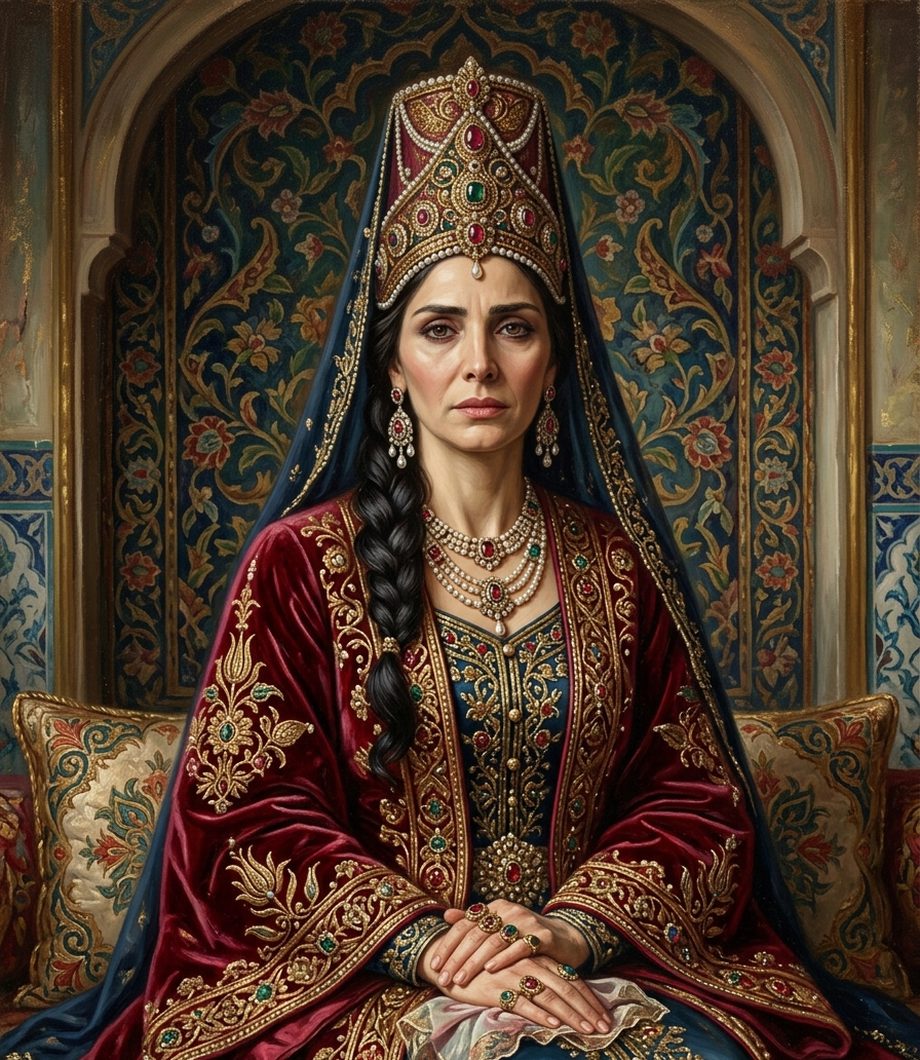
AI-assisted Portrait of Mahidevran Sultan
The Woman Who Played Her Part
Mahidevran did everything the harem asked of her. She bore the sultan his eldest son, kept the first place among his women, and when the time came she followed the boy to the provinces to guard his path to the throne — the whole ancient choreography of an Ottoman mother, performed exactly as custom prescribed. And it destroyed her. For the rival who unseated her, Roxelana, won by refusing to play the part at all: staying at Suleiman's side in the capital, breaking every rule Mahidevran had dutifully obeyed. Mahidevran was undone not by doing wrong but by doing right in a game whose rules had changed.
Called Gülbahar, “rose of spring,” she was Suleiman's leading consort in his early years and the mother of Şehzade Mustafa, the gifted heir apparent whom much of the empire expected to become sultan. Her life is a study in a woman whose entire identity was fused to her role and her son — and who could not conceive of surviving the loss of either.
Mahidevran is the ESFJ consort to the bone: Fe read her worth through rank, honor, and her son's destiny, while Si bound her to the old harem order she upheld with total loyalty — the one favorite, one heir, then off to the provinces beside him.
The Rightful Place
Fe — dominant
Dominant Fe measures the self through relationships and rank, and Mahidevran's sense of her own worth was inseparable from her standing. She was the senior favorite, mother of the eldest prince — and she felt that precedence as a kind of moral fact, an honor that was rightfully hers. When Roxelana rose to threaten it, the affront was not merely political but personal, an assault on the place she believed the order of the world owed her.
That is why the rivalry turned physical. The chronicles record that Mahidevran fell upon Roxelana and scarred her face — and that the outburst cost her Suleiman's favor and her position at court. It was the reflex of an Fe that could not tolerate a usurper in a hierarchy it held sacred, striking out at the person rather than out-maneuvering the threat. Her fury was about status and precedence, about who stood where, not about ideas or power in the abstract.
Turned toward her son, that same warmth became fierce maternal devotion. Mustafa was the vessel of her honor, the future through which her standing would be vindicated — which is precisely why his fall would leave nothing of her behind.
The Old Order
Si — auxiliary
Auxiliary Si is loyalty to the established way of doing things, and Mahidevran was the very picture of the traditional consort. The old harem rule was clear: a favorite bore the sultan one son, and when that son came of age she left the capital to accompany him to his provincial governorship, becoming the guardian mother who shepherded a future sultan through his apprenticeship in rule. When Mustafa was posted to Manisa and later Amasya, Mahidevran went with him, exactly as generations of mothers had gone before her.
It was a role she performed without question, because it was the role — the way it had always been done. And this is the quiet tragedy of her Si: the very fidelity to custom that made her a model consort left her absent from the one room where her fate was decided. Roxelana understood that the old rules were a trap and refused to leave Suleiman's side, remaining in the capital to consolidate her hold on him while Mahidevran dutifully kept house in the provinces. Mahidevran obeyed a tradition her rival had already abandoned.
The Game She Could Not Play
Ti — inferior
Inferior Ti is the ESFJ's weakest instrument: the cold, detached logic that calculates power in the abstract and plays the long strategic game without regard for honor or feeling. Mahidevran had almost none of it, and her rival had it in abundance. Where Mahidevran reacted — with her fists, with wounded pride, with an outburst that handed Roxelana the moral high ground — Roxelana schemed, converting, marrying Suleiman, and patiently arranging the succession over decades.
The contest was never close, because it was not really the same contest. Mahidevran was defending an honor; Roxelana was building a machine. The physical attack that cost Mahidevran her place was the perfect emblem of inferior Ti under pressure — the feeling type, cornered, lashing out in the one register available to her when the game of cold calculation was already lost. She could feel that she was being wronged. She could not out-think the woman wronging her.
Why ESFJ Over ISFP
Why not ISFP?
The physical outburst and the depth of private grief might suggest an inward, intensely personal ISFP. But the ISFP is a self-defining individualist whose values are her own, indifferent to rank and precedence. Mahidevran was the opposite: a woman who lived entirely through her role, her status, and her relationships. Her rage at Roxelana was about honor and place in a hierarchy, and her life was organized around a single social fact — being the mother of the heir. That is Fe reading the world through station, not the Fi of a free spirit answerable only to herself.
The distinction is the whole of her tragedy. An Fi type might have found a self to fall back on once the role was gone — a private identity untouched by the loss of rank. Mahidevran had no such reserve. When her son was taken, so was the only self she had ever been. The conventional consort who lived through her place could not outlive its destruction; she could only mourn it.
Connected Figures
Further Reading
- The Imperial Harem: Women and Sovereignty in the Ottoman Empire — Leslie P. PeirceThe foundational scholarly account of how power actually worked in the harem — essential for understanding the tradition Mahidevran upheld and the rules Roxelana broke.
- Empress of the East: How a European Slave Girl Became Queen of the Ottoman Empire — Leslie P. PeirceA vivid biography of Roxelana that sets Mahidevran's displacement in sharp relief — the rival's rise seen from the other side.
- Suleiman the Magnificent — André ClotA readable narrative of the reign and its court, useful background on Mustafa's fall and the succession struggle that consumed Mahidevran's life.
