 Historical Figure MBTI
#579 · 5-1-26 · The Ottoman Zenith
Mihrimah Sultan
Princess of the Empire · Daughter of Suleiman · Power Behind Two Thrones
1522 — 1578
5 min read
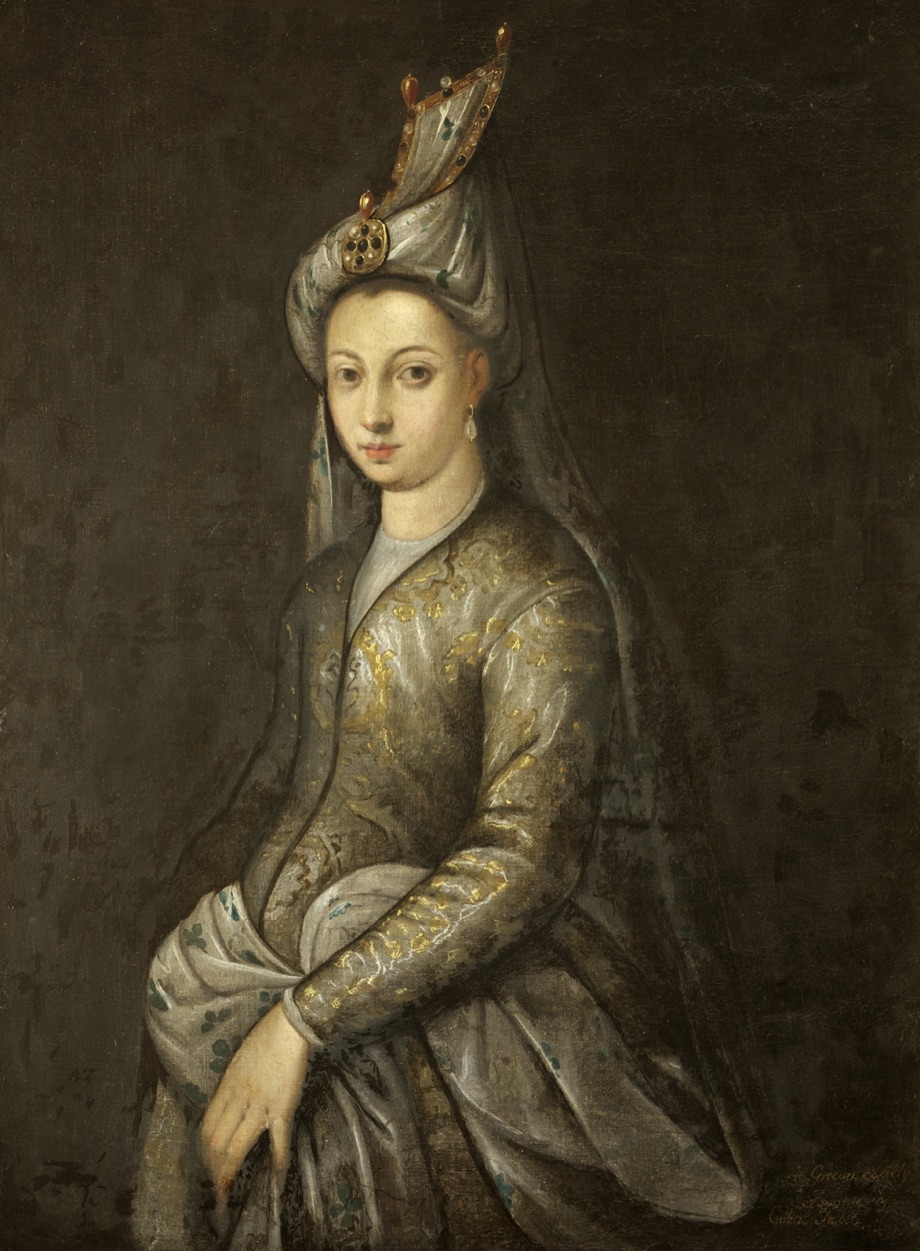
Portrait of Mihrimah Sultan
The Daughter Who Inherited the Empire's Ear
She was the only daughter of the two most powerful people in the sixteenth-century world, and she spent her life converting that accident of birth into something rarer: durable, deliberate influence. Where her mother Roxelana had seized power out loud — a slave girl who broke every rule of the harem to become the wife of a sultan — Mihrimah worked in a lower register. She did not shout. She positioned, financed, advised, and waited. By the time she was done she had been the closest counsel to two sultans in succession, and had left her name on two of the greatest buildings in the Ottoman capital.
Born in 1522 to Suleiman the Magnificent and Roxelana, married at seventeen to the future Grand Vizier Rüstem Pasha, she inherited every material advantage — but what made her exceptional was the use she made of them. After her mother's death in 1558 she became Suleiman's de facto first lady, and when her brother took the throne as Selim II she held sway over him too. She is the strategist behind the throne, an INTJ who understood that the surest power is the kind no one has to see.
Mihrimah is the INTJ as dynastic planner: Ni reading the long game of succession years ahead, Te deploying wealth, patronage, and correspondence toward ends she had already decided — the quiet architect of an empire she never formally ruled.
The Long Game of Succession
Ni — dominant
Dominant Ni reads the future as a single converging line, and Mihrimah read the one line that mattered in an Ottoman century: who would sit on the throne next, and who would stand beside them. Her whole life was a study in positioning years ahead of the moment. Her marriage to Rüstem Pasha at seventeen was not a girl's romance but a structural move — it fused the throne, the harem, and the vizierate into one interlocking faction, so that her mother's household and the empire's chief minister now shared a single interest. In a system built on fratricidal succession, where a sultan's death could erase an entire branch of the family, she understood that survival belonged to whoever had arranged the board in advance.
That strategic patience is the signature. She did not need to hold an office to shape outcomes; she needed only to be the fixed point of counsel two successive rulers turned to. As her father aged she made herself indispensable to him, and as her brother rose she transferred that same influence forward without a break — a continuity across a change of reigns that most courtiers, lurching from one patron to the next, never managed. Where a lesser player schemes for the current sultan's favor, the Ni strategist invests in the sultan who has not yet come.
Wealth, Correspondence, and Stone
Te — auxiliary
Auxiliary Te is the machinery Ni's vision runs on, and Mihrimah commanded formidable machinery: one of the largest private fortunes in the empire, and she spent it like an instrument of state. When Suleiman contemplated a great naval campaign, she reportedly offered to finance an entire war fleet out of her own purse — not a courtier's gift but a strategist's intervention, converting personal wealth directly into imperial capacity. Money, to Mihrimah, was leverage with a purpose attached.
Te also shows in the channels she worked. As Suleiman's closest confidante she managed his correspondence and conducted her own — she is known to have written to Sigismund II Augustus, the king of Poland, on matters of state, a directness of diplomatic reach almost no woman of her world possessed. She did not command armies; she commanded the resources and the letters that moved them.
Her most enduring Te act is written in stone. She commissioned the empire's supreme architect, Mimar Sinan, to build two great mosque complexes bearing her name — one at Üsküdar on the Asian shore, one at Edirnekapı on the highest hill of the old city. These were not private chapels but full public institutions, permanent infrastructure that broadcast her power in the most durable medium available. A woman barred from ruling in her own name still stamped the skyline of the capital with it.
The Private Loyalties Beneath the Strategy
Fi — tertiary
Tertiary Fi gives the INTJ's cold calculation a core of fiercely held private values, and Mihrimah's were fixed on family. Her devotion to her father was the constant of her adult life — she made herself the person he trusted most, and after Roxelana's death she stepped into that emotional vacancy without being asked. Her loyalty to her mother's line was equally absolute; the faction she helped build was, at bottom, a defense of her own blood against every rival branch of the dynasty.
Fi surfaces too in the mosques. A purely instrumental patron builds where it is politically useful; Mihrimah chose to make her most personal statement in the one currency that outlasts politics — devotion rendered permanent, her own name fused with a house of God. It is the introverted feeler's instinct: to convert an inward conviction into something quiet, lasting, and unmistakably hers.
Why INTJ Over ENTJ
Why not ENTJ?
The ENTJ case is tempting, because raw command clearly ran in the family. But that is exactly the distinction: the ENTJ in this bloodline was her mother. Roxelana ruled out loud, in person, by front-line force of will — a Te-dominant driver who bent the court to her presence. Mihrimah worked the opposite way: through calculated influence, wealth, and patronage rather than public command, shaping outcomes from behind two thrones instead of seizing the room. That is a Ni-dominant strategist financing and steering power, not a Te-dominant commander wielding it directly.
The mother-and-daughter pairing is the cleanest illustration the archive offers. Both women held extraordinary power in a system designed to deny it to them. But Roxelana's was visible, personal, and fought for in the open — the extravert's dominance; Mihrimah's was quiet, structural, and exercised through intermediaries — the introvert's long game. She did not want the throne; she wanted to be the mind beside it, for as long as there was a throne to sit beside.
Connected Figures
Further Reading
- The Imperial Harem: Women and Sovereignty in the Ottoman Empire — Leslie P. PeirceThe essential study of how Ottoman women — Roxelana, Mihrimah, and their successors — exercised real political power from within the harem.
- The Age of Sinan: Architectural Culture in the Ottoman Empire — Gülru NecipoğluThe definitive account of Sinan's work, including the two Mihrimah Sultan mosques and the patronage that produced them.
- Suleiman the Magnificent — André ClotA vivid narrative of Suleiman's reign and court, the world in which Mihrimah rose to become its de facto first lady.
