 Historical Figure MBTI
#576 · 5-1-26 · The Ottoman Zenith
Roxelana
Haseki Sultan · Slave Turned Empress · Architect of the Sultanate of Women
c. 1505 — 1558
7 min read
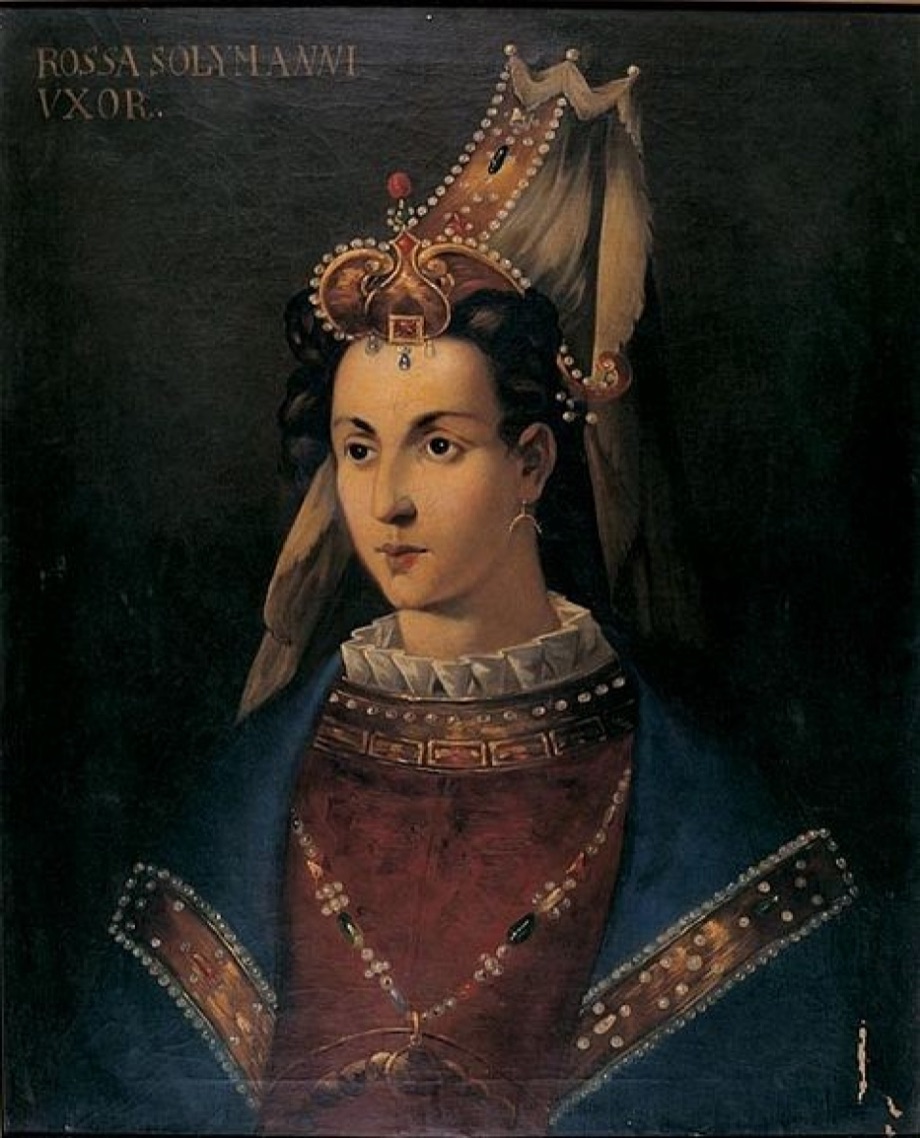
Portrait of Roxelana
The Laughing One Who Never Laughed by Accident
Her captors called her Hürrem — the joyful one — and Europe called her Roxelana, the Ruthenian. Born around 1505 in western Ukraine, most likely a priest's daughter, she should by every ordinary reckoning have vanished the moment a Crimean Tatar raiding party seized her and sold her south into the imperial harem of Suleiman the Magnificent. A slave girl there had one currency, expected to expire the day her charm did. Instead she rewrote the rules of an empire around herself and died, half a century later, the most powerful woman the Ottoman world had produced — mourned by the sultan who had broken three centuries of dynastic custom to make her his wife.
It is tempting to read that ascent as a love story, and Suleiman's surviving poetry invites it. But love was the raw material, not the method. What Roxelana did with the sultan's affection was engineering. She got herself freed and legally married — unheard of for an Ottoman sultan, who took concubines precisely so that no woman could hold such a claim. She broke the iron rule that a favorite bear one son and follow him into provincial exile, staying instead at the seat of government and building, brick by deliberate brick, the machinery of female power that historians would name the Sultanate of Women. And when rivals stood between her sons and the throne, she had them destroyed.
Roxelana is the ENTJ in a world that gave women no offices to command: she rose by charm and ruled by cold architecture, running the long game of Te and Ni — a systematic campaign to control a dynasty — through the only instrument available to her, the sultan's heart.
The charm was real, and it was a tool. Underneath it ran the coldest strategic mind at court.
Building the Machine of Female Power
Te — dominant
Dominant Te reorganizes the world until it produces the outcome you want, and Roxelana's genius was to convert affection into structure. Sentiment is fleeting; institutions are not. So she did not merely enjoy Suleiman's favor — she cashed it in for permanent power. Her freedom and formal marriage were not romance indulged but status locked in by law; moving into the palace rather than accepting the customary provincial exile put her where decisions were made. Each was a precedent smashed for leverage, not sentiment.
Her charitable foundations show the same instrumental mind. The great Haseki complex she commissioned in Istanbul — a mosque, a hospital, a soup kitchen, raised by the architect Sinan — is usually called piety, and it was piety put to work. A freed slave and foreigner needed legitimacy the way a general needs supply lines, and public works were how a woman without an inherited name manufactured one. This is Te reputation-management, not warmth for its own sake: build the visible proof of virtue, and the power that virtue justifies follows.
The deepest Te signature is that she did not merely acquire power; she built an office that outlived her, a functioning institution of female authority constructed from nothing. That is the characteristic ENTJ horizon: not the self, but the system that survives the self.
The Twenty-Year Line to the Throne
Ni — auxiliary
Auxiliary Ni gives Te its single fixed destination, and Roxelana's never wavered: the throne, for her own blood, and no one else's. Its patience is what marks it as Ni rather than mere ambition. She could not simply seize the succession — Ottoman custom and a living rival heir stood in the way — so she played the longest of games, positioning sons, allies, and enemies year after year toward an end state only she could yet see: a court in which the line of Mahidevran, the older rival who had borne Suleiman's eldest son, was extinct.
The masterstroke was marrying her daughter Mihrimah to Rüstem Pasha, whom she then helped elevate to grand vizier. This was Ni–Te in a single move: she foresaw that she needed a loyal hand inside the machinery of state, not merely inside the harem, and the campaign against the rival heir, when it came, ran through him. She did not scheme reactively, threat by threat; she saw the whole board twenty years out and bent every year toward it. That her son Selim and not Mahidevran's Mustafa inherited the empire is the proof of the vision: the convert's daughter from a Ruthenian village had decided, decades in advance, which branch of the House of Osman would rule — and then made it so.
The Charm That Was a Weapon
Se — tertiary
Tertiary Se gives the ENTJ strategist a live, in-the-room presence — the ability to read a face, seize the moment, and deploy voice and manner as tools of persuasion. This is where the "joyful one" lived. Roxelana's celebrated charm and wit, her ability to hold Suleiman's attention against every rival in the harem, was Se in the service of Te: the plan needed access to the sultan, and her charisma kept the door open. She was no recluse plotting on paper — she worked in person, on the man, in real time.
In a dominant function this immediacy would have made her a creature of impulse. In Roxelana it is tertiary — the charm always harnessed to the long plan, never running it. She made herself, her piety, and her wealth legible to everyone from the sultan to the Istanbul poor fed at her soup kitchen, understanding that power unseen is power doubted. She could enchant a room, but the enchantment was aimed: the laughter had a purpose, and the purpose never laughed.
The Loyalty of One
Fi — inferior
Inferior Fi is the ENTJ's buried interior — a narrow, fierce set of private attachments the instrumental mind guards rather than broadcasts. Roxelana felt no obligation to the court, to custom, or to the many she outmaneuvered; her circle of genuine loyalty held Suleiman and her own children and, so far as the record shows, no one else. Everyone outside it was a variable to be managed.
What complicates the picture is that the bond with Suleiman appears to have been real, not merely performed. The tenderness of their letters, his monogamy against every expectation of his office, his deep grief when she died — these suggest that whatever Fi she possessed was poured, undivided, into that one relationship. Strategy and feeling were not opposites here; they ran together, because her single deep attachment and her grand design pointed at the same man.
That is the ENTJ's inferior function in its most characteristic form: not warmth spread wide, but devotion concentrated to a point. She could order the destruction of a grand vizier and a stepson the empire loved and feel it as arithmetic — because her heart had never been in the room with them. It was only ever in one place.
Why ENTJ Over ENFJ or INTJ
Why not ENFJ?
The ENFJ reading is the seductive one, since Roxelana led through charm and personal connection, and the ENFJ is the harmonizer who moves people through genuine empathic bond. But an ENFJ leads toward harmony; Roxelana led toward control. She weaponized affection and then had those she outmaneuvered destroyed — the grand vizier Ibrahim Pasha strangled in 1536, her stepson Mustafa in 1553 — with a strategist's cold calculation, not a harmonizer's reluctant heart. The Fe user cannot bear to sever the bond; the ENTJ cuts it when the objective requires it.
Why not INTJ?
Both share the Te–Ni engine, and one could imagine Roxelana as an Ni-dominant shadow-strategist planning in the dark. But that was not how she operated. Unlike a figure such as Shajar al-Durr, who ruled from behind a veil, Roxelana worked out loud and in person — extraverted, commanding, holding the sultan by direct presence, building open public institutions, corresponding under her own name with foreign kings. The introvert's power works through withdrawal and proxy; hers worked through contact and construction. She is Te-first, a builder in the world, not Ni-first, a planner in the shadows.
What settles it is the relationship between her feeling and her strategy. An ENFJ's empathy is the engine, generating the goal; for Roxelana the warmth was the instrument, and the goal came from somewhere colder — a fixed vision of dynastic control she pursued through affection because affection was the only lever a slave woman was handed. That is the ENTJ: the architect who feels deeply in private and calculates ruthlessly in public, and never confuses the two.
Connected Figures
Further Reading
- Empress of the East: How a European Slave Girl Became Queen of the Ottoman Empire — Leslie P. PeirceThe definitive modern biography — traces Roxelana from the Ruthenian slave raid to the summit of Ottoman power, and the precedents she shattered along the way.
- The Imperial Harem: Women and Sovereignty in the Ottoman Empire — Leslie P. PeirceThe foundational scholarly study of the institution Roxelana transformed — essential for understanding the Sultanate of Women she set in motion.
- Roxolana in European Literature, History and Culture — Galina I. Yermolenko (ed.)An edited collection tracing how the legend of Roxelana was received, mythologized, and reinvented across four centuries of European imagination.
