 Historical Figure MBTI
#580 · 5-1-26 · The Ottoman Zenith
Rüstem Pasha
Grand Vizier · The Cold Administrator · Architect of the Purge
c. 1500 — 1561
6 min read
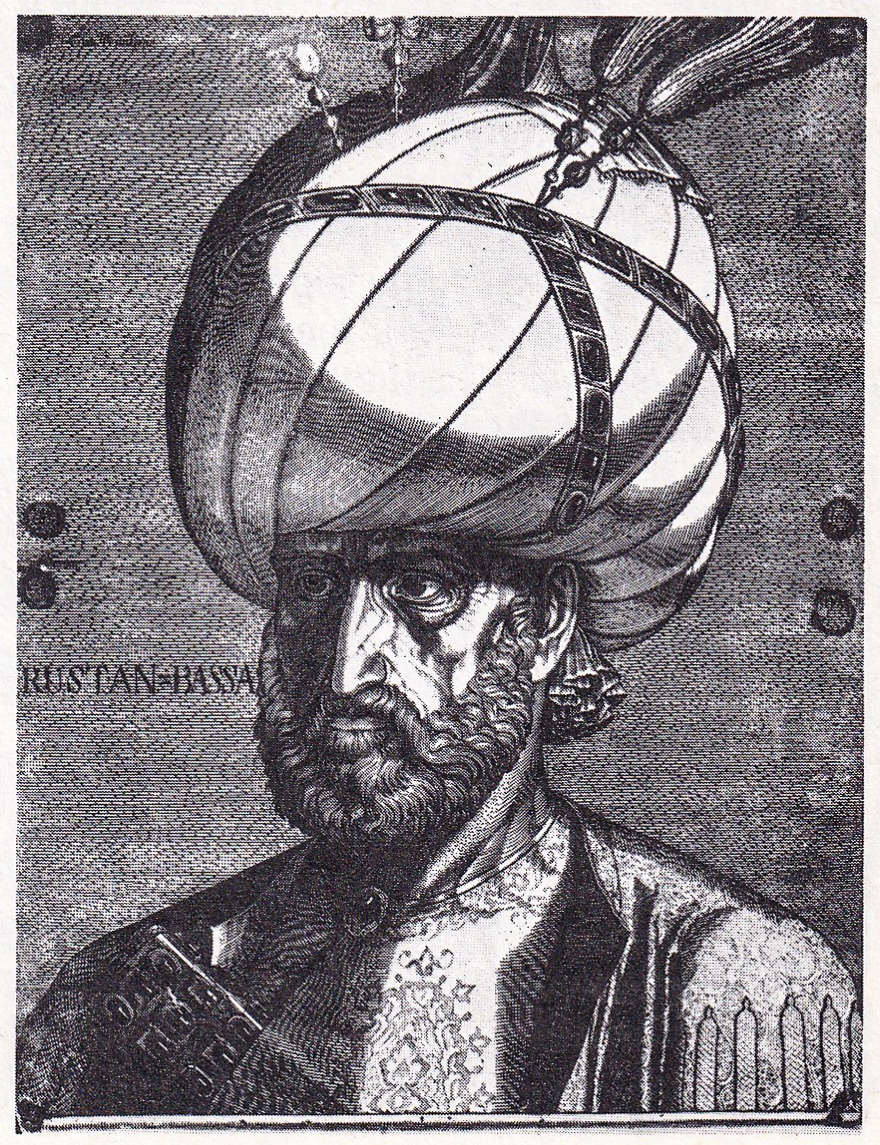
Portrait of Rüstem Pasha
The Accountant Who Ran an Empire
He kept the books, and the books kept the empire. Rüstem Pasha was not a warrior or a visionary but something rarer at the Ottoman summit — a functionary of genius, a man whose weapon was the ledger and whose patience was total. Born a Croatian peasant around 1500 and taken as a boy in the devshirme, the levy of Christian children into the sultan's service, he climbed the slave-hierarchy of the Ottoman state on nothing but competence: an accountant's memory for revenue, a bottomless appetite for detail, and a coldness that never once got in the way of the work. By 1544 he was Grand Vizier to Suleiman the Magnificent — the chief minister of the most powerful state on earth.
His rise was sealed by marriage. Rüstem wed Mihrimah Sultan, the sultan's only daughter, which made him son-in-law to Suleiman and to the formidable Roxelana — the linchpin who bound harem, throne, and vizierate into a single faction. He used the office as he used everything: methodically. He filled the treasury as no vizier before him, and he was central to the intrigue that destroyed the heir, Şehzade Mustafa, reputedly forging the evidence of the prince's treason. When the outraged army demanded a head, Suleiman dismissed Rüstem as a scapegoat — then quietly reinstated him two years later, because no one else could run the machine. He is the ISTJ as imperial functionary.
Rüstem is the ISTJ in its administrative purity: dominant Si's meticulous, precedent-bound stewardship harnessed to Te's ruthless fiscal efficiency — a man who ran an empire the way a great accountant runs a firm, and who executed a dynastic murder with the same patient, evidentiary thoroughness he brought to the treasury books.
The Man Who Remembered Every Coin
Si — dominant
Dominant Si stores the concrete world in exhaustive, retrievable detail, and Rüstem's mind was a treasury of it. Contemporaries marveled at his memory for figures — who owed what, which office yielded which revenue, what precedent governed which claim. He was frugal to the point of legend, personally austere in a court of display, and famous for a thoroughness that missed nothing. Where flashier viziers chased glory on campaign, Rüstem chased accuracy in the accounts, and it was accuracy that made him indispensable.
This is the steward's temperament, not the conqueror's. He did not reinvent the Ottoman fiscal system; he mastered its existing machinery and worked it harder than anyone ever had. He systematized the flow of revenue, tightened collection, and — his critics charged — regularized the sale of offices and the taking of bribes into a reliable stream, turning even corruption into an orderly ledger. Whatever the morality, the method was pure Si: build on what exists, document everything, trust the proven procedure over the bright idea. He was the empire's institutional memory made flesh.
The Treasury He Filled
Te — auxiliary
If Si supplied the memory, auxiliary Te supplied the drive to make it pay. Rüstem's signature achievement was fiscal: he vastly increased state revenues and left the treasury fuller than any predecessor had. He treated the empire as a going concern to be run at a surplus, measuring policy by the bottom line and pursuing efficiency with a hardness that admitted no sentiment. The wars of Suleiman's reign were staggeringly expensive; it was Rüstem who found the money, again and again, and who made sure the accounts closed.
The same instrumental logic ran through the darkest act of his career. The destruction of Şehzade Mustafa, Suleiman's popular firstborn, cleared the path to the throne for Mihrimah's brothers and secured the faction Rüstem had married into. But note how it was done: not by a bold stroke or a gambler's throw, but by the patient assembly of a case — the reputed forging of a treasonous letter, evidence marshaled like entries in a ledger until the sultan was persuaded to order his own son strangled. Rüstem ran the purge the way he ran the treasury: as a thorough, documented, unhurried operation. Even his crimes were bureaucratic.
Avarice and the One Loyalty
Fi — tertiary
Tertiary Fi in the ISTJ is a narrow, private core of value — not warmth spread outward but a fierce, guarded loyalty to a few things held as one's own. In Rüstem it shows, unflatteringly, as the accumulation itself: he did not merely fill the state's coffers, he filled his own, dying one of the wealthiest men in the empire. The avarice his enemies mocked was the private face of the same acquisitive instinct that served the treasury — a value system organized around what could be counted, kept, and secured against loss.
Yet the loyalty was real where it was given. Rüstem bound his fortunes without reservation to Roxelana and Mihrimah Sultan, and served their faction with an unwavering constancy that outlasted disgrace and reinstatement alike. Once committed, he did not waver; the ISTJ's Fi is a small flame, but it does not flicker. He was the faithful servant of a narrow circle — and utterly, coldly indifferent to everyone outside it.
Why ISTJ Over INTJ
Why not INTJ?
The temptation is to read the ruthless treasury-filler and the mastermind of a dynastic purge as an Ni–Te architect — a strategist reshaping the state toward a vision. But Rüstem reshaped nothing. His genius was administrative thoroughness and the patient accumulation of money and leverage within a system he took as given, not the strategic reinvention of that system. Even the intrigue against Mustafa was executed as a careful, evidence-forging bureaucratic operation — a case assembled, not a bold gambit thrown. The INTJ imagines a different future and builds toward it; Rüstem perfected the present and hoarded its proceeds. That is Si–Te, not Ni–Te.
The distinction is the difference between the architect and the steward. His wife Mihrimah Sultan was the true INTJ of the household — the strategic intelligence who saw the board whole. Rüstem was the instrument that made her mother's faction solvent and dominant, the man who supplied the money and the paperwork and the patience. He did not conceive the design of the dynasty; he audited it, financed it, and enforced it, coin by counted coin. That is the ISTJ's particular greatness: not the vision, but the flawless, tireless execution of someone else's.
Connected Figures
Further Reading
- The Imperial Harem: Women and Sovereignty in the Ottoman Empire — Leslie P. PeirceThe essential study of the faction Rüstem married into — indispensable on Roxelana, Mihrimah, and the politics of the harem that shaped his career.
- The Ottoman Empire: The Classical Age, 1300–1600 — Halil İnalcıkThe standard account of the Ottoman state at its height — the administrative and fiscal machinery that Rüstem mastered and ran.
- The Age of Sinan: Architectural Culture in the Ottoman Empire — Gülru NecipoğluThe authoritative work on Sinan's architecture, including the tile-clad Rüstem Pasha Mosque that his fortune financed.
