 Historical Figure MBTI
#574 · 4-30-26 · The Ottoman Zenith
Mimar Sinan
Chief Imperial Architect · Builder of the Süleymaniye · Master of Stone
c. 1490 — 1588
8 min read
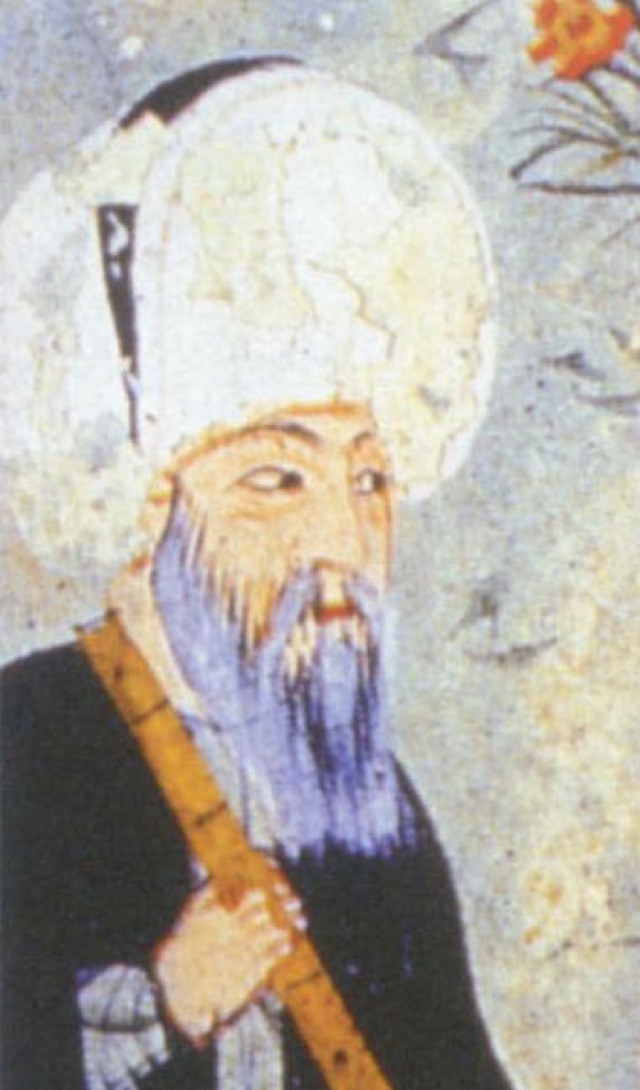
Portrait of Mimar Sinan
The Man Who Solved the Dome
For eleven centuries, one building had shamed every architect who looked at it. When the Ottomans took Constantinople in 1453 and rode into Hagia Sophia, they found a dome that seemed to float on light — a sixth-century Byzantine feat no one since had matched or understood. It became the standard the conquerors both revered and resented: the thing to be answered. The man who finally answered it had begun as a Christian boy in the Cappadocian hills, taken from his village in the child-levy, and he learned his trade not in a workshop but on campaign, throwing bridges across rivers under fire. He never wrote a treatise. He solved the deepest structural problem in architecture the way he solved everything — with his hands, his eyes, and a mind that could feel where the stone wanted to push.
Mimar Sinan (c. 1490 – 1588) served as chief royal architect to the Ottoman sultans for roughly half a century, building or supervising some three to four hundred structures across an empire at its zenith. He described his own career in the plainest engineering terms: the Šehzade Mosque was his “apprentice work,” the mighty Süleymaniye his “journeyman work,” and the Selimiye at Edirne his “master work.” He did not arrive at his genius by vision but by iteration — not the theorist but the craftsman-engineer who understands the world by taking hold of it. Sinan is the ISTP raised to genius: the hands-on problem-solver whose laboratory was the empire itself.
Sinan is the ISTP in its highest register: a Ti mind that grasped load, thrust, and geometry as pure structural logic, fused to Se mastery learned in the field — a man who cracked the riddle of the dome not on paper but in stone, one building at a time.
The Logic of the Load
Ti — dominant
Dominant Ti builds a private, exacting model of how a thing actually works, and refines it against reality until it is airtight. Sinan's model was the flow of force through stone. The central problem of the domed mosque is brutal and physical: a dome is heavy, and its weight does not press straight down but pushes outward, threatening to burst the walls that carry it. Hagia Sophia had wrestled this thrust with massive, half-hidden buttressing that made its interior feel cramped and improvised. Sinan understood the force with a clarity no one before him had achieved, and set out to gather the whole weight of the building into a rational skeleton of piers and half-domes and arches that channelled every ounce of thrust cleanly to the ground.
The Selimiye Mosque at Edirne is the proof. There Sinan carried a single dome even wider than the one at Hagia Sophia and rested it on eight piers arranged in an octagon, so that the load spread evenly and the walls below could open into windows rather than thicken into buttresses. The result is a vast, unbroken, sunlit interior — the engineering not hidden but made visible. In pure structural terms it surpassed the original. And what makes this Ti rather than mere skill is the relentless refinement behind it: each major mosque tests a different geometry for gathering the dome — hexagonal, octagonal, a square with corner half-domes — as though Sinan were running the same equation through variation after variation, hunting the cleanest form. He was not decorating; he was solving. The buildings are a lifetime of proofs.
Learned in the Field
Se — auxiliary
Auxiliary Se is the hands-on engagement with the physical world that fed Sinan's logic its raw material. He did not learn architecture in a scriptorium. Taken in the devshirme and trained as a janissary, he spent his first decades as a military engineer on Suleiman's campaigns — at Belgrade, Rhodes, Mohács, and Baghdad. He built fortifications and siege works, and on one celebrated occasion threw a pontoon bridge across the Danube's marshes so the army could cross where it was thought impossible. Structure for the young Sinan was never abstract; it was the thing that had to hold under the weight of an army, and hold now.
This is the crucial difference between Sinan and a scholar of architecture. His understanding of materials — how stone bears, how an arch behaves under strain — came through his hands and eyes in the field, tested against failure with immediate consequences. When he was appointed chief architect around 1538, he brought to the drawing of mosques an instinct for what would actually stand. And he never left the concrete: he ran aqueducts into Istanbul, spanned rivers with bridges still standing today, and perfected the dome not in theory but by building dome after dome and watching, with a craftsman's patience, exactly how each one behaved.
Apprentice, Journeyman, Master
Ni — tertiary
Tertiary Ni gives the ISTP's hands-on problem-solving a longer arc — a dim but real sense of where the whole enterprise is heading. Sinan's three-word account of his career is Ni in its purest form: apprentice work, journeyman work, master work. He saw his hundreds of buildings not as separate commissions but as a single ascending line toward a mastery he could sense ahead of him before he reached it. That summit was the Selimiye, raised in his eighties — half a century of accumulated intuition converging on one building. Yet the Ni stays tertiary, because the vision never floated free of the stone: Sinan did not leap to the Selimiye by inspiration but built his way there. The far-off goal guided the hand, but it was always the hand that did the actual knowing.
Building for the House of Osman
Fe — inferior
Inferior Fe is the ISTP's least native register: the pull of other people's expectations, of status, faith, and dynastic feeling, which the analytical craftsman must serve without ever being wholly at home in it. Sinan spent his whole career inside that pressure. His buildings were never his own statements — they were acts of Ottoman piety and imperial prestige, raised to glorify God, the dynasty, and the patrons who paid for them. Every dome had to satisfy a court's sense of magnificence and a faith's sense of the sacred, and Sinan met that demand for fifty years without a recorded misstep.
He built, in effect, the emotional and religious life of an empire in stone. The Süleymaniye proclaimed the majesty of Suleiman the Magnificent; the mosques he raised for the princess Mihrimah Sultan and the exquisite, tile-clad Rüstem Pasha Mosque served the devotion and standing of the court's highest figures — each given a building that expressed feelings Sinan did not need to share: grief, reverence, dynastic pride. That he did this so well while remaining, at core, an engineer of load and thrust is the quiet paradox of his life. The interiors move worshippers to awe, and the awe is a by-product of a structural logic worked out in cold precision. Sinan served the soul of an empire by perfecting the mathematics of a dome.
Why ISTP Over INTJ or ISTJ
Why not INTJ?
The temptation is strong: a solitary genius who reshaped a civilization's skyline surely worked from some grand abstract master-vision. But that is exactly what Sinan did not do. The INTJ systematizes from a plan — Ni conceiving the whole in advance, Te imposing it on the world. Sinan worked the other way around: an empirical craftsman who solved concrete structural problems and refined the solutions building by building, the Süleymaniye as apprentice work leading to the Selimiye as master work, each experiment surpassing the last. That is Ti–Se mastery of the real, discovered through the hands, not Ni–Te theory descending onto it.
Why not ISTJ?
Sinan shares the ISTJ's patience, precision, and half-century of loyal imperial service. But the ISTJ works from inherited procedure — Si applying the proven way — and Sinan broke the proven way. He pushed structure past every precedent, cracking the thrust problem that had bounded architecture since Hagia Sophia. That is the Ti innovator testing the limits of what will stand, not the ISTJ faithfully repeating what already does.
What settles it is the shape of his mastery: it was won, never given. Sinan did not begin with an answer and execute it; he began with a force he wanted to understand and chased it through hundreds of structures until the stone finally did exactly what his mind said it should. The defining fact of his life is not a vision but a solution — arrived at by hand and by eye. That is the ISTP's deepest signature: the world understood by taking hold of it, and mastered by never stopping until it yields.
Connected Figures
Further Reading
- The Age of Sinan: Architectural Culture in the Ottoman Empire — Gülru NecipoğluThe definitive scholarly study — situates Sinan's buildings within the whole architectural culture of the empire and remains the standard work on his art.
- A History of Ottoman Architecture — John FreelyA wide, accessible survey that places Sinan's mosques in the long arc of Ottoman building, from the early years to the classical zenith.
- The Ottoman Empire: The Classical Age, 1300–1600 — Halil İnalcıkThe classic account of the empire at its height — essential background on the Ottoman world Sinan served and built for.
