 Historical Figure MBTI
#570 · 4-29-26 · The Ottoman Zenith
Vlad III the Impaler
Voivode of Wallachia · The Impaler · The Dragon's Son
1431 — 1476
11 min read
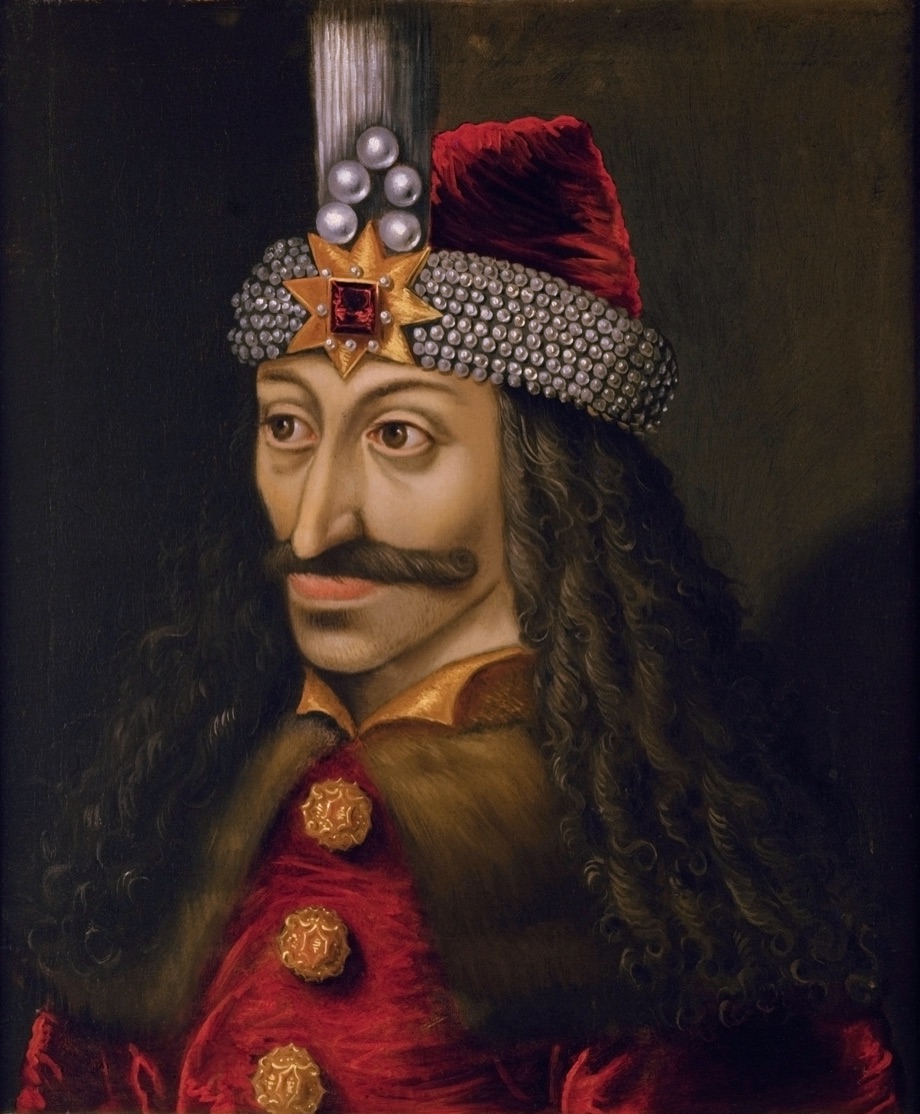
Portrait of Vlad III the Impaler
The Forest of the Impaled
In the summer of 1462, an Ottoman army marched north into Wallachia expecting the usual spectacle of a small Christian principality being brought to heel. What they found instead, on the road to the capital at Târgoviște, was a field of the dead. Thousands of impaled bodies — Ottoman prisoners, Bulgarian captives, men and women taken in earlier raids — stood rotting on a forest of stakes stretched for miles, arranged by rank, the highest lords lifted highest. The chroniclers say that Mehmed II, the conqueror of Constantinople, the man before whom the great walls of the Roman world had fallen, looked at this and turned his army around. He was not squeamish; he was a warlord of his age. He simply understood that he was facing a mind that had thought carefully about horror and decided to use it.
Vlad III, Voivode of Wallachia — son of Vlad Dracul of the Order of the Dragon, and so “Dracula,” the dragon's son — ruled a fractious, exposed border state three separate times between the 1440s and his death around 1476. He impaled boyars and merchants and criminals and foreign envoys by the thousands, until the stake became his signature and his brand. The popular memory files him as a raving sadist, a monster whose name a Victorian novelist would one day borrow for a vampire. That memory is comforting because it is wrong. The stakes were not the eruptions of a madman. They were an instrument, applied with cold consistency toward a clear end: order at home, terror abroad, and a border that no one crossed twice. Vlad is the ESTP turned to its darkest use — a fearless tactician who read the physical world with total clarity and built a system of rule out of pure, calculated dread.
Vlad is the ESTP as shock-tactician: Se's appetite for the visceral and the daring, harnessed to a Ti logic so internally consistent it feels inhuman — terror not as rage but as policy, engineered stake by stake into a working machine of deterrence.
The Night Attack
Se — dominant
Dominant Se lives in the physical present — in the raid, the ambush, the sudden violent seizure of the moment — and Vlad's warfare was Se in its most audacious form. When Mehmed invaded in 1462 with a force that dwarfed anything Wallachia could field in open battle, Vlad did not dig in and wait to be crushed. On the night of June 16, guided by his knowledge of the ground and reportedly slipping through the Ottoman lines in disguise, he led a picked force straight into the sprawling enemy camp in the dark, hunting for the Sultan's own tent. The night attack failed to kill Mehmed only because Vlad struck the wrong tents, but it left the camp in bloody chaos by dawn. It is the signature act of the Se-dominant commander: not a plan executed from a map at distance but a body thrown into the dark, reading terrain and opportunity by feel and betting everything on nerve and speed.
The same appetite for the visceral shaped his whole method of rule. Vlad did not delegate cruelty into abstraction; his punishments were physical, immediate, and staged to be seen. The stake is a peculiarly Se choice of weapon — slow, public, unmistakably corporeal, impossible to look away from. Where a more distant temperament might have relied on law courts, fines, or quiet disappearances, Vlad wanted the deterrent to be a thing you could smell on the wind and count with your own eyes on the roads into his cities. He governed through the senses because that was the register he trusted most.
Even the famous set-pieces of his legend carry the Se stamp of a man wholly present in the deed. The stories of him dining calmly amid the impaled, of nailing envoys' hats to their heads when they refused to bare them, of burning the sick and the idle poor together in a hall — whatever their literal truth, they are all about a ruler who acted on the world directly and theatrically, in the flesh, without a flinch. This was not a man who agonized. It was a man who did the thing, watched it land, and moved.
The Logic of Terror
Ti — auxiliary
What separates Vlad from a mere brute is the auxiliary Ti — the cold internal logic that organized all that violence into a coherent system. Terror, for him, was not an outburst but an argument, and the argument was airtight on its own terms. He had inherited a principality wrecked by factional boyars who made and unmade voivodes at will; his own father and elder brother had been murdered in exactly that churn. Vlad's response was pitiless and perfectly rational: he broke the nobility as a class. He is said to have invited the boyars to a feast, seized the ones he judged complicit in the old betrayals, and impaled or enslaved them, then elevated new men who owed everything to him. Remove the variable that destroys Wallachian rulers, and you stabilize the throne. That is Ti solving for the actual problem, not the emotionally satisfying one.
The legendary rigor of his domestic order runs on the same engine. The tale of the golden cup left at a public fountain that no thief dared touch is, whatever its factual basis, a précis of his logic: make the certainty of horrific punishment so absolute that crime becomes irrational, and the crime rate collapses without further effort. He is reported to have cleared his realm of beggars and thieves by extermination rather than reform — brutal, but internally consistent with a mind that treats a kingdom as a mechanism to be tuned for one output: order. The atrocities scale not with his temper but with the size of the problem he is solving.
Above all, Ti explains the forest of the impaled as a calculated act of psychological warfare rather than gratuitous horror. Vlad understood that a display of overwhelming, methodical cruelty could accomplish what his outmatched army could not — that if he made the price of invading Wallachia unbearable to contemplate, the arithmetic of a rational conqueror like Mehmed would do the rest. He was engineering the enemy's decision from inside the enemy's own cost-benefit reasoning. The stakes were a message written in the only language he was sure the Sultan would read: this will cost you more than it is worth.
The Theatre of Dread
Fe — tertiary
Tertiary Fe in the ESTP shows not as warmth but as a shrewd instinct for how a group can be moved — for the collective mood, and how to seize it. Vlad had it, and he weaponized it. His atrocities were never merely private; they were staged. The impalements were arranged as theatre — bodies sorted by rank, the field composed for maximum effect on the viewer, timed and placed where an approaching army or a rebellious city could not miss the message. A man with no feel for how spectacle lands on an audience could not have produced the 1462 display, which worked precisely because it was calibrated to the psychology of the men who would see it. Vlad read collective fear the way a showman reads a crowd.
That same social instinct served him with envoys and rivals. The stories of the nailed hats and the impaled ambassadors are, at bottom, about status and message: an insult to Wallachia is repaid in a form the whole world will hear about, so that the reputation of the Voivode precedes him into every negotiation. He understood honor, humiliation, and the currency of a name — the Fe register of who owes whom respect — and he played it ruthlessly, converting each act of cruelty into a story that traveled and did his intimidation for him long before he ever took the field.
The Vision He Could Not Hold
Ni — inferior
Inferior Ni is the ESTP's blind spot: the long, single vision of the future that the present-tense mind grips only in flashes, and often gets wrong. For all his tactical brilliance, Vlad was a poor long-range strategist, and it undid him. His method generated enemies faster than it generated allies. The very terror that secured his borders alienated the boyars, the Saxon merchants of Transylvania whose towns he burned, and the neighboring powers whose goodwill he needed. He could win the night and lose the decade.
The proof is the shape of his life. Three reigns, two long stretches of exile and imprisonment, and a throne he could never make secure. His own brother, Radu the Handsome — raised beside him in Ottoman captivity but bent by it in the opposite direction, into a favorite of the Sultan's court — was set against him with Ottoman backing, and the boyars, exhausted by terror, drifted to the softer, more pliable sibling. Vlad's machine of dread had no answer to a rival who offered relief from it. He fled to Hungary and spent years a prisoner of the very king he had hoped would be his patron.
When he clawed back the throne a third time around 1476, it lasted only weeks before he was killed in battle, his severed head sent to Constantinople as a trophy. A man who could see a single night's attack with perfect clarity could not see the political end-state five years out — could not build the durable web of loyalty and legitimacy that outlasts terror. The inferior function names exactly what was missing: not nerve, not logic, but the long view.
Why ESTP Over ESTJ
Why not ESTJ?
The order-through-fear and the ruthless enforcement can look ESTJ — the administrator who imposes discipline and stamps out disorder. But the ESTJ enforces law within an accepted order; he works through institutions, precedent, and Si's respect for the established way. Vlad was the opposite: a lawless improviser who answered to no institution and broke every norm he touched. He impaled the Sultan's own envoys, defied his overlord, attacked by night, and manufactured his authority out of shock rather than administering an inherited one. That is the opportunist and shock-tactician — Se-Ti seizing the present — not the Te-Si builder maintaining a system.
The distinction matters because it rescues Vlad from the wrong kind of monster-story. The ESTJ reading would make him a stern disciplinarian gone too far; the raving-sadist myth makes him a man consumed by appetite. The ESTP reading is colder and more disquieting than either. Here is a man of total physical fearlessness and a lucid, instrumental intelligence, who looked at cruelty not as a compulsion to indulge or a law to enforce but as a tool lying to hand — and picked it up because, on the evidence in front of him, it worked. The horror of Vlad the Impaler is not that he could not think. It is that he could, and this is what the thinking produced.
Connected Figures
Further Reading
- Dracula: Prince of Many Faces — His Life and His Times — Radu R. Florescu & Raymond T. McNallyThe best-known scholarly reconstruction of the historical Vlad, disentangling the man from the legend and tracing the sources of both.
- Vlad III Dracula: The Life and Times of the Historical Dracula — Kurt W. TreptowA rigorous, source-based biography that sets Vlad firmly in his Wallachian and Ottoman political context.
- Vlad the Impaler: In Search of the Real Dracula — M. J. TrowA readable narrative account that weighs the atrocity chronicles against the evidence and the folk memory.
- The Ottoman Empire: The Classical Age, 1300–1600 — Halil İnalcıkThe standard survey of the empire at its zenith — essential for understanding the world Vlad defied and the machine Mehmed commanded.
