 Historical Figure MBTI
#931 · 7-8-26 · The Second World War
Paul Reynaud
Prime Minister of France · The Premier Who Could Not Stop the Collapse
1878 — 1966
6 min read
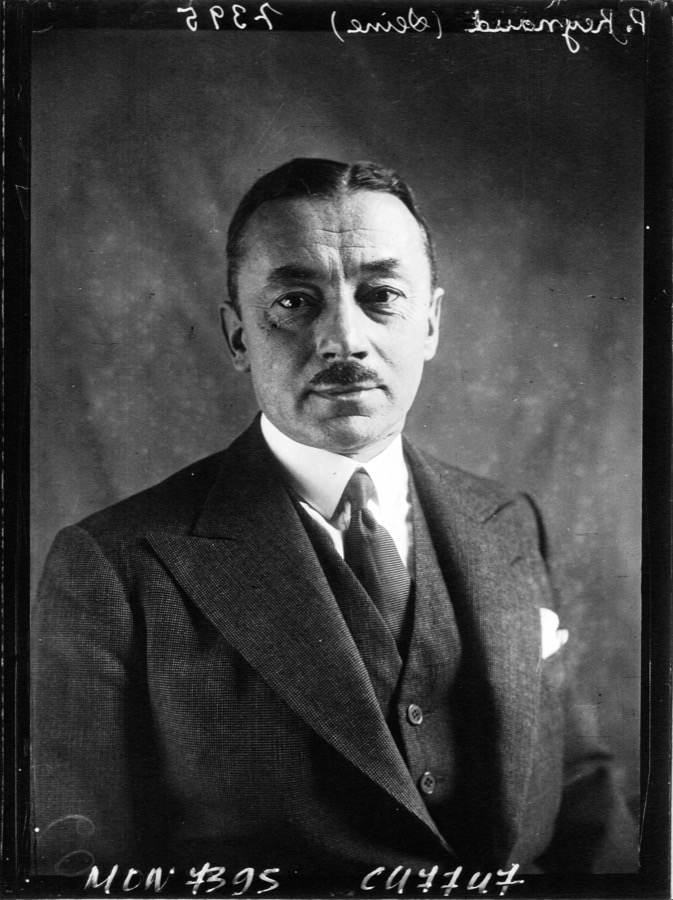
Paul Reynaud, official press portrait (Agence Mondial / BnF Gallica, public domain)
Six Weeks to Prove It
Paul Reynaud spent the 1930s as a lonely voice in the French political establishment, arguing that the next war would be won or lost by tanks massed into independent armored divisions, not scattered piecemeal along a static line of fortresses. He had read Charles de Gaulle's writings on mechanized warfare, met the younger officer, and staked his own credibility on backing him in a military culture that regarded the idea as close to heresy. When Reynaud finally became Prime Minister in March 1940, weeks before the German invasion, it looked briefly as though the argument he had been making for a decade might get tested in time.
It did — and it broke him. The German breakthrough at Sedan in May shattered the French line in days, and Reynaud spent the six weeks that followed trying to impose decisive action on a government that no longer believed decisive action was possible. He pulled de Gaulle into his cabinet as undersecretary of defense, sought American aid, resisted the mounting chorus around Marshal Pétain and General Weygand calling for an armistice. He is an ENTJ, and the crisis is legible almost entirely through that lens: a will to force outcomes that ran straight into a cabinet room where the votes were not his.
Reynaud's ENTJ Te wanted to command the collapse of France; instead he presided over it, and resigned rather than sign its surrender himself.
A Premier Who Wanted to Command the War
Reynaud's Te showed up years before he held power, in the flat, technical insistence that France's doctrine was wrong. He did not simply distrust the Maginot Line strategy on instinct; he built the case in speeches and in print, citing tank concentrations and mobility the way a prosecutor cites evidence, and he kept making it even as the military establishment closed ranks against him. That is a dominant-Te habit in its purest form — treat the external, measurable facts as the argument, and expect the argument to win on its merits.
As Prime Minister the same instinct became the engine of his premiership. He restructured his own cabinet mid-crisis to bring in de Gaulle, pressed Britain and the United States for material support, and pushed for the government to keep fighting from North Africa rather than accept defeat on the mainland. Every one of those moves was an attempt to seize the levers of outcome directly rather than manage the politics around him — which is also why he proved so vulnerable once the levers stopped responding. Te wants to act on the world; it has no fallback plan for a cabinet room that simply outvotes it.
Backing the Theory No One Else Would Touch
What separates Reynaud from a merely stubborn Te type is the Ni underneath it — the ability to see, years ahead of the evidence forcing anyone else's hand, where mechanized warfare was going to take the next European conflict. Backing de Gaulle's tank doctrine in the 1930s was not a popular hedge; it was a bet on a single coherent picture of the future against the settled judgment of the French General Staff, made with no guarantee it would ever be tested, let alone vindicated.
It was vindicated with brutal speed. The Ni pattern held even inside the collapse: Reynaud grasped faster than most of his cabinet that the battle for France was effectively lost within days of Sedan, and that the real question left was what France did next — fight on from the empire, or negotiate. His clarity about the shape of the endgame outran his ability to make anyone around him act on it, which is the recurring frustration of Ni in service to a dominant that needs allies to execute.
The Line He Would Not Cross
Reynaud's Fi surfaces at the one moment where argument stopped being enough. When the cabinet majority swung behind Pétain and Weygand and an armistice became inevitable, Reynaud did not fight to reverse the vote by other means, and he did not stay in office to manage a surrender he thought was wrong. He resigned. Signing the document himself, even under outvoted protest, was a line his own sense of what he could live with would not let him cross, and he handed the premiership to Pétain rather than put his name on the armistice.
It is a small, quiet gesture set against six weeks of failed maneuvering, and it cost him: internment first under Vichy, then handed to the Germans, for the rest of the war. But it is also the clearest inferior-Fi moment in the whole record — a private conviction, rarely voiced and never the main event, asserting itself only when Te and Ni had both run out of room to act.
Why ENTJ Over ESTJ
Why not ESTJ?
An ESTJ prime minister facing the French General Staff's doctrine of static defense would have leaned on established procedure and the settled chain of command, not staked his career on an unproven theory of armored warfare pushed by a colonel the establishment disliked. Reynaud did the opposite for a decade before he ever held power: he backed de Gaulle's mechanized doctrine against orthodoxy on the strength of where he judged the technology and the next war were heading, not on the strength of institutional precedent. That is Ni-backed strategic foresight overriding convention, not Si-anchored conformity to it.
The same gap shows in how each type would have handled the cabinet crisis of June 1940. An ESTJ under pressure tends to fall back on hierarchy and process — accept the majority, follow the chain of command to its conclusion. Reynaud instead tried to override the emerging consensus by force of argument and by importing an outsider, de Gaulle, into the machinery of government, and when that failed he broke from the process entirely rather than execute an outcome he judged wrong. Command by vision and by will, not by procedure, is the ENTJ signature that fits him.
Connected Figures
Further Reading
- The Fall of France: The Nazi Invasion of 1940 — Julian JacksonThe standard account of the six-week collapse and the cabinet fight over the armistice.
- The Last Days of Paris — Alexander WerthA contemporary journalist's record of the government's flight and the mood inside a collapsing France.
