 Historical Figure MBTI
#1264 · 9-18-26 · The Carolingian World
Paul the Deacon
Lombard Historian · Monk · Preserver of Memory
c. 725–late 790s
5 min read
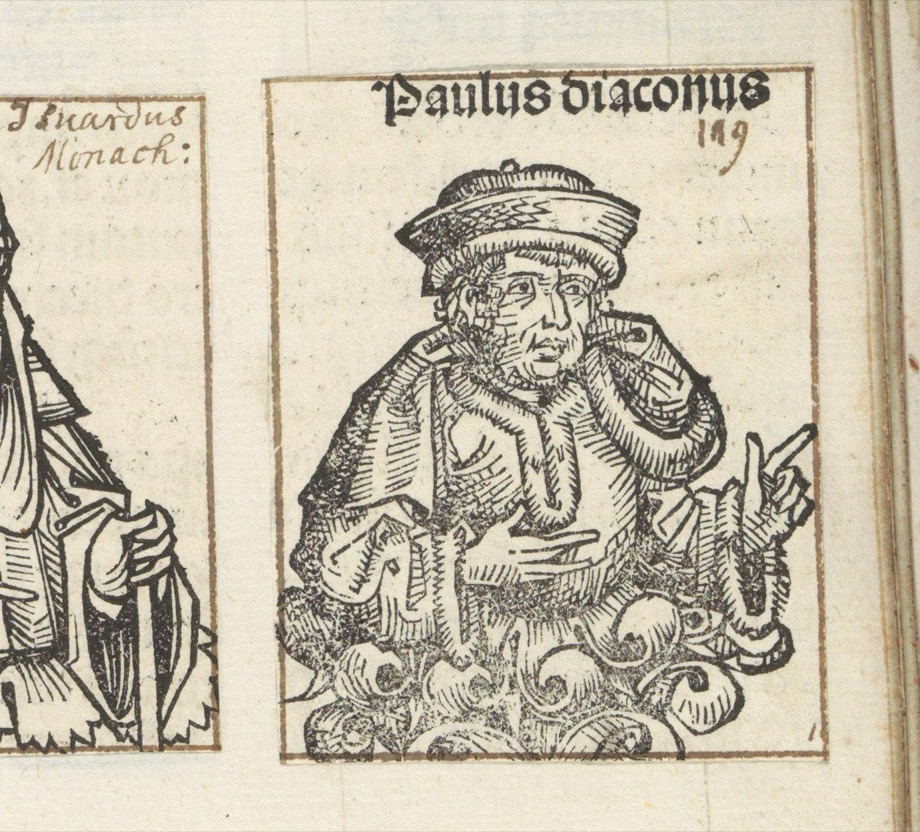
Imagined portrait of Paul the Deacon — 1493 (later depiction)
A history written after a kingdom
Paul the Deacon knew what it meant for a people’s political world to change without its remembered past disappearing. The Lombard kingdom fell to Charlemagne in 774. Paul’s later History of the Lombards reaches back through migration, kingship, violence, and conversion, but ends with Liutprand, decades before that conquest. The narrator leaves his readers inside a world that his own lifetime had already transformed.
It is tempting to make the stopping point a statement of refusal or a carefully planned consolation. The evidence does not establish either. The work may have remained unfinished, and the reasons for its shape continue to invite argument. Its achievement is more secure than our reconstruction of its last intention: Paul gave the Lombard past a substantial narrative life under conditions in which Lombard sovereignty no longer supplied its frame.
The low-confidence INFJ interpretation concerns that shaping of memory and meaning. It cannot be derived simply from his being a monk or a historian. A literary narrative allows us to examine recurring emphases, while the distance between an author’s constructed world and his private decisions remains considerable.
The tentative INFJ reading locates dominant Introverted Intuition in Paul the Deacon’s effort to give a changing community’s past an intelligible moral shape.
A past larger than the winning dynasty
Paul’s career connected the Lombard court, the southern Italian world of Benevento, Monte Cassino, and the Frankish court. These were not interchangeable settings. A learned man could move between them because his skills were useful, but usefulness did not erase the political changes through which he had lived. His writing arose from overlapping affiliations rather than a single uncomplicated loyalty.
Introverted Intuition is plausible in the narrative’s effort to make scattered inherited materials belong to an intelligible history. Migration stories, royal episodes, and ecclesiastical concerns are selected and connected. Readers encounter more than a register of reigns. They are invited to see what conduct preserves or damages a community and how religious change enters its history.
That interpretation must remain close to the work. Medieval historical writing commonly sought providential significance; Paul did not invent the practice. A meaningful narrative is therefore evidence of a literary and religious purpose before it is evidence of a personality function. The proposed reading gains force only from the persistence of that purpose across the mixed materials he chose to preserve.
The people within political change
An extract concerning Gregory the Great and the Lombards gives the shaping purpose a human center. Paul credits Queen Theudelinda with influencing royal conduct and helping secure peace. Religion becomes consequential through persuasion, generosity, and the restraint of bloodshed. The narrative does not reduce relations between Lombards and Romans to permanent hostility.
Auxiliary Extraverted Feeling is a possible account of this interest in the relationships through which communal life can be repaired. The interpretation concerns the attention given to mediation and its consequences, not a claim that Paul lacked an interest in violence or conflict. His history contains both. The peacemaking episode matters because it preserves an alternative to treating force as the only effective action.
His own petition for his brother’s release supplies a different register. After resistance to Frankish rule, his brother was carried away as a prisoner. Paul appealed to Charlemagne through poetry. Family suffering, literary skill, and the conqueror’s capacity for mercy entered the same exchange. The appeal establishes a concrete obligation that moved him; it does not require us to decide that his subsequent court service amounted to either betrayal or wholehearted assimilation.
A voice with sources and limits
Paul did not witness the early migrations or the reigns that occupy much of his history. He worked with previous accounts, oral traditions, and literary resources. A vivid episode can reveal how the past was remembered without supplying a transparent record of what happened. His importance as a source makes this distinction more necessary, not less.
The same caution applies to reading him psychologically. The stories that survive are mediated by the purposes of a Christian author and by the expectations of historical narrative. There is no responsible shortcut from a moving episode to the assertion that we know his habitual inner state. We can describe his editorial choices more confidently than the processes that produced them.
Why this tentative reading?
Why not ISFJ?
Preservation of inherited memory and loyalty to family make ISFJ a substantial alternative. INFJ is preferred tentatively because the history does more than safeguard an accumulated tradition: it organizes that tradition into a moral account of a people. Yet selection and interpretation belong to the historian’s craft, so this distinction carries limited psychological weight.
The type is best treated as a question that directs attention to the work. Does Paul principally preserve what has been received, or reshape it around an integrating meaning? The evidence supports both activities. The balance adopted here remains explicitly provisional, and new attention to his other writings could reasonably move it.
Connected Figures
Further Reading
- History of the Langobards — Paul the Deacon; translated by William Dudley FoulkeRead the narrative and its source discussions together; remembered stories are not interchangeable with witnessed events.
- Pope Gregory the Great and the Lombards — Paul the DeaconAn accessible extract showing how royal conduct, religious change, and peacemaking become linked in his history.
- The Narrative Worlds of Paul the Deacon — Christopher HeathA scholarly reading of Paul’s historical writing across the political and cultural worlds he inhabited.
