 Historical Figure MBTI
#607 · 5-6-26 · The Reformation
Philip Melanchthon
Teacher of Germany · Author of the Augsburg Confession · The Gentle Reformer
1497 — 1560
6 min read
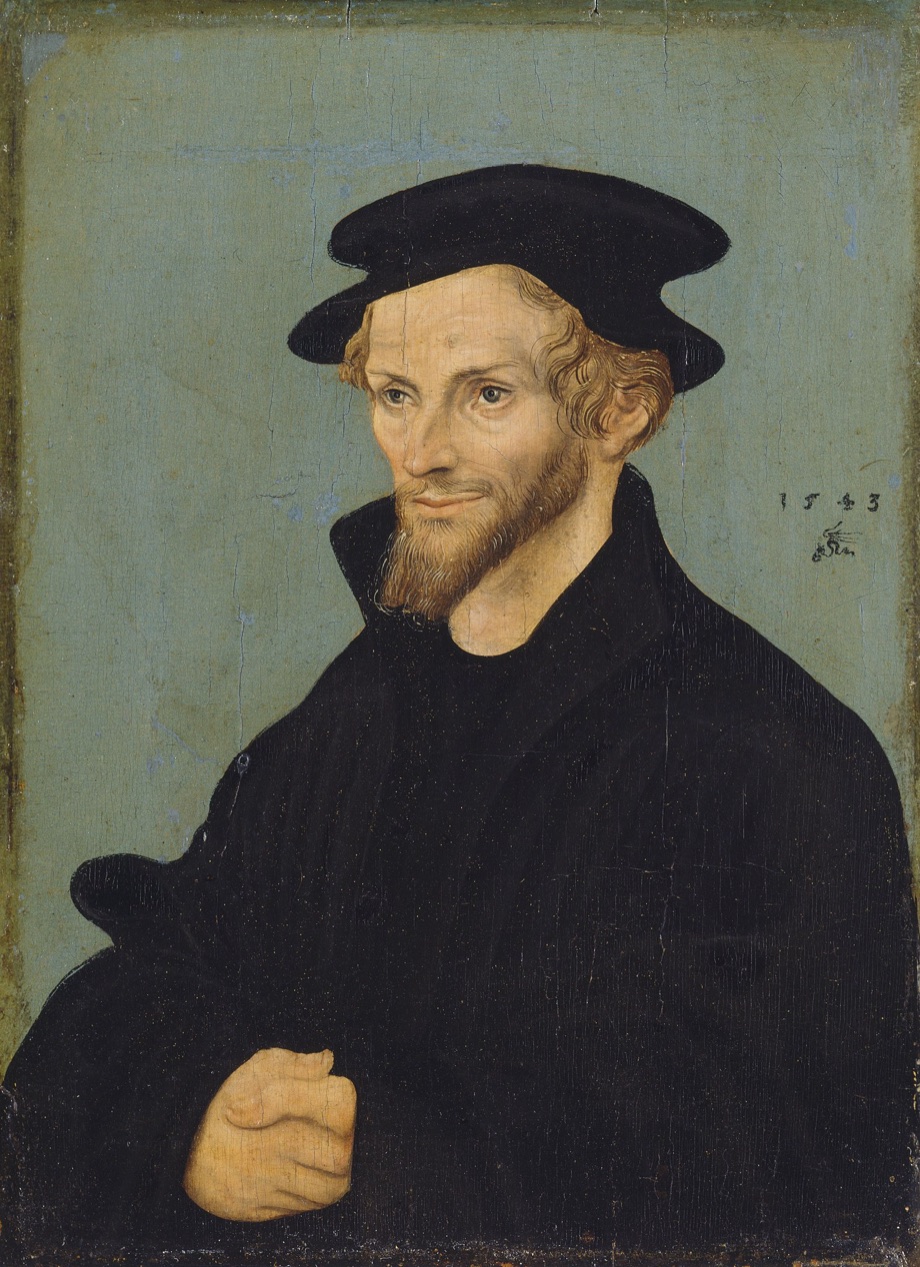
Portrait of Philip Melanchthon
The Gentle Man Beside the Volcano
Every fire needs a hearth to be of any use, and the fire of the German Reformation found its hearth in a slight, stammering, perpetually anxious scholar of Greek who would have preferred a quiet life among his books. Where Martin Luther was thunder — volcanic, coarse, magnificent in his rages — Philip Melanchthon was the still, ordering mind that caught the lightning and gave it a shape a reader could hold. He was Luther's closest colleague and his temperamental opposite: mild where Luther was ferocious, conciliatory where Luther was intransigent, made miserable by the very conflict on which Luther seemed to thrive.
He was a prodigy — a master of Greek while other scholars were still construing their first texts, drawn to Wittenberg in 1518 and never really to leave. And it was this gentle humanist, not the roaring monk, who did the reformation's quietest and most enduring work: he wrote its first systematic theology, the Loci Communes of 1521, and drafted the Augsburg Confession of 1530, the founding statement of the Lutheran faith, laid before the Emperor Charles V. Germany would call him Praeceptor Germaniae, the Teacher of Germany. But the deepest fact about him is not the systematizing; it is the ache. He spent his life longing for a reconciliation the age would not grant — the archetype of the INFP caught in a century that had no room for gentleness.
Melanchthon is the INFP as peacemaker in a war he never wanted: Fi's tender, sincere conscience and its horror of cruelty, married to Ne's vast humanist reach — a man who gave a revolution its mind and its form, and spent himself trying to heal the very fracture that mind had helped to open.
The Conscience That Could Not Bear a Quarrel
Fi — dominant
Dominant Fi is a private, inward compass — a felt sense of what is right and sincere and merciful, held so deeply it is barely arguable. In Melanchthon it took the form of a personal faith of unusual tenderness and a moral revulsion at cruelty that never left him. He was ruled by feeling more than by calculation: sensitive, easily wounded, given to anxiety and to physical illness under strain, and constitutionally incapable of enjoying the polemical bloodsport his age treated as sport. The savagery of religious controversy did not brace him; it made him ill.
This is why his lifelong project was reconciliation — not a diplomat's tactic but a moral compulsion. He could not accept that Christians should tear one another apart, and he became the great irenic voice of the Reformation, forever seeking the formula, the concession, the softer wording that might let enemies stand in the same room. When the emperor imposed the Leipzig Interim, he was willing to yield on the adiaphora — the “things indifferent,” ceremonies he judged not essential to salvation — if yielding might buy peace and preserve the gospel. To him it was mercy; to the hardliners it was betrayal, and they never forgave him.
Therein lies the Fi tragedy of his life. The very sincerity that made him gentle made him a target, because he would not perform the certainty the age demanded. Where a fiercer man wore conviction as armor, Melanchthon wore his conscience on the outside, exposed — savaged by Catholics for the reform and by his own camp for the compromises, and suffering it as only a thin-skinned idealist can. When he died in 1560 he was reported to feel, above all, relief: to be free at last of “the fury of the theologians.”
The Mind That Ordered a Revolution
Ne — auxiliary
Auxiliary Ne is the outward reach of the INFP — the roving, connecting intelligence that ranges across fields and finds the pattern binding them. Melanchthon had it in abundance, the perfect complement to Fi's inwardness. He came out of the humanist tradition of Erasmus — the love of the original languages, the ancient texts read afresh, the conviction that renewed learning and renewed faith were one project. His breadth was famous: Greek and Latin, rhetoric, dialectic, ethics, physics, history, astronomy. He was less a specialist than a synthesizer, a man who could not look at a body of knowledge without wanting to arrange it into something teachable.
That instinct produced his lasting monument. The Loci Communes took the wild, thunderous outpouring of Luther's thought and organized it into the first systematic Protestant theology — a coherent ordering of doctrine a student could actually follow. Luther supplied the volcanic material; Melanchthon supplied the architecture. It is a characteristically Ne act: not originating the fire but grasping the whole of it and giving the shapeless a form. The same gift drafted the Augsburg Confession, which had to state a new faith clearly and moderately enough to be heard by an emperor.
And it made him the Teacher of Germany in the most literal sense. Melanchthon reorganized the school and university system of Protestant Germany — designing curricula, writing textbooks, founding and reforming institutions — because Ne could not help seeing education itself as the thing to be reformed. The reformation of doctrine he shared with Luther; the reformation of learning was his alone.
The Keeper of the Texts
Si — tertiary
Tertiary Si gives the INFP a steadying attachment to the concrete inheritance of the past — to sources, precedents, the wisdom of what has been carefully handed down. In Melanchthon it showed as reverence for the ancient authorities and a scholar's patient fidelity to the actual text. He did not want to sweep the past away; he wanted to recover it rightly. His humanism was Si in the service of Ne: a return ad fontes, reading Scripture and the Fathers and the classical authors in their own words rather than through the accreted commentary of the schoolmen.
It is also what made him a conservative reformer rather than a radical one. His instinct for the “things indifferent” came partly from Fi's longing for peace and partly from a genuine Si respect for inherited practice: many of the old ceremonies, he felt, were harmless custom, not error to be torn out. Where the iconoclasts wanted to raze, Melanchthon wanted to keep whatever did not have to go — the temperament of a man who reforms with a scalpel rather than a hammer.
The Diplomat Who Was No Match for the World
Te — inferior
Inferior Te is the INFP's weakest suit: the capacity to impose order on people and events, to negotiate hard, to hold a line in the teeth of opposition. Melanchthon was repeatedly forced to operate exactly here — drafting confessions, sitting at colloquies, standing before emperors and legates as the public face of a movement — and it is where his gifts ran thin. He could compose the document; he could not command the room. His concessions in the pursuit of peace, most notoriously over the Leipzig Interim, were the improvisations of a man out of his element in raw power politics, trying to buy with reasonableness a settlement the age would only settle by force.
His enemies read those concessions as weakness, and in a Te sense they were: a harder operator would have seen that no compromise was to be had, that the hardliners on both sides wanted a fight and not a formula. The very Fi that made him humane made him a poor field general in a war of doctrine, forever wounded that the other players would not lay down their weapons because he had asked them nicely to. So the inferior function turned, at the end, into exhaustion — and his dying relief at escaping “the fury of the theologians” is the sound of an INFP released at last from a fight that was never his to win.
Why INFP Over INTP
Why not INTP?
The case is tempting: he built the first systematic Protestant theology and reformed the architecture of learning — the work of a natural systematizer, which sounds like Ti. But Melanchthon was not a detached analyst turning doctrine over for the pleasure of the structure. His driving note was moral, not logical: gentleness, sincerity, and an anguish at division that ran through everything he did. His lifelong project of compromise flowed from feeling, from a conscience that could not bear cruelty — Fi warmth, not Ti detachment. The INTP systematizes to understand; Melanchthon systematized to serve a faith he loved and to hold a fracturing communion together.
The tell is in what wounded him. An INTP's theology can be attacked without touching the man; the argument is the thing, and a flawed argument is simply corrected. Melanchthon took the assaults on his compromises as assaults on his sincerity, and they made him physically ill. He did not want to be right so much as he wanted the fighting to stop — the deepest INFP signature there is: a mind of real systematizing power placed entirely in the service of a tender heart, the gentle idealist who gave the fire its form and would have traded all of it for peace.
Connected Figures
Further Reading
- Philip Melanchthon: Speaker of the Reformation — Timothy J. WengertA leading Melanchthon scholar's study of his rhetoric, theology, and role as the reformation's public voice — the best modern entry point.
- The Reformation: A History — Diarmaid MacCullochThe definitive one-volume history of the whole upheaval; places Melanchthon, the Augsburg Confession, and the irenic project in their full European context.
- The Augsburg Confession — Philip MelanchthonHis own drafting — the founding creed of the Lutheran churches, and the clearest window onto his moderate, conciliatory cast of mind.
