 Historical Figure MBTI
#1019 · 7-28-26 · The Second World War
Primo Levi
The Chemist of Survival · If This Is a Man · Testimony as Analysis
1919 — 1987
8 min read
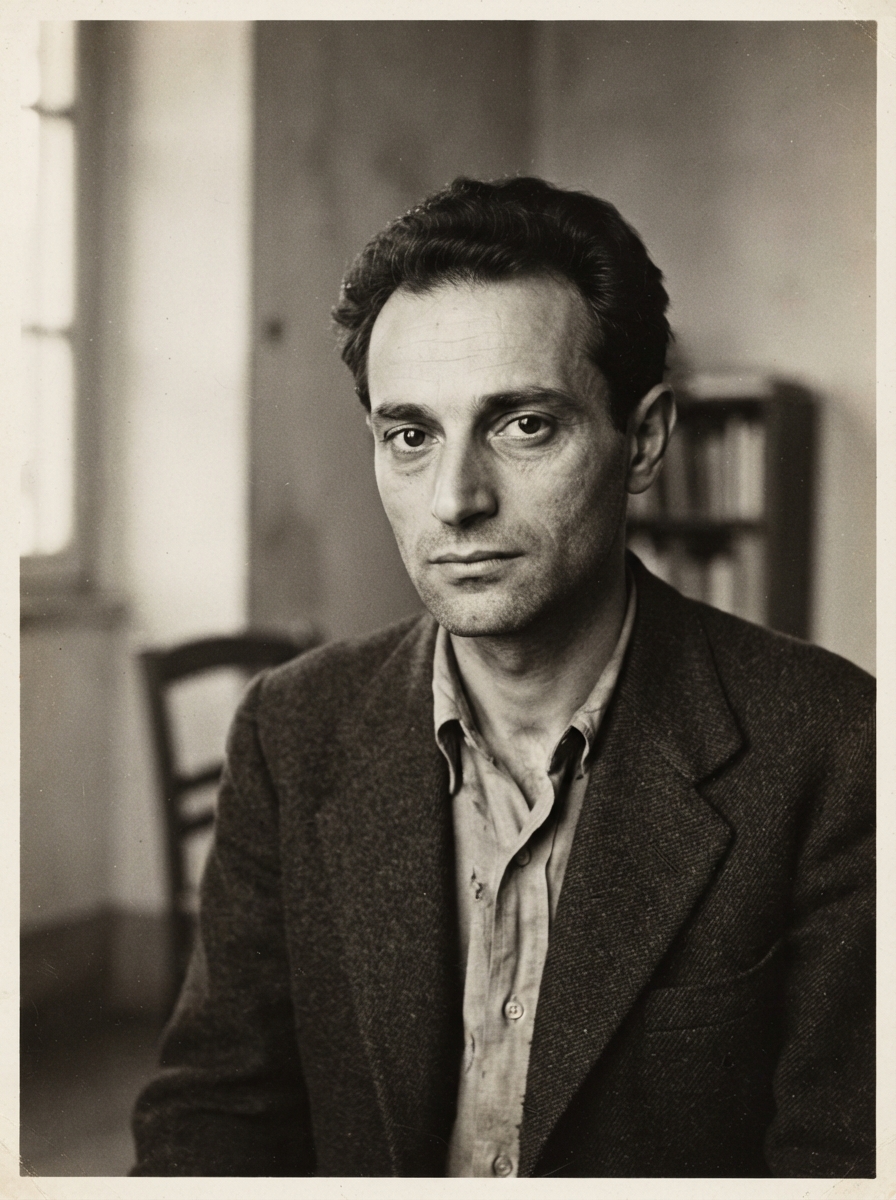
AI-assisted Portrait of Primo Levi
A Report From Inside the Experiment
He was arrested in December 1943 as a partisan, in the Aosta valley, at twenty-four, three months into a badly organised resistance career that had achieved nothing. Asked to choose between admitting to being a partisan — which meant being shot — and admitting to being a Jew, he chose the second, believing it the safer answer. It was not. He was sent to the transit camp at Fossoli and from there, in February 1944, to Auschwitz III-Monowitz, the labour camp attached to the Buna synthetic rubber works. Six hundred and fifty Italian Jews travelled on that train. Twenty-four came back.
He survived, as he was always careful to say, by luck: he spoke some German, he arrived late in the war, he was young, and above all he was a graduate chemist at a plant that needed chemists, which moved him indoors for the last months. Then he caught scarlet fever and was left behind in the infirmary when the camp was evacuated in January 1945, which meant he was not on the death march that killed most of the men who were fit enough to walk. He wrote the whole of If This Is a Man within about a year of coming home, working at night while employed full-time as an industrial chemist. A small press printed 2,500 copies in 1947. Most of them were pulped in a warehouse flood.
What is startling about that book, then and now, is its temperature. There is no rhetoric in it and almost no accusation. Levi described his own method as that of a chemist writing up a laboratory report — precise, quiet, concerned with mechanisms — and the result is the most analytically penetrating account we have of how a camp actually worked on the people inside it. He was an INTP who happened to be handed the most terrible material any observer has ever been handed, and who responded by trying to understand it.
An INTP whose dominant Ti met Auschwitz and produced not an outcry but a report — the camp treated as a system with rules, and the rules written down with the exactness of a man who had spent his life measuring things.
The Camp as a System With Rules
Dominant introverted thinking wants the internal logic of a thing — not its moral standing first, but how it is put together. Levi applies that instinct to Auschwitz with a consistency that some readers found cold when the book appeared. He works out the economics of the bread ration and the exchange rate between bread and soup and a shirt. He describes the hierarchy of Kapos and Prominenten as a functioning social order with entry conditions. He distinguishes, famously, between the drowned and the saved: two classes defined operationally, by whether a prisoner could still make small advantageous adjustments to his circumstances or had ceased to be able to.
The most rigorous product of that function came forty years later, in The Drowned and the Saved, with the idea of the grey zone. Levi refused the clean partition between victim and perpetrator, because the camp had been designed precisely to destroy it — recruiting prisoners into the administration of their own destruction, and thereby implicating them. He insisted the Sonderkommando members could not be judged by anyone who had not stood where they stood. That is not moral relativism; it is a Ti conclusion, arrived at by following the structure of the system to where it actually leads rather than to where feeling would prefer it went.
He is equally exact about himself. He records that he stole, that he did not share a found supply of water equally, that he was not among the better men in the camp, and that the best did not come back. The absence of self-exemption is the same function operating on the nearest available subject.
The Chemist Who Wrote Everything Else
Auxiliary extraverted intuition is why Levi is a much stranger writer than his reputation suggests. He is remembered for two camp memoirs; he also wrote science fiction, a novel about Jewish partisans in Belorussia, a book of essays on rigging and knots and the beauty of skilled work, poems, a column on animals and language, and a translation of Kafka he found so distressing it made him ill. The Periodic Table is the purest expression of the function: twenty-one chapters, each named for an element, each using the chemistry as a lens onto a piece of a life — argon for the ironic, inert Piedmontese Jewish ancestors, vanadium for the postwar letter that turns out to come from a German he knew at Buna.
Ne shows in the analogies, too, which are the engine of his prose. The camp is compared to a laboratory, to a Darwinian selection, to Dante’s inferno, to a language problem. His account of reciting the Canto of Ulysses to a French prisoner while carrying the soup ration holds literature, memory, translation, and starvation in one frame, and it works because his mind naturally runs several models over the same object.
He kept the chemistry as well as the writing, working for over thirty years at a paint and varnish factory outside Turin, becoming its technical director, and not retiring to write full-time until 1977. The double life was not a compromise; he said the factory kept his language honest.
The Fidelity of the Detail
Tertiary introverted sensing gives the memoirs their unnerving specificity. Levi reproduces the Buna camp’s vocabulary, the exact wording of orders, the number tattooed on his arm, the names and the dialects, the temperature, the geometry of the barracks, the timing of roll call. He wrote most of it down within a year of returning, while the sensory record was still intact, and the precision is a large part of why the book has stood up so well against the archives.
The same function turns up as a lifelong attachment to place. Levi was born in the Turin apartment on Corso Re Umberto and died in it, having lived there for essentially all of his sixty-seven years apart from the war. For a man whose subject was rupture, he was remarkably continuous.
The Duty He Took On Late
Inferior extraverted feeling in an INTP tends to arrive as an obligation rather than an appetite, and to be discharged conscientiously and at cost. From the 1960s Levi spent years visiting Italian schools to talk to teenagers about the camps — hundreds of sessions, patiently answering the same questions — because he had concluded it was necessary, not because he enjoyed a platform. He was, by every account, a mild and unusually courteous man who found public performance draining and did it anyway.
Where the function shows strain is in his response to being disbelieved. His correspondence with German readers, collected in The Drowned and the Saved, shows him working hard to be fair to people whose evasions he could see clearly. Late in life the arrival of Holocaust denial wore at him badly.
On 11 April 1987 he fell from the interior stairwell of the Corso Re Umberto building and died. The coroner recorded suicide; it is the widely accepted view and it was not accepted by everyone, and it will not be settled. He had been depressed, was recovering from surgery, and was caring for a mother with dementia. Elie Wiesel said Levi died at Auschwitz forty years later. It is a good line, and Levi, who distrusted good lines about himself, would probably have wanted it qualified.
Why INTP Over INFP
Why not INFP?
The INFP reading picks up the humaneness, the poetry, and the moral gravity, all of which are genuinely there — but it misreads the instrument. Levi’s prose is deliberately restrained and oriented toward classifying the camp’s internal logic, not toward registering his own emotional interior; he described writing as a chemist writes a report, a controlled record meant to be understood rather than a vehicle for catharsis. A dominant-Fi writer facing that material would put the self at the centre and let the value judgement drive. Levi does the reverse: he suspends the judgement in order to keep the analysis clean, which is why the grey zone exists as a concept at all — an idea a dominant Fi would have found intolerable to hold.
The contrast within the triptych makes the call sharper still. Put him beside Anne Frank, whose diary is the dominant-Fi document par excellence — the self examined, defended, revised — and beside Elie Wiesel, whose testimony is addressed outward as a summons. Three survivors of the same machinery, three entirely different cognitive instruments brought to bear on it. Levi’s is the one that asks how it worked.
Connected Figures
Further Reading
- If This Is a Man (Survival in Auschwitz) — Primo LeviThe 1947 memoir of Monowitz, written within a year of his return; the primary source.
- The Periodic Table — Primo LeviTwenty-one chapters named for elements — the chemist and the writer in the same book.
- The Drowned and the Saved — Primo LeviHis last book, and where the grey zone is set out in full; published a year before his death.
- Primo Levi: A Life — Ian ThomsonThe standard English biography, thorough on Turin, the partisan arrest, and the final years.
- The Complete Works of Primo Levi — ed. Ann GoldsteinThe 2015 three-volume edition, including the science fiction, essays, and poems most readers never see.
