 Historical Figure MBTI
#972 · 7-17-26 · The Eastern Front
Vasily Zaytsev
Sniper · Stalingrad's Marksman · Silent Precision
1915 — 1991
4 min read
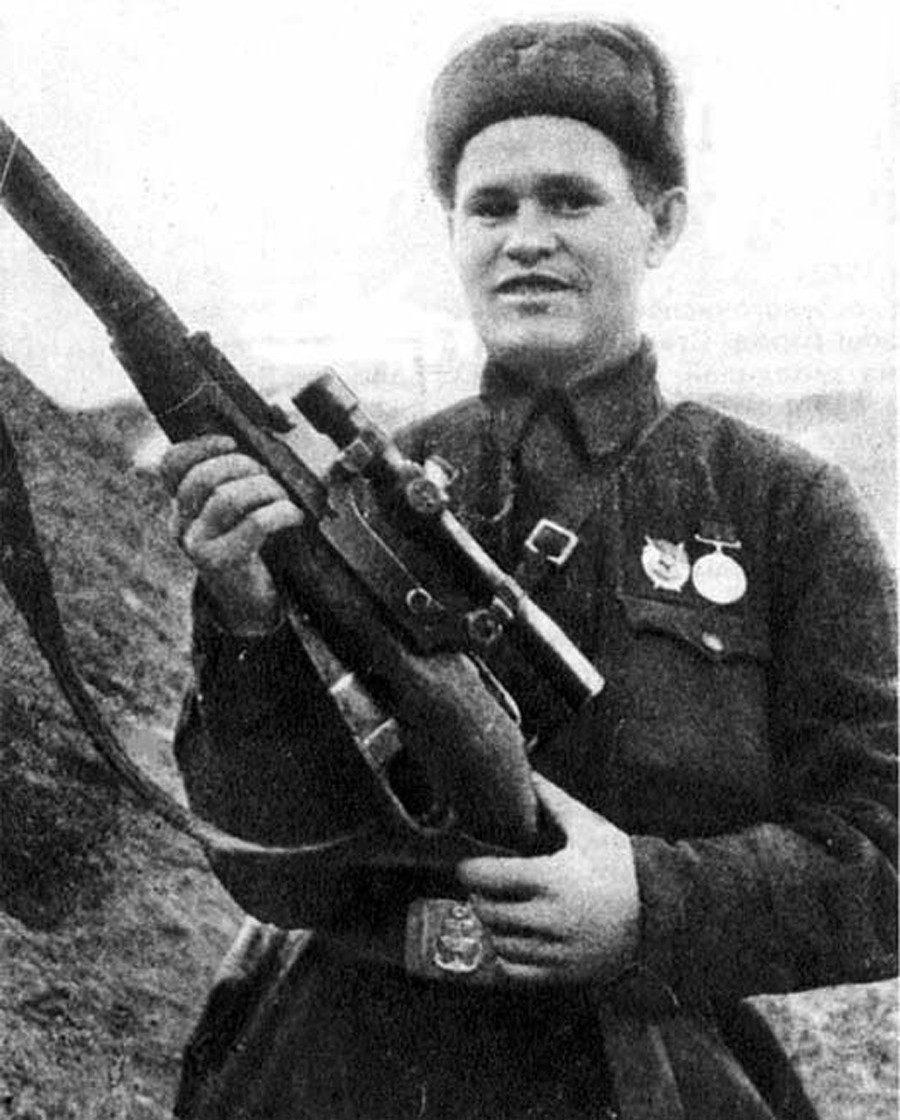
Portrait of Vasily Zaytsev, Red Army sniper
The Hunter in the Ruins
Before Stalingrad, Vasily Zaytsev was a shepherd and bookkeeper from the Urals who had learned to hunt as a boy — patient, exact, comfortable with long stretches of stillness. The Red Army turned that temperament into one of the war's most effective snipers, crediting him with dozens of confirmed kills during the battle, each one requiring hours of motionless waiting inside collapsed buildings and rubble, calculating angles of fire, wind, and light before ever pulling a trigger. He became, in Soviet propaganda, a symbol of the ordinary soldier turned deadly specialist — and the propaganda later spun a likely embellished story of a personal duel with a German master sniper that made him famous well beyond the war.
What the myth-making obscures is how unglamorous the actual craft was: solitary or paired work, technical precision, an almost clinical patience exercised one shot at a time. Zaytsev wasn't leading men or rallying morale; he was solving a narrow, physical problem over and over, alone, under conditions where a single miscalculation meant death. That's the working profile of an ISTP.
Zaytsev's dominant Ti turned marksmanship into a private, technical discipline — not a performance, a craft.
The Mathematics of a Single Shot
Zaytsev approached sniping as a technical problem to be solved rather than a heroic act to be performed. He trained other snipers in what became known as the "Zaytsev school," breaking the craft down into concrete, teachable components — camouflage discipline, angle selection, wind reading, the physics of bullet drop over distance — and refining his own method constantly against what actually worked in Stalingrad's specific terrain of rubble and shattered concrete.
He kept a private tally and a private logic about his targets, treating each engagement as a puzzle with a right answer rather than a moment of glory. The famous, likely exaggerated account of his duel with a German sniper named Konings is remembered today mostly for its tension and patience — days of nearly motionless calculation — which is exactly the kind of story that attaches itself to a dominant Ti mind even when the details get inflated in the telling.
Stillness as a Weapon
Ti's technical precision only worked because Zaytsev had an auxiliary command of the immediate physical environment — where light fell, how rubble shifted, which shadows would hide a rifle barrel's glint. He could hold a firing position for hours without moving, reading minute changes in his surroundings that would mean nothing to an untrained observer, and adjust instantly when the environment changed. That fusion of exacting internal logic with acute, real-time sensory awareness of the battlespace is Ti-Se working in tandem, not analysis alone.
His hunting background made this second nature rather than trained behavior — the same patience that let a Ural shepherd track game translated directly into a sniper's ability to become part of the landscape until the exact moment to act.
Reading the Opponent's Pattern
Where Zaytsev's tertiary Ni surfaced was in anticipating an enemy sniper's habits — where a shooter would likely reposition after a failed shot, what patterns of movement a wounded or cautious opponent would fall into over hours of a standoff. This wasn't the vivid, symbolic insight of a dominant intuitive; it was a narrower, more occasional capacity to project forward from a specific opponent's behavior, used sparingly and only in service of the immediate tactical problem in front of him.
Why ISTP Over ISFP
Why not ISFP?
An ISFP sniper might be remembered for an emotional or aesthetic relationship to the craft — the solitude, the moral weight of killing at a distance. Zaytsev's own accounts, and the accounts of those who trained under him, emphasize the opposite: technical calculation, teachable method, angles and physics. His engagement with the work was coldly analytical rather than emotionally expressive, which points to Ti-Se, not Fi-Se.
Zaytsev's legend outgrew the man, but the underlying psychology holds up: a private, technically exacting discipline exercised through acute physical awareness, with almost none of the outward emotional expressiveness a Feeling-led type would show under the same pressure. That's ISTP, not ISFP.
Connected Figures
Further Reading
- Stalingrad — Antony BeevorCovers Zaytsev's sniper unit and separates documented fact from later legend.
- War of the Rats — David L. RobbinsHistorical novel that popularized the (likely embellished) Konings duel story.
- Notes of a Russian Sniper — Vasily ZaytsevZaytsev's own memoir of the Stalingrad sniper campaign.
- Enemy at the Gates — William CraigGround-level narrative history of Stalingrad's street fighting.
