 Historical Figure MBTI
#971 · 7-17-26 · The Eastern Front
Friedrich Paulus
Field Marshal · The Officer Who Could Not Disobey · Surrendered at Stalingrad
1890 — 1957
4 min read
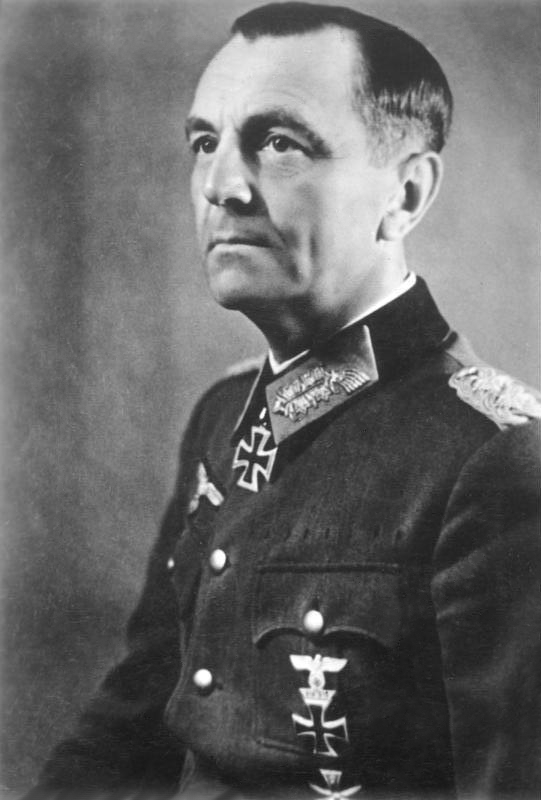
Portrait of Friedrich Paulus (Bundesarchiv, 1942)
Field Marshal by Order, Not by Nature
Friedrich Paulus was a staff officer's staff officer — meticulous, careful, promoted for his competence at planning rather than any flair for command in the field. He helped draft the original blueprint for Operation Barbarossa before being handed the Sixth Army in 1942, an assignment that put a details man in charge of the largest single force in the German invasion of the Soviet Union. When that army was encircled at Stalingrad by Operation Uranus in November 1942, Paulus faced a decision no amount of careful staff work had prepared him for: break out immediately, against orders, while it was still possible, or hold, as Hitler commanded, and wait for relief that was not coming.
He held. Hitler promoted him to field marshal in January 1943, explicitly because no German field marshal had ever surrendered — a rank conferred as a psychological trap. Paulus absorbed the message as intended, then surrendered anyway a day later, once resistance had become not disobedience but simple arithmetic. The tragedy of Paulus isn't that he lacked judgment; it's that he deferred it, repeatedly, to a chain of command that was leading his army to annihilation, and only stopped deferring when there was nothing left to save. That is the signature failure mode of an ISTJ.
Paulus's dominant Si didn't fail through incompetence — it failed through fidelity, to a chain of command that had already stopped deserving it.
The Weight of Precedent
Paulus's entire career ran on precedent, procedure, and the established chain of command — the traits that made him an outstanding chief of staff and a poor improviser. He had spent years internalizing how the German officer corps was supposed to function: orders came from above, were executed faithfully below, and deviation was the mark of an unreliable officer. At Stalingrad, with his army surrounded and starving, that internalized structure did not bend. He requested permission to break out. He did not act unilaterally when permission was refused.
Subordinate generals, including some far more willing to gamble on a breakout before the encirclement fully closed, found Paulus immovable on the question of authorization. It wasn't cowardice — by every account he was personally steady under fire — it was a bone-deep conviction that the proper channel, however catastrophic its output, was the only legitimate one.
The Careful Administrator of a Doomed Army
Once encircled, Paulus ran the pocket with the same organizational competence that had built his career: rationing what little supply the Luftwaffe's failing airlift brought in, managing a shrinking perimeter, coordinating a starving, freezing army as efficiently as the situation allowed. This is Te doing exactly what it does well — executing, organizing, extracting order from collapse — but pointed entirely at managing a catastrophe rather than averting one.
When the moment for surrender finally came, in a Univermag department-store basement in February 1943, Paulus handled it with the same procedural correctness: a formal capitulation, negotiated properly, rather than an undignified collapse. Even his end was administered.
A Private Break, Too Late
Paulus's Fi surfaced only after capture, when it was safe and useless. In Soviet captivity he eventually turned against Hitler outright, joining the anti-Nazi National Committee for a Free Germany and testifying at Nuremberg — a genuine, deeply felt reversal of loyalty, but one that arrived years after it might have saved a quarter million men. The private moral clarity was real; its timing reveals exactly how far down his function stack it sat.
Why ISTJ Over INTJ
Why not INTJ?
An INTJ commander who misjudged Stalingrad would have failed through an independent strategic miscalculation — betting wrong on his own read of the campaign. Paulus's failure was the opposite: he read the situation on the ground correctly, understood the encirclement was fatal, and still deferred to orders from above rather than trusting his own judgment. That is a Te-Si failure of procedural obedience, not an Ni-Te failure of vision.
Set beside Neville Chamberlain, another ISTJ whose fidelity to established process — diplomatic protocol, appeasement as doctrine — produced catastrophe when the moment called for something else entirely, Paulus reads less like an isolated failure than a recurring type-level pattern: the ISTJ who cannot disobey the process even after the process has visibly stopped working.
Connected Figures
Further Reading
- Stalingrad — Antony BeevorThe definitive narrative account, including Paulus's promotion and surrender.
- Enemy at the Gates — William CraigCovers the German command dysfunction inside the pocket.
- Paulus: The Fatal Decisions — Walter Görlitz (ed.)Compiled from Paulus's own postwar notes and testimony.
- Armageddon: The Battle for Germany, 1944–1945 — Max HastingsPlaces Stalingrad's surrender in the broader collapse of the Wehrmacht's eastern command culture.
