 Historical Figure MBTI
#970 · 7-17-26 · The Eastern Front
Vasily Chuikov
General · "Hug the Enemy" · Defender of Stalingrad
1900 — 1982
5 min read
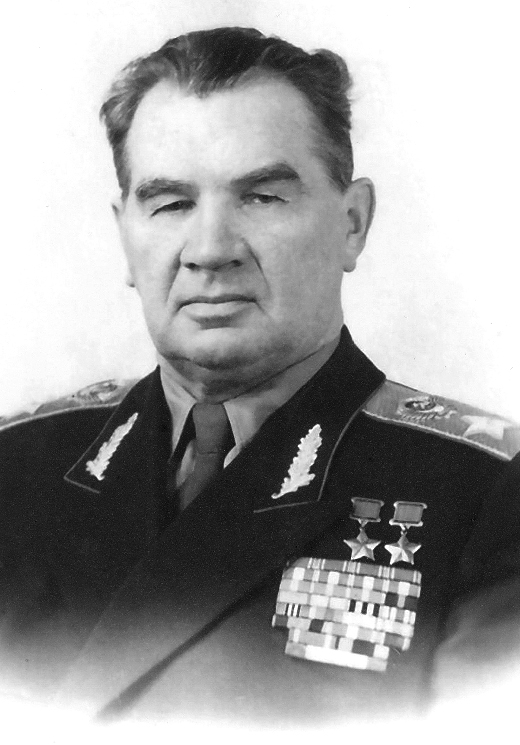
Portrait of Vasily Chuikov
The General Who Fought With His Hands
Vasily Chuikov took command of the 62nd Army in September 1942, when Stalingrad was already mostly rubble and the German Sixth Army was pushing the last Soviet foothold into a strip of riverbank a few hundred meters deep. Textbook defense said the position was untenable. Chuikov's answer wasn't a plan so much as a reflex: get close. He ordered his men to fight the Germans at grenade range, sometimes across a stairwell or a single wall, so that the Luftwaffe and German artillery — the two advantages the Wehrmacht actually had — couldn't be used without killing their own troops. He called it "hugging" the enemy, and it turned Stalingrad into a battle fought floor by floor, in the dark, with knives and shovels as often as rifles.
Nothing about this was cerebral. Chuikov didn't out-plan Paulus across a map table; he out-lasted him inside buildings that no map could usefully represent. He set up his own command post within artillery range of the front line, more than once nearly overrun, because he needed to see and feel the fight to run it — and he needed his men to see him there too. That combination, a visceral, improvising tactical instinct paired with a driving, visible presence among his troops, is the signature of an ESTP.
Chuikov was Se in its purest military form — a dominant sense for the immediate, physical battlespace, sharpened rather than dulled by chaos.
A Feel for the Rubble
"Hugging" the enemy wasn't a doctrine Chuikov inherited — it was something he felt out under fire and then generalized. He noticed that when his men fought at near-contact range, German air support and artillery went quiet, because the Wehrmacht couldn't call in a strike a few meters from its own lines. That's an Se conclusion: not a deduction from principles, but a read of the physical situation translated instantly into action. He pushed the tactic building by building, testing it in real time against what the terrain and the enemy actually did, not what they were supposed to do.
He ran his headquarters absurdly close to the fighting, on the Volga bank itself, under direct fire, because a command post further back couldn't give him the sensory information he needed to make decisions at the speed the battle demanded. Officers who worked under him describe a man who was calmest when the situation was most physically immediate — shelling, close combat, house-to-house chaos — and who became impatient and unfocused the further a problem got from something he could see or touch.
Improvised Doctrine
Underneath the visceral instinct was a sharp, private logic. Chuikov reorganized his forces into small "storm groups" — a handful of men with grenades, submachine guns, and sappers, built to clear a building or a floor rather than hold a sector — a structural innovation that broke with standard Red Army formations and that he worked out largely on his own, testing and revising it against what actually worked in the ruins. It wasn't committee doctrine; it was one officer's internal system for a problem no manual addressed.
He was also notoriously indifferent to how his tactics looked to superiors who preferred orthodox maneuver warfare. Chuikov didn't need to justify "hugging" in terms of established theory — he needed it to work, and once he'd satisfied himself it did, he defended it with blunt technical confidence rather than elaborate argument.
A Presence, Not a Technician
Chuikov didn't run Stalingrad from behind a desk, and that wasn't only tactical necessity — it was projection. He wanted his soldiers to know their army commander was on the riverbank taking the same shelling they were, and he used that visible proximity deliberately to hold together an army that had every reason to break. His gruffness, his physical presence, his willingness to be seen enduring the worst of it: this is Fe in service of morale, not private technical mastery kept to himself.
It's also what separates him from a quieter tactical specialist. Chuikov wanted credit, wanted his men rallied around him personally, and later cultivated his own legend as "the man who held Stalingrad" — a comfort with public, outward-facing leadership that a more introverted technician would have found uncomfortable.
The Blind Spot for the Long View
Ni sat at the bottom of Chuikov's stack, and it showed in his limits as much as his strengths. He was extraordinary at winning the next hour of a battle and far less interested in the campaign's larger arc — the encirclement that would trap the German Sixth Army, Operation Uranus, was Zhukov's and the Stavka's design, not his. Chuikov held the anvil; other men swung the hammer, and he seemed content with that division of labor because long-range strategic synthesis wasn't where his instincts lived.
Later in life, when Ni-heavy reflection about legacy and meaning might have mattered more, he remained essentially the same figure: blunt, present-tense, more comfortable recounting specific incidents from the ruins than constructing a grand narrative of what it had all meant.
Why ESTP Over ISTP
Why not ISTP?
An ISTP with the same tactical instincts would have stayed the quiet technician, running the fight from a bunker and letting the results speak. Chuikov did the opposite: he put himself on the exposed riverbank precisely so his men could see him under fire, and he leaned on that visible endurance as a tool of command. That outward-facing use of presence to hold an army together is Fe, not the private, self-contained competence of an ISTP.
Chuikov's genius was never abstract. It was a dominant, physical read of a collapsing battlespace, an improvised private logic for exploiting it, and a gruff, visible leadership style that turned his own survival into propaganda for his men. That combination is ESTP, not the solitary technical mastery of ISTP.
Connected Figures
Further Reading
- The Beginning of the Road — Vasily ChuikovChuikov's own memoir of the Stalingrad command, blunt and unreflective in exactly the ways that fit him.
- Stalingrad — Antony BeevorThe standard narrative history; covers the storm-group tactics and Chuikov's riverbank headquarters in detail.
- Enemy at the Gates — William CraigGround-level account of the street fighting that shaped the 'hugging' doctrine.
- Armageddon: The Battle for Germany, 1944–1945 — Max HastingsLater career context on Chuikov as the general who took Berlin in 1945.
