 Historical Figure MBTI
#761 · 6-7-26 · The Inca Empire
Viracocha Inca
Conservator · Fled Cusco · Preserved the Dynasty
d. c. 1438
3 min read
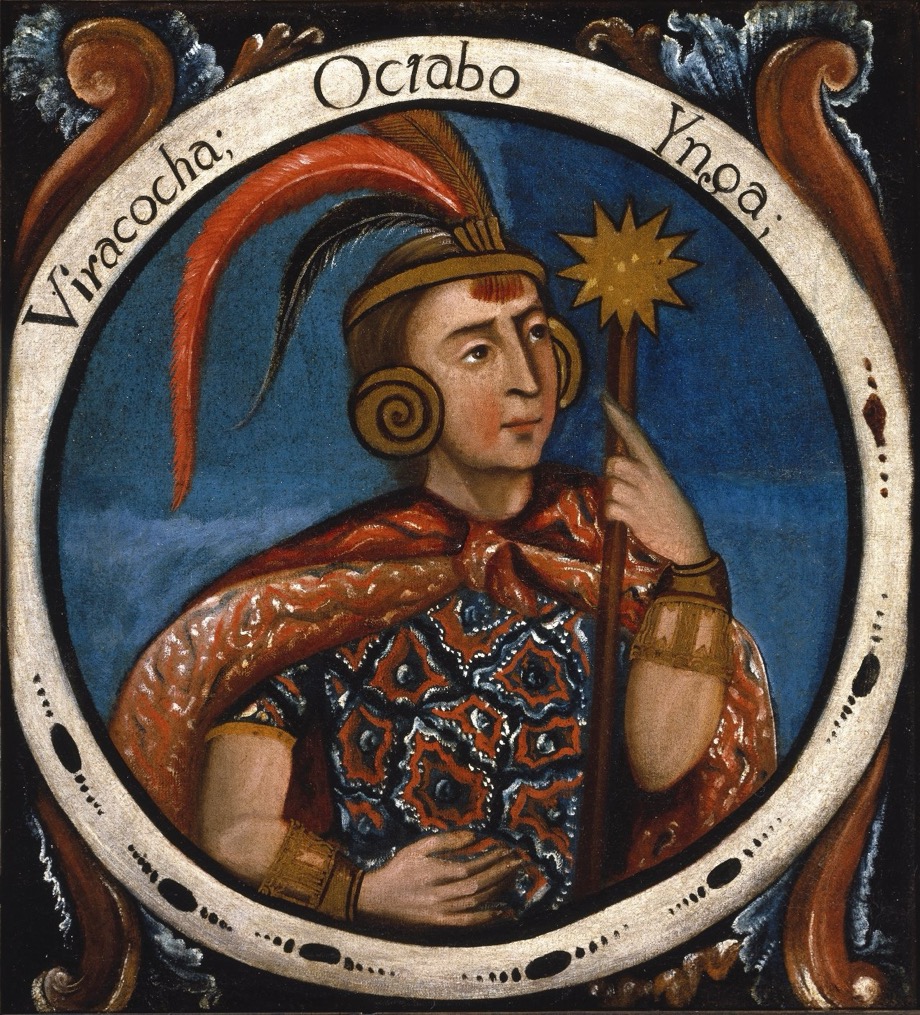
Portrait of Viracocha Inca
The King Who Walked Away
Before there was an empire, there was only Cusco — a walled valley kingdom among rivals, and none of them more dangerous than the Chanca, a confederation pressing in from the west with an army Cusco had no clear way to beat. When the Chanca came, Viracocha Inca, the eighth Sapa Inca, made the calculation a caretaker makes: the city could be rebuilt, but the bloodline could not. He gathered his chosen heir, Urco, and withdrew to a fortress refuge outside the capital, leaving Cusco to whatever came next rather than stake the dynasty on a battle he judged unwinnable.
What came next was his younger son. Cusi Yupanqui — later Pachacuti — stayed behind, rallied the defenders, and by the chronicles' telling won a battle so desperate that legend needed stones turned into warriors to explain it. He did not stop at victory. He deposed Urco, sidelined the father who had fled, and built on the ground Viracocha Inca had refused to risk the empire — Tawantinsuyu — that would eventually run the length of the Andes.
History has judged Viracocha Inca by the standard his son set, and by that standard he reads as a coward. But withdrawal was not panic; it was policy, consistent with everything else known of his reign — a ruler who consolidated what earlier kings had won rather than reaching for what they hadn't. He simply met the one crisis that punished that temperament, at the one moment it could not survive being right about the odds.
Viracocha Inca was an ISFJ: a dominant Si that trusted precedent and preservation over any single battle's glory, expressed through a dutiful, protective Fe that measured success by the dynasty's survival — not the city's.
Psychological Verdict
The flight from Cusco is the whole case for ISFJ. Dominant Si reads a crisis against accumulated precedent rather than raw possibility — Viracocha Inca did not gamble on what might happen if Cusco held; he weighed what was known to be at stake and protected the thing least replaceable, the royal line, over the thing that felt irreplaceable only in the moment, the capital. That is a caretaker's math, not a warrior's, and it runs through auxiliary Fe as duty: his obligation was to the dynasty as an institution, to Urco as its designated continuity, not to a heroic stand that might have ended the succession outright. Where Pachacuti's later coup reads as decisive Ni fused to assertive Te — see the improbable, force it into being — his father's retreat reads as its opposite: don't improvise against the odds, preserve what tradition has already built. Neither choice is obviously wrong. History simply rewards the one that worked, and remembers the other as failure of nerve rather than a different, equally coherent theory of what a king is for.
Connected Figures
Further Reading
- History of the Inca Realm — María RostworowskiThe standard modern reconstruction of the Chanca war and the succession crisis it triggered.
- History of the Incas — Pedro Sarmiento de Gamboa (1572)The colonial-era chronicle, commissioned under Viceroy Toledo, that preserves the Viracocha Inca–Pachacuti succession story — with its own political agenda.
- The Incas — Terence N. D'AltroyGeneral synthesis on Inca political history and patterns of royal succession.
- The Development of the Inca State — Brian S. BauerOn the archaeology and historiography of the pre-imperial Cusco kingdom Viracocha Inca ruled.
