 Historical Figure MBTI
#763 · 6-7-26 · The Inca Empire
Amaru Topa Inca
The Passed-Over Heir · Terraces and Seed
15th century
3 min read
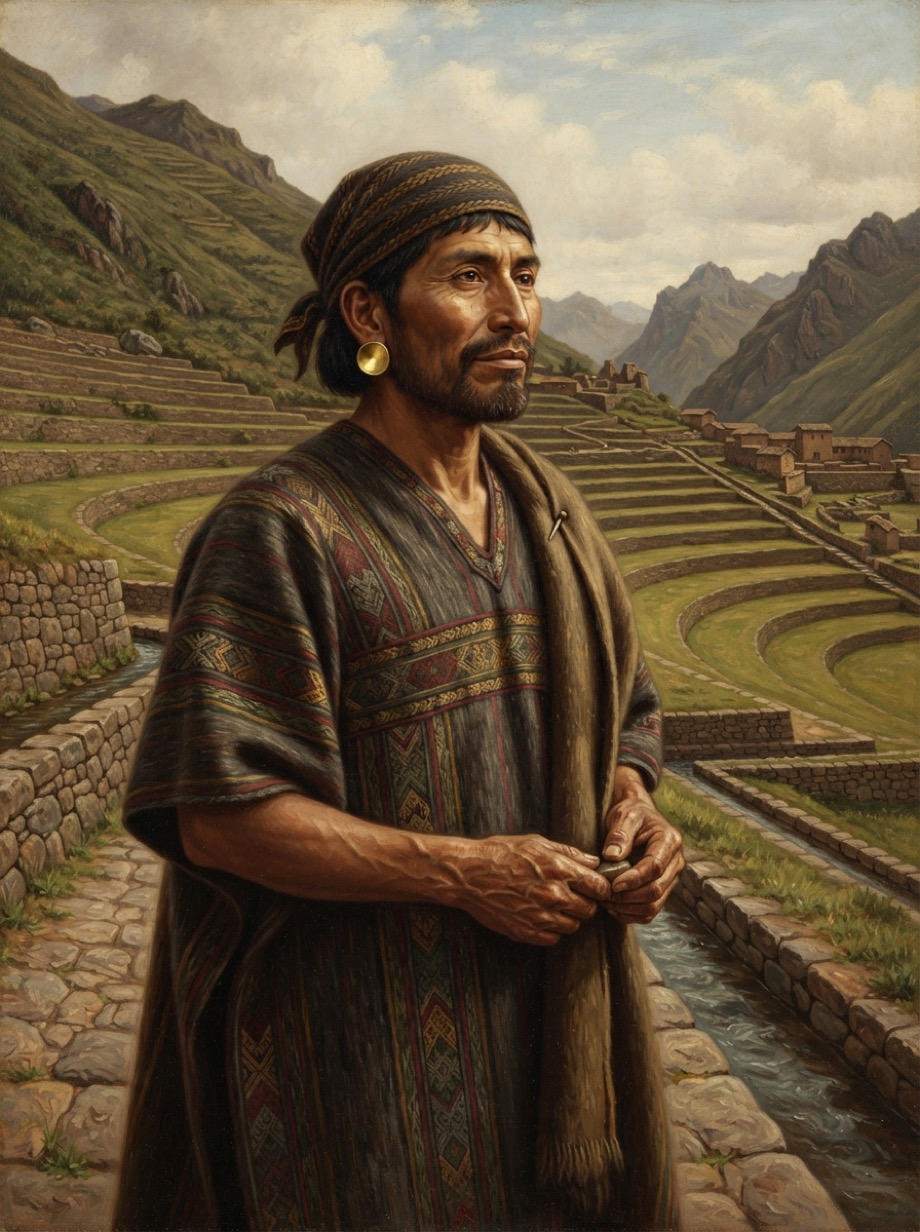
AI-assisted Portrait of Amaru Topa Inca
The Heir Who Chose the Furrow
Amaru Topa Inca was born to inherit an empire and instead spent his life tending its soil. As Pachacuti's eldest son, he held first claim on the fringed royal headband — the mark of the Sapa Inca — until his father judged him unsuited to the work of conquest and passed the succession to a younger brother, who took the throne as Topa Inca Yupanqui and doubled the realm's size through relentless campaigning. Amaru Topa Inca did not contest the decision, or if he did, no memory of a struggle survived him. What survived instead is a quieter record: terraces cut into the hills around Cusco, irrigation channels routed to thirsty fields, the patient administration of land that would feed the empire his brother was busy enlarging by the sword.
It would be easy to read his set-aside as a failure, but the sources that remember him at all remember a man who kept working — not campaigning, not scheming for reversal, just building the terraces and canals that made Cusco's valley fertile. He appears in later years as a respected elder of the royal lineage, consulted and present at the edges of power without ever again reaching for its center. That, more than any single act, is the whole of his character: a man for whom the correct response to being overlooked was not resentment but cultivation.
He reads as an ISFP — dominant Fi holding to a private sense of what mattered, expressed not in words or ambition but in the physical, hands-on work of shaping land.
There is no drama in Amaru Topa Inca's story, and that absence is the story. Where his father and brother are remembered for the empire they seized and organized, he is remembered for the empire they were able to feed — terrace by terrace, canal by canal — because someone stayed home and did the unglamorous work of the ground.
Psychological Verdict
The case for ISFP rests on what he chose over what he was denied. A man built for conquest, passed over for the throne, would be expected to chafe, scheme, or fade into bitterness; Amaru Topa Inca instead redirected himself toward tangible, values-anchored work he could shape with his own hands. That is Fi paired with Se: an inward, personal conviction about what was worth doing — caring for land, sustaining the valley his family ruled — carried out through direct, physical engagement rather than through the abstract systems-building (Te) or grand strategic vision (Ni) that defined his father and brother. He is the gentlest figure in this generation of the dynasty precisely because his psychology pointed him toward cultivation rather than command.
Connected Figures
Further Reading
- History of the Inca Realm — María RostworowskiOn the succession patterns among Pachacuti's sons.
- The Incas — Terence N. D'AltroyOn Inca agricultural administration and terracing infrastructure.
- The Shape of Inca History — Susan A. NilesOn the domestic, non-military building projects of the Pachacuti dynasty.
