 Historical Figure MBTI
#388 · 4-4-26 · Elizabethan England
Sir Walter Raleigh
Courtier · Explorer, Soldier, Poet · The Renaissance Adventurer
c. 1552 — 1618
8 min read
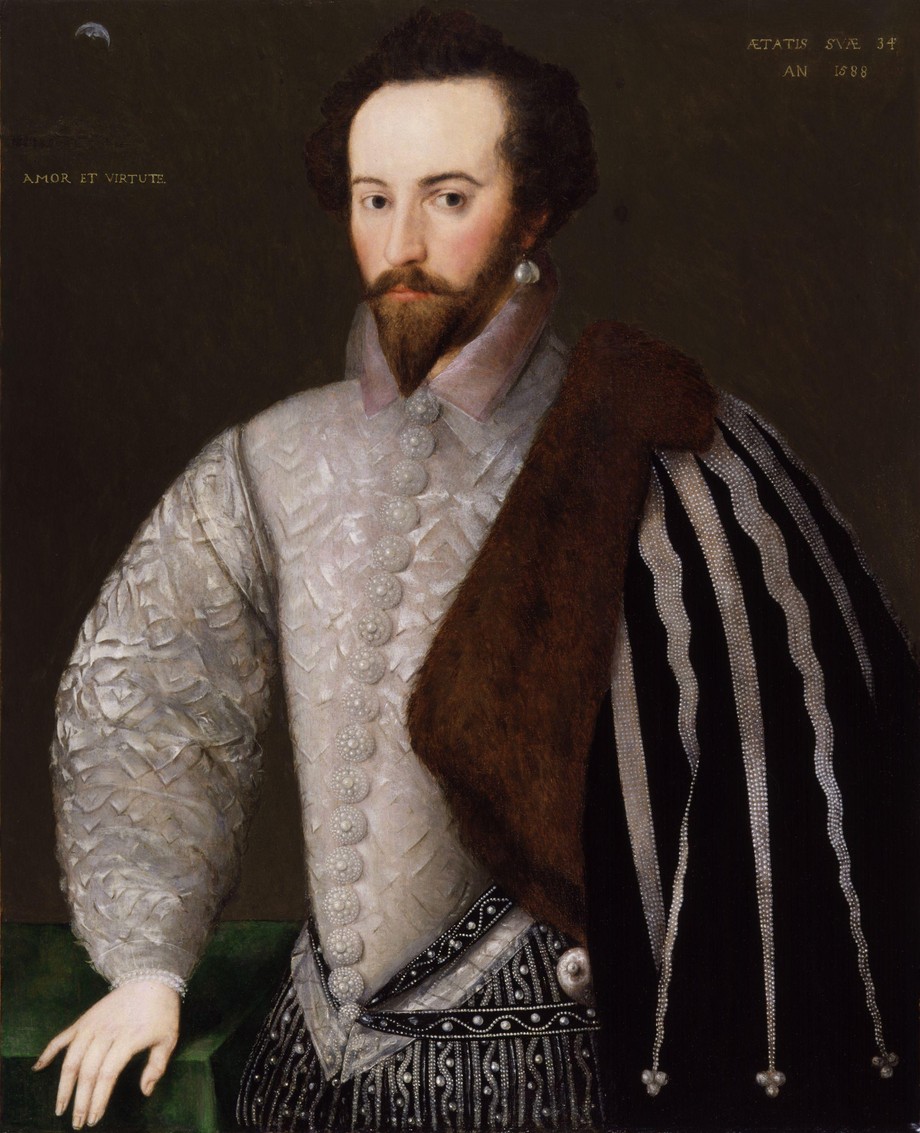
Portrait of Sir Walter Raleigh
The Man Who Tried to Be a Dozen Brilliant Men
There is no convenient noun for what Sir Walter Raleigh was. Courtier, explorer, soldier, colonizer, poet, historian, schemer—the list is the point, because no single career contains him. Born around 1552 into minor Devon gentry, he charmed his way into the favor of Elizabeth I and won estates, monopolies, and a knighthood. He sponsored the doomed colony at Roanoke, twice sailed to South America chasing El Dorado up the Orinoco, and wrote some of the finest lyric verse of his age. Imprisoned in the Tower, he composed a sprawling History of the World that ran to a million words and never reached the Romans. He was a mind that could not encounter a possibility without trying to seize it—and a man undone by the sheer number of things he attempted at once.
His wit was quick, his self-presentation theatrical, his ambition enormous and entirely undisguised. He feuded openly with the Earl of Essex, spread himself across half a dozen arenas simultaneously, brilliant in each, master of none. His secret marriage to Bess Throckmorton enraged Elizabeth and earned him years of Tower exile; when James I took the throne in 1603 he was tried on a flimsy treason charge and locked away for thirteen years. Released for one last gold-hunt to Guiana, he found no gold, lost his son in a clash with Spain, and sailed home to his death. On the scaffold he felt the axe and remarked, “This is a sharp medicine, but it is a physician for all diseases.” To the very end the wit outran the wisdom. This is the profile of an ENTP: dominant extraverted intuition that proliferated schemes without limit; sharp auxiliary thinking that armed the wit; tertiary feeling that supplied the courtier's charm; inferior sensing whose blindness to limit wrecked him again and again.
Raleigh was the ENTP who tried to be a dozen brilliant men at once—a Ne that could not stop generating new worlds to conquer, a Ti sharp enough to cut anyone who crossed it—and who was destroyed, in the end, by the one thing the type can never do: sit still and survive.
The Inexhaustible Proliferation of Schemes
Ne — dominant
Dominant Ne does not specialize; it scatters. In a single decade of his prime Raleigh was simultaneously running a court career, fitting out privateering voyages, planning colonies, investing in alchemical experiments, and writing courtly verse—every venture spawning the next before the last had paid off. Roanoke was his imagination given hulls and sails: he gathered scientists to survey the land, projected onto the unmapped coast an entire future of English settlement, and the colony vanished without trace—but the failure never dimmed the vision, because for Ne the possibility itself is the prize. Twice he sailed for the Orinoco convinced El Dorado lay somewhere upriver, a golden city so vivid its non-existence was almost a technicality.
The History of the World, written in the Tower, is Ne's self-portrait. Raleigh poured a million words into the project and reached only the second century BC—not for lack of stamina, but because the proliferating mind kept opening new avenues faster than it could close the old ones. A work of staggering ambition that he could not, constitutionally, ever finish.
The Sharp Edge of the Wit
Ti — auxiliary
Auxiliary Ti surfaces in the ENTP as a fast, cutting wit—an instinct for the flaw in any position and the exact phrase that exposes it. Raleigh's contemporaries record a man whose conversation was dangerous, who could puncture a rival with a sentence, and whose reputation for freethinking—the rumored “School of Night,” with Harriot and Marlowe, questioning received doctrine—came from a refusal to let any orthodoxy pass unexamined.
At his treason trial in 1603 the same analytic edge nearly saved a doomed man. Accused on the thinnest of evidence—a single co-accused's coerced testimony—he defended himself with such logical force that observers came to scoff and left half-converted. He dismantled the prosecution's reasoning, demanded his accuser confront him in person, and turned the proceedings into a demonstration of how little actual proof stood behind the charge. That reversal was Ti at work: not an appeal to sentiment but a relentless public anatomy of a weak argument.
His poetry bears the same fingerprint. Raleigh's best verse is spare, skeptical, and argumentative; his reply to Marlowe's “Come live with me and be my love” coolly dismantles the pastoral fantasy line by line, a poem built as a rebuttal. The wit that made him enemies and the analysis that nearly cleared him at trial are the same faculty: a Ti that could not stop taking the world apart to see how it worked.
The Courtier's Charm and the Performed Self
Fe — tertiary
Tertiary Fe is not deep empathy; it is social instrument—a calibrated sense of how to read a room, charm a patron, and perform an identity that audiences want to reward. Raleigh understood Elizabethan court culture as theater in which favor was won by display, and he played the part with total commitment: spectacular clothes sewn with pearls, verses laid at the queen's feet, the carefully managed persona of the bold, devoted adventurer. His handling of Elizabeth was Fe as strategy—he cast himself in verse as her devoted servant, addressing her as Cynthia, moon-goddess, and it lifted a Devon nobody to estates and a knighthood.
But tertiary Fe dazzles on the surface and stumbles at genuine emotional attunement. When he secretly married Bess Throckmorton without the queen's permission, he badly misjudged the emotional ground—Elizabeth took it as personal betrayal. The man who could perform devotion brilliantly could not navigate the feelings of the one person whose feelings most mattered. His finest hour came last: he turned his own execution into theater so composed it reversed his reputation. He spoke graciously to the crowd, felt the axe, pronounced it a sharp medicine, and laid his head down with a calm that astonished onlookers. A man widely disliked for arrogance died so well that he was remembered immediately as a hero—the showman's instinct for the audience, working right up to the final breath.
The Blindness to Limit That Wrecked Him
Si — inferior
Inferior Si is the ENTP's great vulnerability—the neglected function of detail, caution, and patient maintenance. Raleigh spent his life tripping over ground he refused to look at. He poured fortunes into colonies and voyages faster than any could return, attended to the grand vision and ignored the logistics that would have sustained it. The Roanoke colonists were left under-supplied and abandoned.
The final expedition to Guiana was inferior Si's catastrophe in full. Released from the Tower on the strict condition that he provoke no conflict with Spain, Raleigh sailed anyway on the strength of a gold-mine he was certain existed, let his men attack a Spanish settlement, lost his son in the fighting, found no gold, and handed King James the perfect pretext to enforce a long-suspended death sentence. The man whose dominant function was the inexhaustible generation of possibilities was destroyed by his inability to do the one thing Si does best: stop, consolidate, and survive.
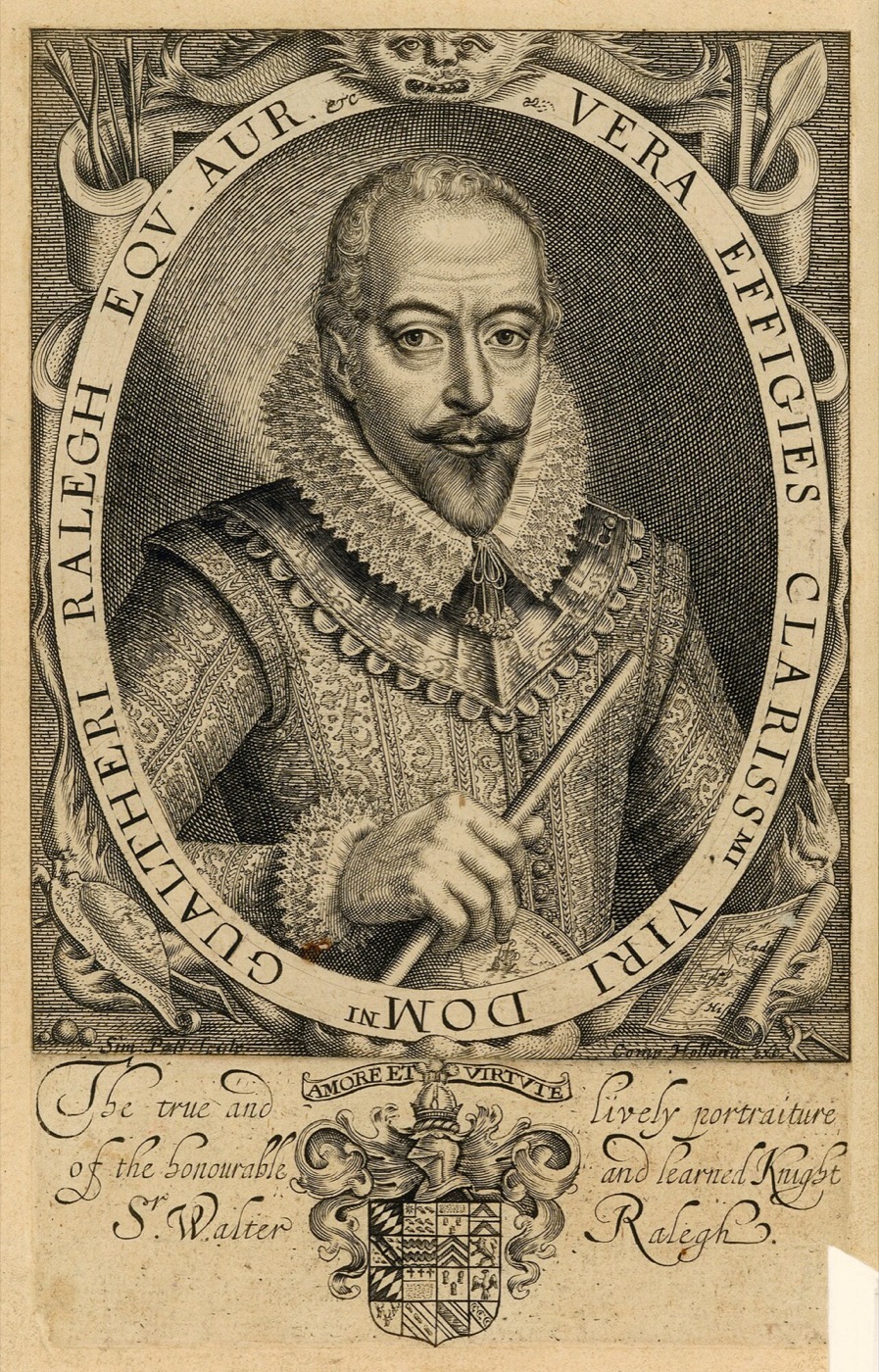
Why ENTP Over INTP
Why not INTP?
The polymath range and the freethinking skepticism can read as INTP—the scattered intellect, the questioning of orthodoxy, the unfinished million-word history. But the INTP turns its intuition inward, theorizing in private and engaging the world reluctantly. Raleigh did the opposite at every turn: he worked the court relentlessly, performed, charmed, and threw himself outward into a dozen public arenas—colonies, voyages, wars, the queen's favor—all at once. His Ne was extraverted and socially deployed, with a showman's charisma the INTP simply lacks.
Raleigh never retreated. He chased favor, fortune, and fame through the most public channels his age offered, and his tertiary Fe—the courtier's instinct for the crowd and the performed self—was the engine of a career an introvert could never have run. The freethinking was the outward proliferation of an extravert who wanted to do a dozen brilliant things in the world, not think them quietly.
Connected Figures
Further Reading
- Ralegh: The Renaissance Man and His Roles — Stephen J. GreenblattA foundational literary-historical study of how Raleigh performed identity across his many roles — courtier, explorer, poet, prisoner.
- Sir Walter Ralegh: A Life — Raleigh TrevelyanThe most thorough modern biography, tracing all phases of Raleigh's career from Devon obscurity to the scaffold.
- The Elizabethan World Picture — E. M. W. TillyardThe intellectual and cosmological framework within which Raleigh's freethinking and his History of the World make sense.
- The Wider Sea: A Life of Sir Walter Raleigh — J. H. Adamson and H. F. HollandAn older but richly detailed account that situates Raleigh within the political and maritime world of Elizabethan England.
