 Historical Figure MBTI
#876 · 6-24-26 · The American Civil War
William Sooy Smith
Union General · Defeated at Okolona
1830 — 1916
3 min read
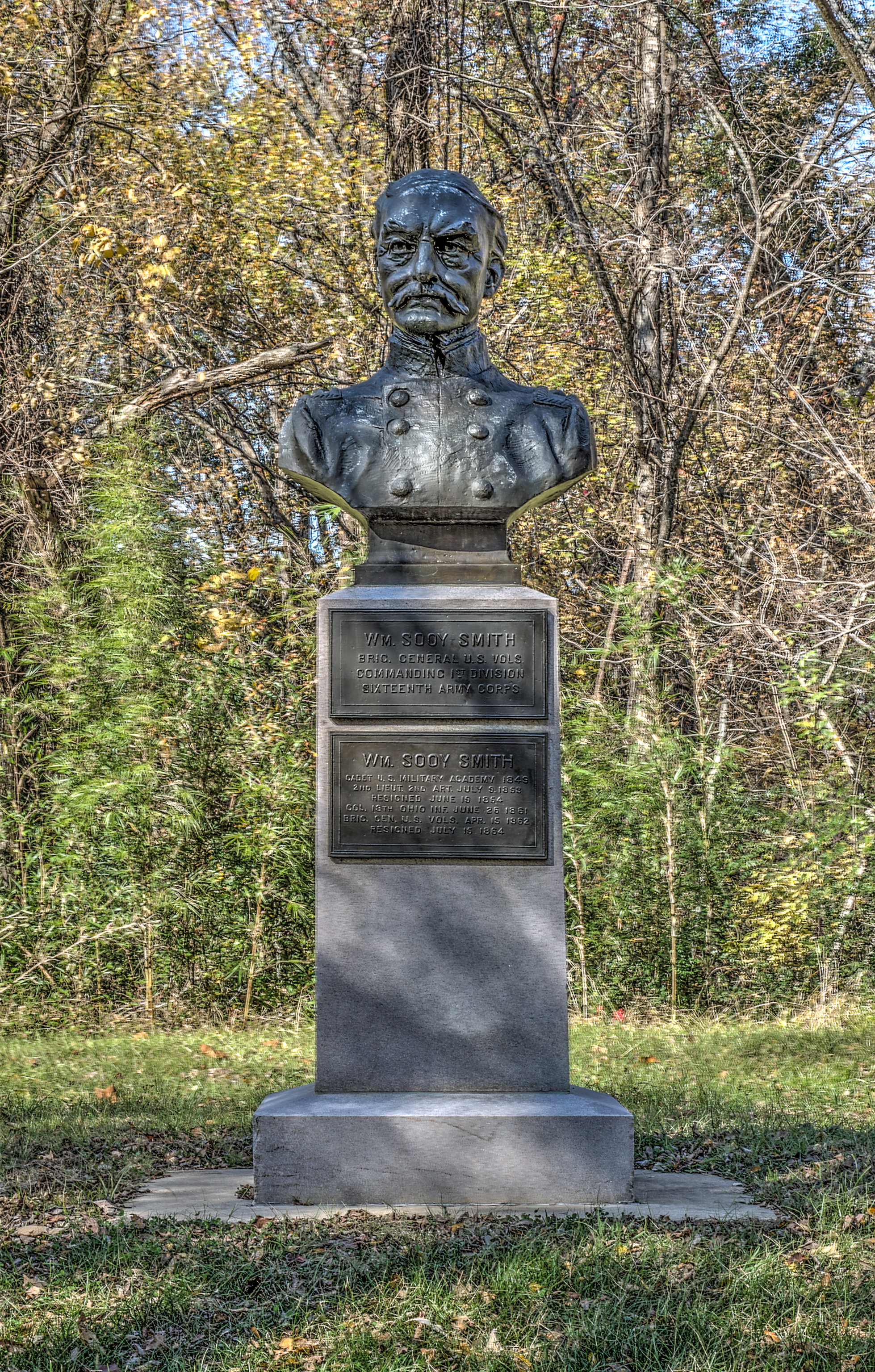
Portrait of William Sooy Smith
The Engineer Who Rode Too Slowly
William Sooy Smith arrived at war with a trained mind and a straight edge. He had studied civil engineering at Ohio's Farmers' College and then at West Point, and before Fort Sumter he was already building bridges and lighthouses along the Great Lakes — the kind of work that rewards patience, calculation, and a horror of shortcuts. When the war came he brought that temperament with him into a cavalry saddle, rising to command a division under William Tecumseh Sherman, and it served him adequately through smaller engagements. But cavalry command, especially against an opponent like Nathan Bedford Forrest, does not reward patience. It rewards the willingness to move before the plan is finished.
In February 1864 Sherman sent Smith west from Memphis with some seven thousand cavalry, meant to tear up the Mississippi countryside and rendezvous with Sherman's own Meridian campaign. Smith took his time assembling the column, took more time on the march, and by the time he met Forrest's much smaller force near Okolona, the schedule he had built so carefully was already a ruin. Forrest, outnumbered and improvising by the hour, attacked in pieces, probed for the seam, and found it. Smith's retreat became a rout of one wing after another. He had planned a campaign; Forrest had fought a battle.
He was a careful man asked to be a fast one, and the war did not wait for him to finish measuring.
Psychological Verdict
Smith reads as ISTJ almost by default — an engineer's temperament transplanted, unaltered, onto a battlefield that did not accommodate it. Dominant Si shows in the sheer procedural weight of his approach to the Okolona campaign: supplies counted, routes surveyed, timetables set before the column ever moved, the same instinct that made him trust careful precedent over improvisation in bridge work. Auxiliary Te gave him the organizational competence to actually field seven thousand men and move them with purpose, which is no small thing — his failure was not incompetence but mismatch, a mind built for sequence set against an opponent who thought in openings.
What undid him was not a flaw in the type so much as its limit under pressure. Forrest's genius was almost pure improvisational Se — reading the ground and the moment and acting inside it before an enemy could finish his own calculation. Smith's inferior Ne gave him little defensive imagination for that kind of attack; he had no instinct for what an opponent might do outside the plan, only for what the plan itself required. It is the clearest kind of type collision the war produced: the methodical overtaken by the instinctive, not through carelessness, but because carelessness was never the danger he had trained against.
Connected Figures
Further Reading
- Nathan Bedford Forrest: A Biography — Jack HurstThe fullest account of the Okolona campaign and Smith's defeat
- Forrest at Brice's Cross Roads — Edwin C. BearssContext on Forrest's 1864 Mississippi campaigns
- Battles and Leaders of the Civil War, Vol. 4 — Robert Underwood Johnson & Clarence C. Buel, eds.Contemporary officers' accounts of the Meridian campaign
- The Union Cavalry in the Civil War — Stephen Z. StarrBroader context on Union cavalry organization and command
