 Historical Figure MBTI
#878 · 6-25-26 · The American Civil War
Wilmer McLean
The House at Appomattox
1814 — 1882
2 min read
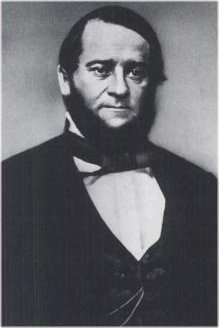
Portrait of Wilmer McLean
The War Began in My Front Yard
Wilmer McLean was not a soldier, a statesman, or anyone in particular — a Virginia grocer and wholesale merchant who had spent his life doing the quiet, cumulative work of provisioning other people's lives. In the summer of 1861 he happened to own a farm near a stream called Bull Run, and history, indifferent to his wishes, arrived on it anyway. The First Battle of Bull Run broke out across his fields; a Union cannonball came down through his kitchen chimney and landed, by most accounts, in a pot of stew being cooked for Confederate officers. It was as close as a private man could come to having the war served to him on his own table.
McLean did what any sensible person seeking stability would do — he moved. He sold the farm and resettled his family some 120 miles south, in the small, unremarkable village of Appomattox Court House, a place chosen precisely because nothing was ever likely to happen there. For most of four years, nothing did. Then, in April 1865, with Lee's army collapsing and both commanders searching for a house with a room quiet enough for surrender terms, an officer rode into the village and asked if McLean knew of a suitable place. He offered his own parlor. Four years after the first shots of the war landed in his kitchen, its last acts were signed at his dining table, under his own roof, in a chair he had pulled out for Robert E. Lee to sit in.
He is said to have remarked, afterward, with the dry astonishment of a man still trying to make sense of it: the war began in his front yard and ended in his front parlor. It was not something he sought. It was, twice over, simply where he happened to be standing.
An ordinary man's ISFJ instinct for shelter and routine placed him, by pure geographic accident, at the exact hinge points of a war he only ever wanted to escape.
Connected Figures
Further Reading
- April 1865: The Month That Saved America — Jay WinikNarrative account of the Appomattox surrender and its final days.
- A Place Called Appomattox — William MarvelThe definitive history of the village, the McLean house, and the surrender.
- Battles for Atlanta — Ronald H. BaileyBroader campaign context for the Civil War's final year.
