 Historical Figure MBTI
#879 · 6-25-26 · The American Civil War
Edward Ord
Union General · Witness at Appomattox
1818 — 1883
3 min read
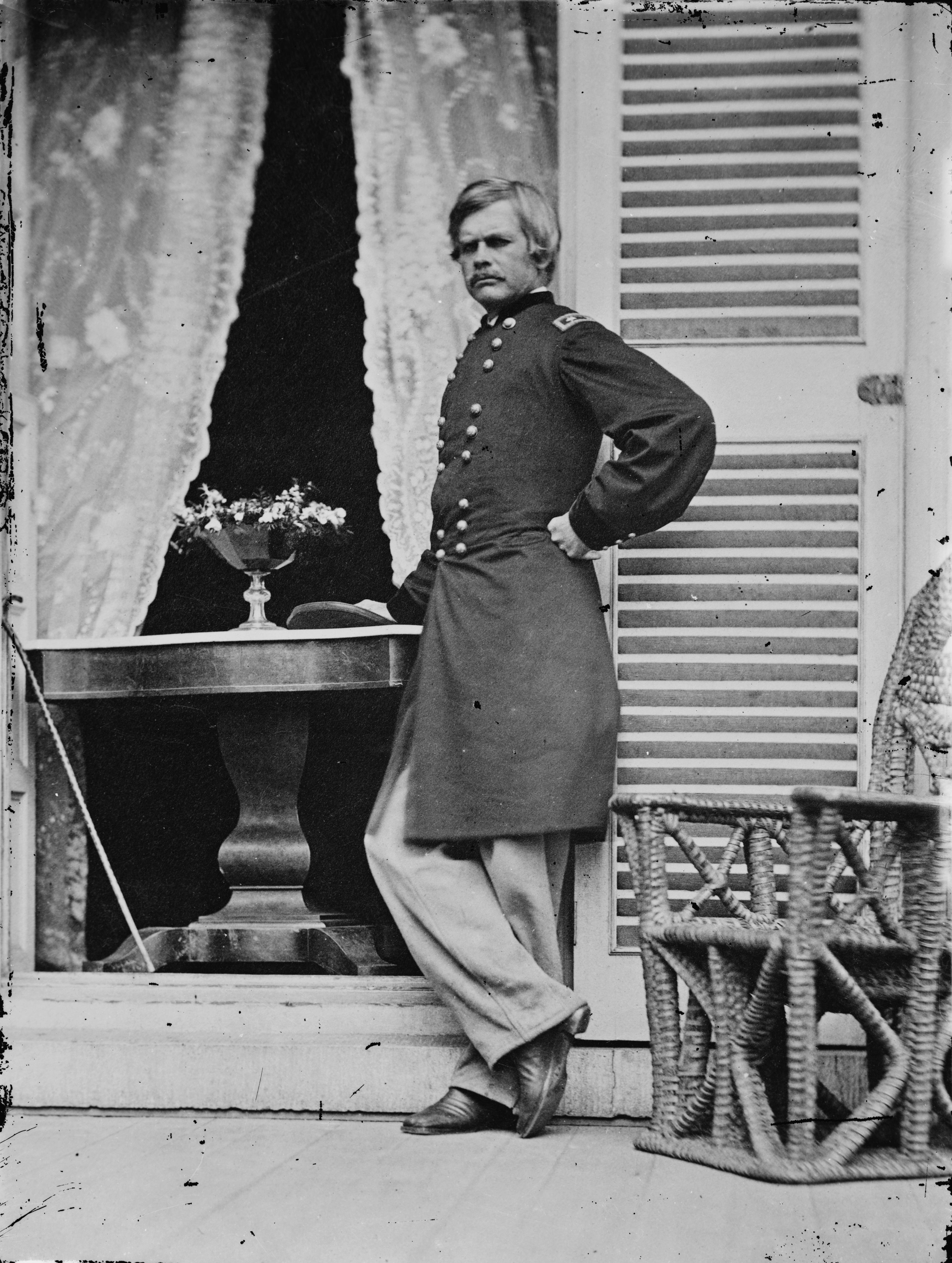
Portrait of Edward Ord
The Officer Who Made the Schedule Hold
Edward Ord's career has almost no anecdotes attached to it, and that absence is the whole story. He graduated West Point in 1839, spent the next two decades in the unglamorous rotations of the old peacetime army — coastal artillery, Seminole patrols, garrison duty on the Pacific coast — and arrived at the Civil War already forty-three years old, a man who had been quietly competent for so long that competence had become indistinguishable from his personality. He is not remembered the way Grant or Sherman or even Custer is remembered, because he never gave anyone a reason to remember him. He simply did what the army asked, on time, in the right order, year after year.
By April 1865 that steadiness had a name and a command: the Army of the James, which Ord led in the final push on Petersburg and Richmond, and then in the forced march that helped close the ring around Robert E. Lee's retreating army at Appomattox. There was nothing improvisational about what Ord contributed to that week — no daring flank, no famous charge. There was only the unglamorous fact that his corps arrived where it was supposed to arrive, when it was supposed to arrive, so that the larger machine Ulysses S. Grant was operating did not stall. He was present in the McLean parlor when Lee signed the surrender, one more dark uniform in a room full of men whose names would eclipse his.
Ord's steadiness ran in the family in an unusual way: he was long rumored, never quite confirmed, to be the grandson of England's King George IV through an illegitimate line — a genealogy he neither claimed nor denied, and which mattered to his career not at all. What mattered was the same thing that had mattered for two decades of garrison postings: that he showed up, did the assigned work competently, and let the results speak instead of the résumé.
Every army that wins a war needs a few men like Ord — ISTJ to the bone — who treat reliability itself as a form of honor.
Connected Figures
Further Reading
- April 1865: The Month That Saved America — Jay WinikNarrative account of the war's final weeks, including the Appomattox campaign Ord served in.
- A Stillness at Appomattox — Bruce CattonPulitzer-winning history of the Army of the Potomac's last campaign against Lee.
- The Appomattox Campaign: March 29–April 9, 1865 — Chris M. CalkinsDetailed operational history covering the Army of the James's role in trapping Lee.
