 Historical Figure MBTI
#1174 · 8-28-26 · The Three Kingdoms
Zhuge Ke
The Brilliant, Doomed Nephew · Regent of Wu · A Genius Undone by His Own Certainty
203 — 253
4 min read
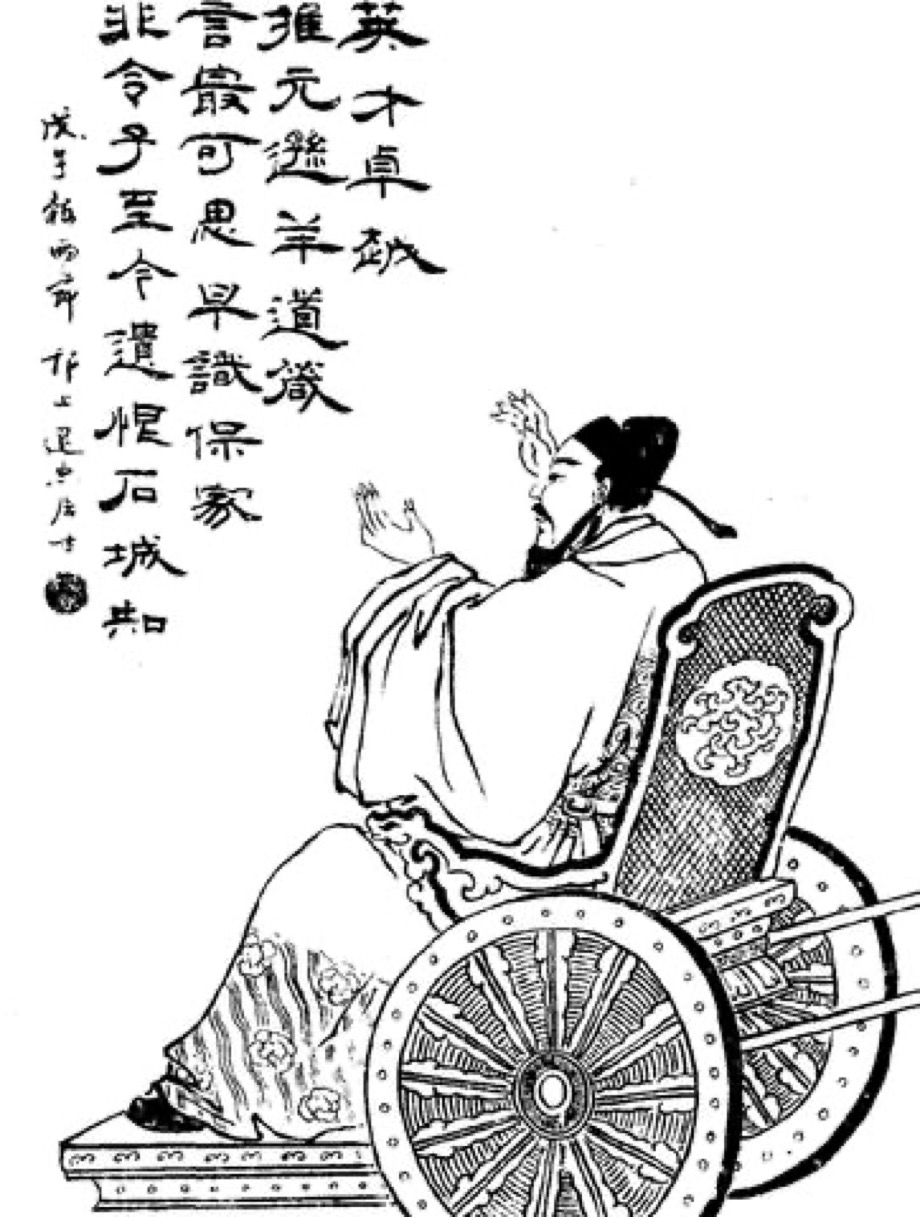
Portrait of Zhuge Ke
The Nephew Who Was Never Wrong Until He Was
Zhuge Ke was, by every contemporary account, the most obviously brilliant man in Wu — the son of Zhuge Jin (Zhuge Liang’s elder brother, also in Sun Quan’s service) and a court prodigy whose quickness in debate and administration made him famous before he was thirty. Sun Quan doted on him, tested him publicly with riddles and arguments he always won, and on his deathbed named him regent for the child-emperor Sun Liang — the single most powerful position in Wu, handed to a man whose gifts had never yet been tested against a mistake he couldn’t talk his way out of.
For a while it worked. Zhuge Ke opened his regency with a real military victory, routing a Wei invasion at the Battle of Dongxing (252) in a fast, improvised counterattack that made him look every bit as capable as his famous uncle. But success curdled into certainty. Over the objections of nearly the entire Wu court, he launched a massive, ill-prepared invasion of Wei territory the following year, besieging the fortress of Hefei New City through a brutal summer that devastated his own army with disease and produced nothing. He returned to a court that had lost faith in him and answered its doubts not with humility but with purges — and within months was assassinated in a palace coup, his body reportedly wrapped in a straw mat and dumped without proper burial, his entire clan executed in the aftermath.
Zhuge Ke was an ENTP, and his dominant Ne is the whole story compressed into one career: an inexhaustible generator of bold possibilities, brilliant enough that no one could out-argue him — which is exactly why no one could stop him before the possibility he chose turned out to be a catastrophe.
The Gambit Nobody Could Talk Him Out Of
Zhuge Ke’s Ne shows first in the sheer range of his public performances as a young man — Sun Quan liked to parade him in front of visiting dignitaries and set him improvised challenges purely to watch him generate a clever answer on the spot, and Zhuge Ke never once failed to produce one. That same fluency scaled up, disastrously, once he held real power: after Dongxing, he did not consolidate a victory, he saw in it the shape of a much larger possibility — the conquest of Wei territory itself — and pursued that vision past every warning sign, past the summer heat, past the disease spreading through his camp, past nearly the entire senior court telling him to stop.
It is the same cognitive move in both cases: an idea, seized quickly and pursued with total confidence, evaluated by its internal brilliance rather than by whether the ground beneath it could hold. At twenty-five that made him the most dazzling man at court. At forty it emptied Wu’s treasury and army outside the walls of a fortress that never fell.
The Argument He Never Lost
His auxiliary Ti gave those improvisations their edge — Zhuge Ke was not merely quick, he was rigorous, able to construct a genuinely sound case for whatever position he had seized on, which is precisely why the Wu court struggled to overrule him even when the underlying judgment was wrong. He could out-reason anyone in the room about why the Hefei campaign made sense; he simply never let the same rigor turn on the premise itself.
Why ENTP Over ENTJ
Why not ENTJ?
Zhuge Ke commanded real authority as regent, but his signature move was never top-down organizational control — it was generating and selling a bold idea (the Hefei invasion) through sheer persuasive force, then riding its momentum past every objection. An ENTJ regent facing that much court resistance would have built consensus or overridden it through structure; Zhuge Ke simply out-argued the room, again and again, until the room stopped being able to stop him.
What makes Zhuge Ke’s story land as tragedy rather than simple hubris is the contrast with his uncle. Zhuge Liang carried the same relentless commitment to a chosen course, but his Ni-Te discipline was built around testing a single vision for years before betting the state on it. Zhuge Ke had the family’s confidence and none of that patience — an ENTP’s fast, brilliant Ne untempered by the slow verification that might have told him Hefei could not be taken.
Connected Figures
Further Reading
- Records of the Three Kingdoms (Sanguozhi) — Chen ShouThe primary source for Zhuge Ke's regency and downfall.
- Generals of the South — Rafe de CrespignyWu dynasty history covering the post-Sun Quan succession crisis.
- A Biographical Dictionary of Later Han, Three Kingdoms and Jin — Rafe de CrespignyReference entries on Zhuge Ke and the Wu regency politics of the 250s.
