 Historical Figure MBTI
#847 · 6-18-26 · The American Civil War
Allan Pinkerton
Detective · Union Intelligence Chief
1819 — 1884
6 min read
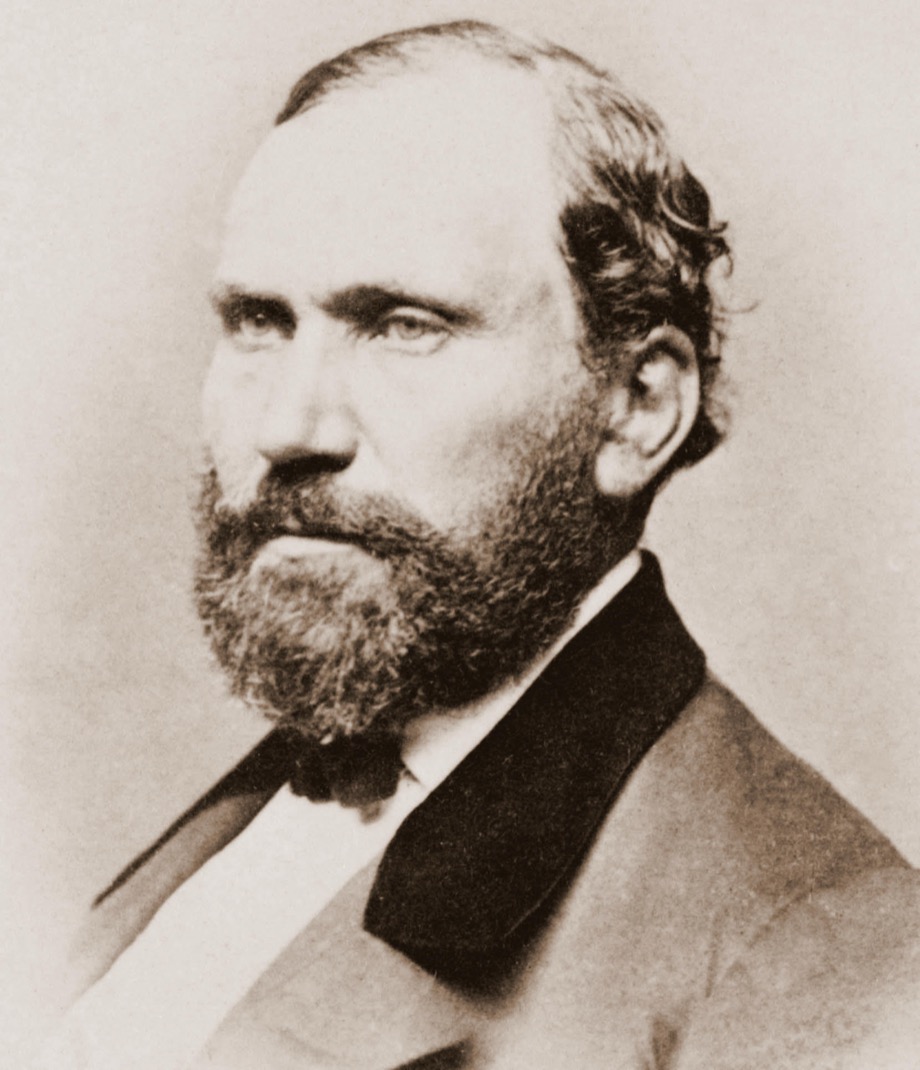
Photograph of Allan Pinkerton, c. 1860s
The Case File That Ate the Army
Allan Pinkerton built his reputation on a simple conviction: that the truth was a matter of sufficient documentation. Rail-worker turned cooper turned self-taught detective, the Scottish immigrant had, by the outbreak of the Civil War, already assembled the most sophisticated private investigative apparatus in America — a filing system, a network of undercover operatives, and a personal discipline for cross-referencing testimony that broke up counterfeiting rings and railroad-theft conspiracies with the patience of an accountant. In February 1861 that method saved a president. Working the Baltimore rail lines ahead of Lincoln's inauguration, Pinkerton's agents pieced together, from dozens of small and separately unremarkable conversations, a live plot to kill the president-elect as he changed trains. Pinkerton did not guess; he assembled, then acted — hustling Lincoln through the city that same night, disguised, hours ahead of the published schedule.
It is the same method, applied eighteen months later to Robert E. Lee's army, that produced the opposite of a triumph. As head of the Union's secret service under George B. McClellan, Pinkerton kept doing exactly what had worked in Baltimore — interviewing, tabulating, cross-checking every scrap a spy or escaped slave or captured picket could offer — and delivered, again and again, Confederate troop counts inflated by a factor of two or more. McClellan, already inclined to see phantom hosts in front of him, treated Pinkerton's numbers as gospel. The ISTJ detective had not become less rigorous; the problem was that rigor, in this new domain, was aimed at the wrong question.
Pinkerton was an ISTJ in the purest sense — a dominant-Si mind that trusted its own exhaustively assembled record over the battlefield in front of it, right up until the record itself became the enemy's best weapon.
The Archive as an Article of Faith
Pinkerton's method was, in essence, a filing cabinet elevated to a worldview. Every operative reported in writing; every report was checked against the last; every case built its own internal, cumulative record until the pattern became undeniable — this was how he cracked the Adams Express robbery, how he ran down counterfeiters across three states, how he built the Baltimore case detail by unremarkable detail. Dominant Si does not intuit a conclusion; it accumulates one, and Pinkerton trusted nothing else the way he trusted his own completed file.
Transferred to Virginia in 1861, the habit did not bend. Pinkerton's intelligence reports for McClellan read exactly like his detective casework — exhaustive tallies of regiments, batteries, and unit designations drawn from prisoner interrogations, refugee interviews, and captured correspondence, stacked into totals that looked, on the page, like the product of rigor rather than credulity. He was not fabricating; he was doing precisely what had always worked, counting every reported unit as real and every source as roughly reliable, in a theater where Confederate deserters, double agents, and simple confusion multiplied the count. The very thoroughness that made him trustworthy against forgers made him gullible against an enemy built to be overcounted.
He never quite noticed the discrepancy, because dominant Si does not audit itself so much as build the world out of what it has already filed. Pinkerton left McClellan's service in 1862 still believing the tallies had been sound.
We Never Sleep
What made Pinkerton more than a meticulous clerk was auxiliary Te — the drive to organize his accumulated facts into a chain of command and put them to work. He did not simply collect information; he built an agency around it, with operatives assigned, procedures standardized, and results delivered on a schedule. The famous unblinking-eye logo and its motto were not vanity but doctrine: a promise that the process itself, executed relentlessly, was the product.
That same Te confidence let him hand McClellan not raw impressions but finished numbers, stated with the flat authority of a closed case. McClellan, congenitally averse to acting without total certainty, found in Pinkerton's decisive tallies exactly the executive-sounding conclusion he wanted to hear. After the war Pinkerton applied the identical instinct to strikebreaking and corporate security, building his agency into the dominant, ruthlessly organized private-enforcement business in the country.
A Private Code, Rarely Shown
Pinkerton was no cold technician; underneath the procedure sat a stubborn personal conviction about right and wrong that rarely made it into his official reports. He was, before the war, an active conductor on the Underground Railroad and a friend of John Brown's circle, sheltering fugitives at real legal risk — commitments he kept quietly, on his own terms, without needing them validated by anyone else. That same interior loyalty attached itself, almost irrevocably, to Lincoln after Baltimore and to McClellan after Virginia; Pinkerton defended the general's conduct of the war years after it had become a minority opinion, not because the evidence demanded it but because his own sense of loyalty did.
Tertiary Fi in an Si-Te frame rarely announces itself in argument; it shows up as obstinate personal devotion that outlasts the facts. Pinkerton's inability to revise his troop estimates downward, even as reality kept contradicting them, owed something to this — the numbers were his, McClellan was his, and to abandon either felt less like a correction than a betrayal.
Why ISTJ Over ISTP
Why not ISTP?
An ISTP would have been more adaptive in the field — comfortable improvising on incomplete information rather than waiting to build an exhaustive documentary case first. Pinkerton's confidence never came from testing and revising conclusions in real time; it came from the completeness of his internalized files (Si), delivered as flat, top-down verdicts (Te). That is a dominant-Si, not dominant-Ti, signature — he trusted the process itself as authoritative rather than treating each report as a hypothesis to be pressure-tested against the field.
The distinction is exactly what separated Baltimore from the Peninsula. Against a finite, discoverable conspiracy, exhaustive documentation was the whole answer. Against an army actively working to be miscounted, the same unrevised trust in one's own thorough method became the failure itself — a difference of domain, not of diligence.
Connected Figures
Further Reading
- The Spy of the Rebellion — Allan PinkertonPinkerton's own memoir of his Civil War intelligence work, self-serving but revealing.
- Allan Pinkerton: The First Private Eye — James MackayA full biography tracing the detective agency from its founding through the war.
- George B. McClellan: The Young Napoleon — Stephen W. SearsDetails how Pinkerton's inflated troop estimates fed McClellan's paralytic caution.
- The Secret Six: The True Tale of the Men Who Conspired with John Brown — Edward J. Renehan Jr.Background on the abolitionist networks Pinkerton moved in before the war.
