 Historical Figure MBTI
#838 · 6-17-26 · The American Civil War
Anna Morrison Jackson
Wife of Stonewall Jackson · Keeper of the Flame
1831 — 1915
3 min read
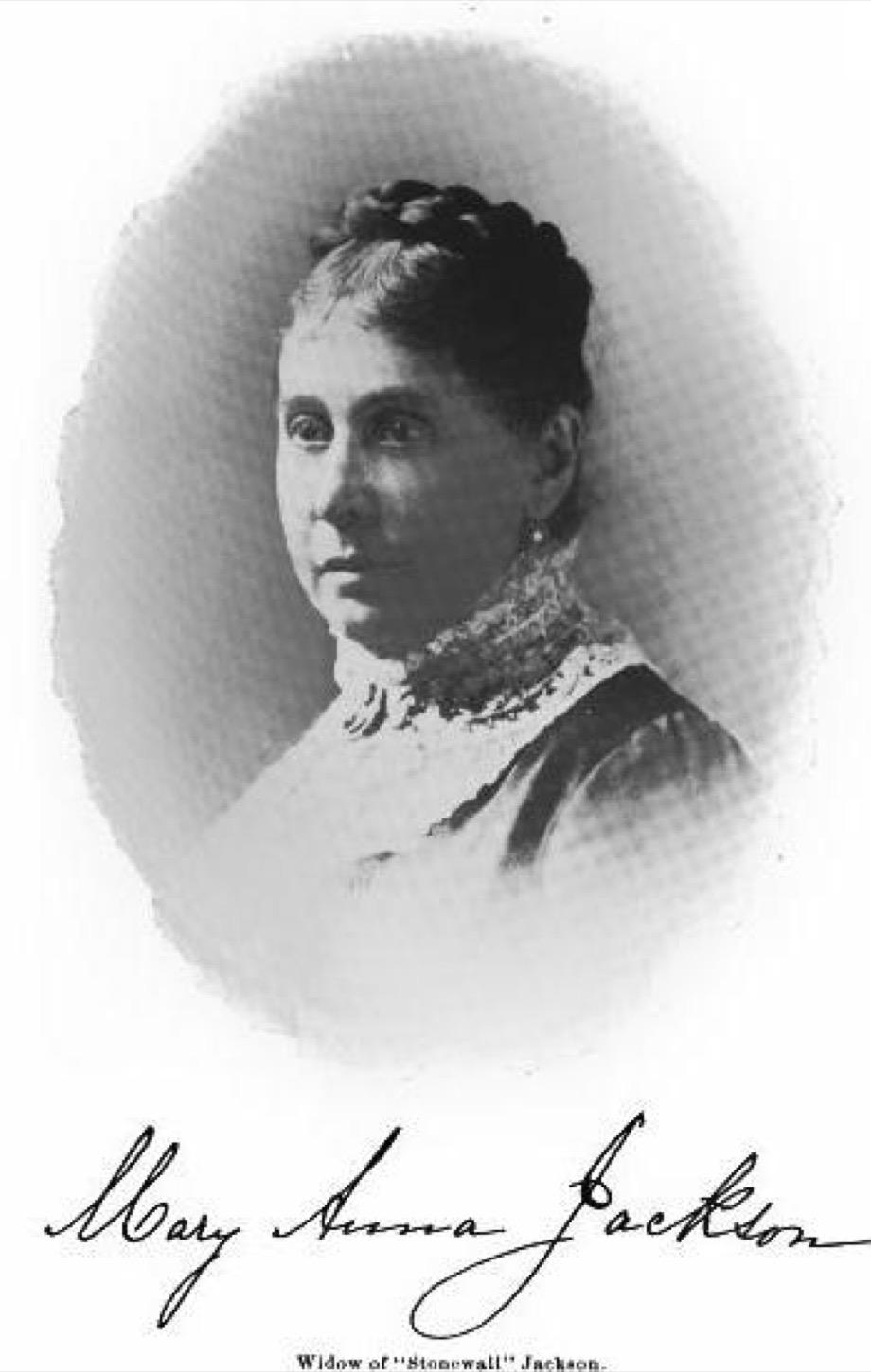
Portrait of Anna Morrison Jackson
The Widow Who Wrote the Legend
Anna Morrison Jackson married an oddity — a professor known around Lexington for his rigid habits, his silences, his sudden intensities of religious feeling — and she loved him without apparent difficulty. The daughter of a Presbyterian minister who ran a North Carolina college, she had been raised inside exactly the kind of ordered, devout household that made Thomas Jackson legible to her when he was illegible to almost everyone else. Their marriage ran mostly on paper: long stretches of war separated them, and what survives is a record of devoted letters, a first infant lost, and a second daughter, Julia, whom Jackson held only once before Chancellorsville took him in May 1863. As an ISFJ, Anna Jackson met that entire arrangement — the absence, the letters, the sudden widowhood — with a steadiness that looks, in hindsight, like the real load-bearing structure of the marriage.
What followed mattered more to history than the marriage itself. Anna Jackson lived another fifty-two years as the recognized keeper of her husband's memory, and she treated that role as a duty rather than a stage. She wrote her own memoir of him in 1892, sat for decades of monument dedications and veterans' reunions, and pushed back, quietly but persistently, against exaggerations and inventions that crept into the growing Jackson mythology. She did not build the legend from ambition; she guarded one she believed was already true.
Anna Jackson's ISFJ temperament turned grief into custodianship — decades spent not reinventing a husband's memory but defending its accuracy.
Fifty-Two Years of Faithful Keeping
There is a telling consistency in how Anna Jackson spent her long widowhood: she did not remarry, did not withdraw from public life, and did not chase the celebrity that Lost Cause culture would gladly have handed her. Instead she corrected other people's books, answered veterans' letters, and produced her own careful account precisely because she distrusted the embellishments already circulating about her husband. That impulse — private loyalty expressed as documentary accuracy rather than performance — reads as pure Si-Fe: a preference for the remembered, verified past over any more flattering revision of it, married to a genuine responsibility toward the people, living and dead, whose memory she felt she owed something to.
Connected Figures
Further Reading
- Memoirs of Stonewall Jackson — Mary Anna JacksonHer own 1892 biography of her husband, the foundational document of her decades as keeper of his memory.
- Stonewall Jackson: The Man, the Soldier, the Legend — James I. Robertson Jr.The standard modern biography, drawing extensively on Anna Jackson's letters and papers.
- Rebel Yell — S. C. GwynneA narrative account of Jackson's campaigns that also traces the couple's wartime correspondence.
- Remembering the Civil War: Reunion and the Limits of Reconciliation — Caroline E. JanneyContext on the Lost Cause memorial culture Anna Jackson moved through for fifty years.
